What Is Looksmax AI? Looksmaxxing, Glow-Up, and the Real Risks
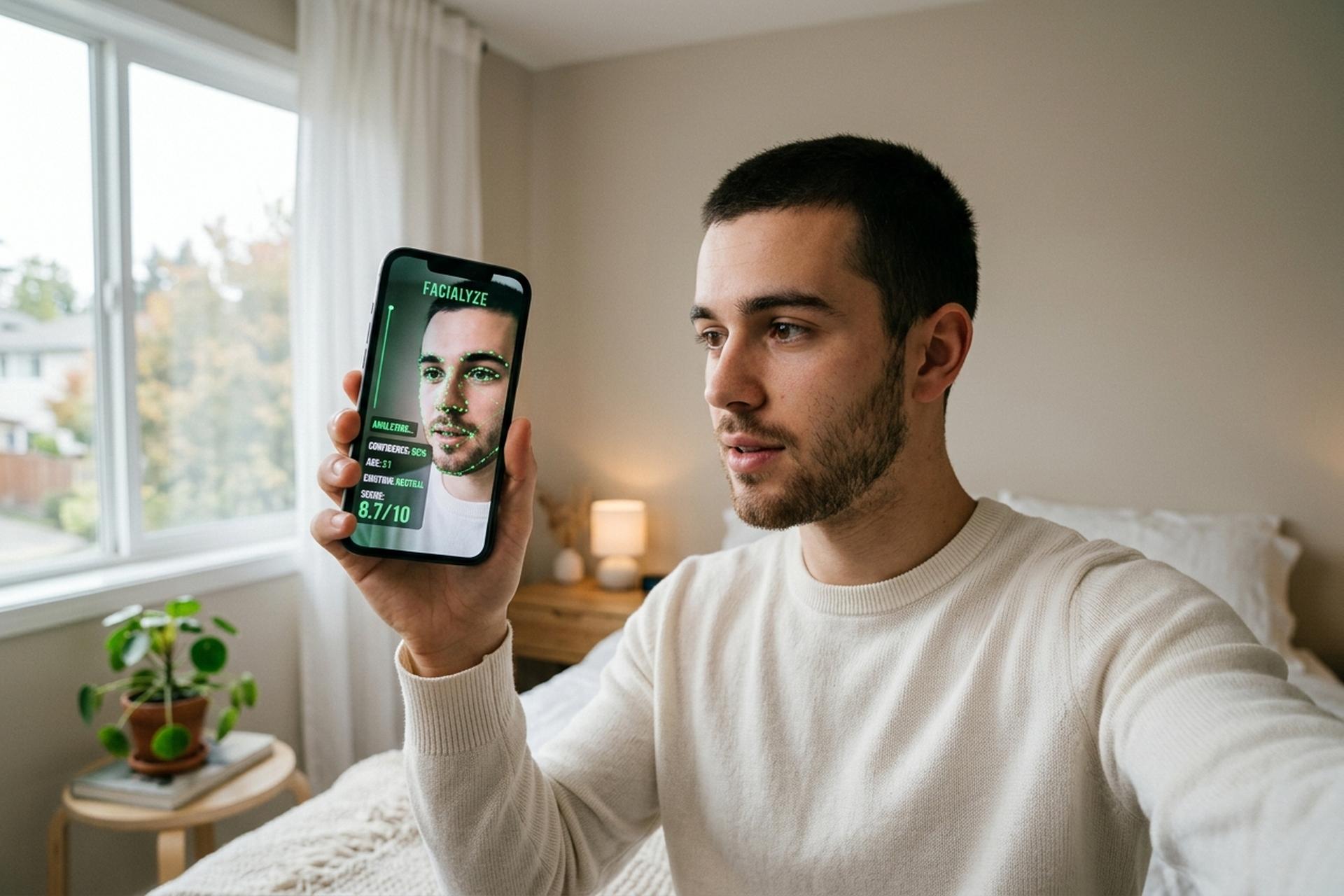
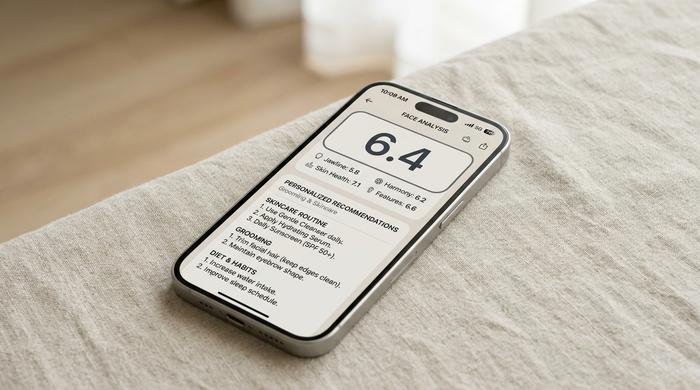
A teenage boy opens an app, points his phone at his face, and ten seconds later a number flashes on the screen. 6.4 out of 10. Below it, a list of "fixes": better skincare, a different hairstyle, a stronger jawline. The app is called Looksmax AI, or Umax, or something with "glow-up" in the name. It costs about four dollars a week. According to Fortune's reporting in July 2024, the leading app in this category, Umax, had already crossed 7 million downloads, peaked at #36 on the US App Store Lifestyle chart, and was pulling in roughly $500,000 a month in subscription revenue, with 90% of users men aged 16 to 45.
This is the looksmaxxing trend, accelerated by AI. And it is becoming impossible to ignore. Brandwatch logged more than 806,000 mentions of looksmaxxing across social platforms between September 2025 and early 2026, from over 405,000 unique users, with 84% of the conversation flagged as negative sentiment. Search interest in "looksmaxxing" is up over 4,000 percent in two years according to Healthline.
So what is Looksmax AI actually doing, how do you use it, and is the AI score worth taking seriously? This guide walks through the answers, including the parts the marketing copy and the App Store listing skip. We cover the technology, the pricing, the privacy of your photo, the reality of "personalized recommendations," and the mental-health context that researchers at Dalhousie University and elsewhere have been documenting since the trend broke into the mainstream.
What Looksmax AI Actually Is and Where It Came From
Looksmax AI is the brand most people land on when they search the App Store for a tool that rates how attractive your face is and your physical appearance overall. The category is bigger than the brand. Multiple apps share the formula: upload your photo, the AI analyzes your facial features, and you get a numerical score plus a list of "improvements" you can buy or perform.
The leading product is technically Umax, by Improvement Tech, but a near-identical app called LooksMax AI lists separately on the App Store with around 42,000 ratings and a 4.5-star average. The two have effectively the same UX. The word "looksmax" itself comes from the older "looksmaxxing" subculture that lived on incel forums (Sluthate, Lookism, the closed PUAHate) before TikTok pulled it into Gen Z mainstream. Looksmax AI is the consumer-friendly, app-store-friendly product version of that subculture's homemade rating systems.
The pitch the app uses is straightforward. Quoted directly from the App Store screenshots and product page, Looksmax AI is your personalized AI coach to help users on their journey of becoming more attractive. The marketing copy promises advanced AI, an AI-powered tool that analyzes your facial features, an AI that gives personalized advice, and the essential tools and insights to embark on your journey of self-improvement. The product page bills its focus is on aiding men in elevating their facial attractiveness and confidence, with apps like Looksmax positioned as a free alternative to a personal coach. There is even a tagline about helping you understand your facial structure, get your results in seconds, and get your rating and become more attractive in the same flow, alongside promises to provide personalized feedback to help you look your best, find your best look, help you on your journey, and help you look like the best version of yourself. The App Store title even shows up with a left-to-right marker prefix, Looksmax AI, a Unicode quirk most users never notice. Free Looksmax features get you a basic score; the paid tier is what unlocks the advanced AI models, the personalized glow-up, and the rating and become more attractive flow that the app's onboarding nudges you toward.
The reality is more measured. The app is a face-scoring tool wrapped in a glow-up advice layer. Become more attractive with Looksmax is the promise. Whether the AI gives results that hold up under scrutiny is the question this guide spends most of its space on.
How Looksmax AI Works: Photo Analysis Step by Step
Once you download Looksmax AI from Apple's App Store or Google Play, the flow is short. You create an account, accept the privacy policy, and either start the 3-day free trial or pay the weekly fee up front (around $3.99). Then you upload your photo.
The AI runs facial detection and landmark mapping on the selfie. Most apps in this category place between 60 and 500 reference points on the face to measure features like canthal tilt, midface ratio, and gonial angle. The deeper science-claiming services like Qoves Studio map 521 landmarks and run 160+ measurements, while the consumer apps lean on simpler, faster models tuned for an iPhone CPU.
Once it has the measurements, the model spits out scores: an overall rating on a 1 to 100 or 1 to 10 scale, plus sub-scores for jawline, cheekbones, eyes, hair, skin, masculinity, harmony, and a few invented categories like "hunter eyes" or "sigma vibes." Then it generates personalized feedback: a glow-up plan, hairstyle suggestions, skincare routine, and grooming tips. Most of the AI's processing happens on your device or on the developer's cloud, depending on the app.
If you keep the subscription, the app remembers earlier scans and lets you track your "looksmaxxing journey" across photos taken weeks or months apart. That is the core loop.
What Looksmax AI Scores: Facial Features Explained
This is the part beginner guides usually gloss over. The categories the app uses come from cosmetic-surgery aesthetics literature, not from a single peer-reviewed beauty standard.
| Metric | What It Measures | The "Ideal" Range Looksmaxxers Cite |
|---|---|---|
| Canthal tilt | Angle of the line connecting inner and outer corners of the eye | 2°–6° positive ("hunter eyes") |
| Gonial angle | Jaw angle at the back of the lower jaw | 115°–122° |
| Midface ratio | Distance between brow and nose tip vs nose tip and chin | 0.42–0.48 |
| Bizygomatic / bigonial ratio | Cheekbone width vs jaw width | Around 1.3 |
| PSL score | A 1-to-8 scale invented on incel forums | 5+ counted as "Chad-tier" |
| Skin score | Texture, redness, blemishes from photo pixel analysis | Higher is better |
| Harmony / symmetry | Side-to-side facial mirror match | Closer to 100% is better |
A few of those numbers come from real surgical literature. The gonial-angle range, for instance, is well documented in maxillofacial surgery papers. Others, like the PSL scale, are forum inventions with no scientific backing. The app does not always tell you which is which.
The other thing to keep in mind: most of these measurements are not things you can actually change without surgery. Canthal tilt is set by the orbital bone, gonial angle by the mandible. Mewing, jaw exercises, or a new haircut will not move them. The "personalized recommendations" the app offers tend to focus on the things that are softer and more changeable: skincare, hair, posture, fitness, grooming. Which is fine, but it is also a different category of advice than the rating implies.
How to Use Looksmax AI: A Practical Walk-Through
If you are going to try the app, the practical version of the workflow looks like this.
Download Looksmax AI from the App Store or Play Store. Check the listing carefully. You want the one that says "Verified by Apple" if you are on iOS, with a recent version history under What's New. That is your sanity check that the app is being maintained and not abandonware reposted under the same name. See screenshots and ratings and reviews on the listing page before you commit.
Sign up with email. The app will ask for your email address mostly so it can re-bill you and send marketing nudges. The privacy and security disclosures are buried under the privacy policy link in the App Store listing, worth at least a glance before you upload anything. You can use a plus-alias email if you want to keep the inbox clean. Some user tips floating around Reddit suggest spinning up a separate Apple ID for face-rating apps; that is overkill for most people but not crazy if you care about data hygiene.
Upload your photo. Lighting matters more than people expect. Soft, even, front-lit daylight gives the most consistent score. A harsh overhead light from above darkens your eye sockets and the AI can read that as smaller, more recessed eyes, which lowers your harmony score.
Read the rating. Get personalized scores back. Note the score you would expect to dispute and the recommendations the app actually proposes. Cross-check them against what you already know about yourself.
Decide whether the actionable tips to enhance your appearance are useful. The skincare and grooming advice is usually generic but reasonable. Generic advice gets dressed up in the language of personalized advice, but if the routine is "wash with a gentle cleanser, use sunscreen, drink water, sleep more," that is fine. Just call it what it is.
Cancel before the auto-renew kicks in. The free trial is three days. Many users get blindsided by the auto-bill on day four and discover that cancelling is buried inside iPhone or Android subscription settings, not the app itself.
Looksmax AI Pricing and the Free Alternatives
Pricing is the part everyone underestimates.
| Tool | What You Get | Price |
|---|---|---|
| Looksmax AI / Umax (mobile) | Photo scoring, glow-up plan, weekly subscription | $3.99/week (about $200/year) |
| Looksmax AI Pro hairstyle pack | Add-on for hair simulations | $4.99 one-time |
| Qoves Studio | Human-reviewed facial analysis report, 160+ measurements | $150–$300 per report |
| Overchat AI rate-my-face | Free face score, basic categories, 2M+ faces analyzed | Free, no signup |
| Fotor AI attractiveness test | Free face score, photo retouch upsell | Free, ad-supported |
| ChatGPT face analysis prompt | Custom prompt + selfie | Included in ChatGPT Plus ($20/mo) |
| Looksmax Advisor GPT | Same as above, dedicated GPT in store | Free with ChatGPT Plus |
The free alternatives are real, and they exist because the underlying computer-vision models are not proprietary. The reason Looksmax AI converts paid users anyway is the experience: it presents you with a single confident number and a checklist, where free tools tend to dump raw measurements without the gamification.
The thing to watch out for is the conversion pattern. Three-day free trial, then weekly recurring billing, then the user forgets and pays for months. The US Federal Trade Commission's Negative Option Rule covers exactly this kind of "click to subscribe, dig to cancel" pattern. The apps are not breaking the law as long as they disclose the renewal, but the model is engineered for forgetfulness.
Looksmaxxing Glow-Up Advice: Soft vs Hardmaxxing
Inside the looksmaxxing community, advice splits into two camps and the AI app sits in the middle, recommending mostly the first.
Softmaxxing covers the changes any dermatologist would sign off on. Skincare with sunscreen, retinoids and a moisturizer. Better sleep. Getting in the gym. A haircut that fits your face shape. Weight in a healthy range. Whitening teeth. None of it is unreasonable advice. The AI is just dressing up a wellness routine in a confidence package.
Hardmaxxing is the other side. Bone-cutting jaw surgery, leg lengthening, hair transplants, anabolic steroids, in some online corners face tape and bone smashing (yes, that is a thing some forum users do, and it is dangerous). A 2025 looksmaxxing community survey of users under 24 found 49.1% considering jaw surgery or a hair transplant, while only 3.4% had actually had one. Most stay in the considering phase. The minority who escalate are exactly the population most exposed to harm.
Looksmax AI itself does not advertise hardmaxxing. The risk is that an AI rating that says your jawline is "weak" lights the path that ends in a forum thread about Le Fort I osteotomies. This is not paranoia. Researchers at Dalhousie University analyzed 8,000+ comments on a major looksmaxxing forum that draws around 6 million unique monthly visitors and documented threads encouraging not just surgery but self-harm and suicidal ideation among the most demoralized users. The paper, Halpin et al. 2025 in Sociology of Health & Illness, is the strongest peer-reviewed link between this community and harm.
Is the Looksmaxxing AI Analysis Accurate?
The polite answer is: a tool like Looksmax AI is consistent. The honest answer is: that is not the same as accurate.
A 2025 paper presented at AAAI/AIES, "Beauty and the Bias," tested seven multimodal AI models with more than 7 million prompts across 91 scenarios and 900+ images. The models reproduced a measurable attractiveness halo effect: people the AI scored as more attractive were also rated as more competent, trustworthy, and intelligent, exactly the cognitive shortcut psychologists have been studying in humans for fifty years. AI inherited the bias from the training data, which was scraped from the internet, which is full of the same human bias.
A 2024 study by Goshtasbi and colleagues in Facial Plastic Surgery & Aesthetic Medicine compared AI attractiveness scores to human raters on the same set of faces. The AI correlated with humans, but biased systematically high, especially on faces that fit Western, Eurocentric facial proportions.
A 2026 paper in the European Journal for Philosophy of Science went further and labeled facial-analysis AI a "social pseudotechnology." The argument: scoring a face for "masculinity" or "harmony" treats a culturally and historically specific aesthetic as a measurable trait, the same move 19th-century phrenologists made when they claimed to read intelligence from skull shape.
So when the app gives you a 6.4, what does the number mean? It means your photo, processed by this particular model, lands at the 64th percentile of whatever distribution the model was trained on. That is interesting trivia. It is not a fact about you.
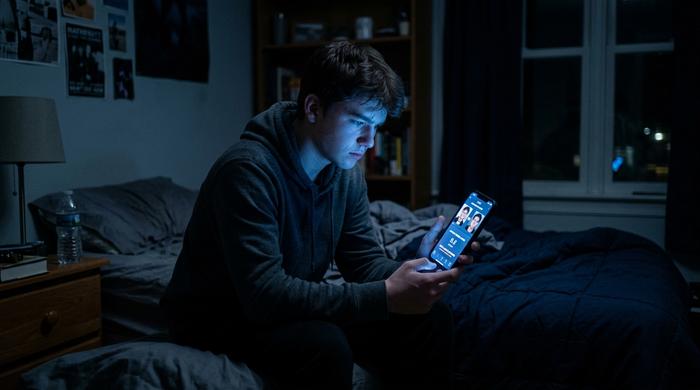
Photo Privacy: What the App Privacy Page Doesn't Show
The app privacy section on the App Store lists what the developer says it collects. The reality is less reassuring than the page implies.
UMAX2's published privacy policy states raw selfies are deleted within 7 days. LooksMax AI Pro retains them for 30 days. Improvement Tech's Umax processes face images in the cloud but its privacy posture has not been independently audited. None of the leading apps publicly state explicit Illinois Biometric Information Privacy Act (BIPA) compliance, which matters because BIPA is the only US state law that gives individuals a private right of action over biometric data, and it has produced more than 1,500 class-action lawsuits since 2019. Clearview AI settled a BIPA suit for $51.75 million in 2024. That is the warning shot for any app that sends a US user's face to a server.
For people outside Illinois, the immediate concern is more practical. Where does your selfie sit, in plaintext or in some hashed form, while it is being processed? How long does it stay there if you delete the app? Most apps do not say.
If you care, the safer way to use any of these tools is to remove EXIF metadata before upload, use a fake name and a throwaway email, and treat the photo as something you would be okay with leaking on a forum somewhere. If that mental test fails, do not upload.
Mental-Health Risks: When Looksmaxxing AI Becomes Harm
This section is short on purpose, because the data is direct.
Body dysmorphic disorder (BDD) has a roughly 1% point prevalence in young people aged 5 to 19, with a meaningful gender split: 1.8% in girls vs 0.3% in boys (Krebs et al., JAACAP 2024). Around 70% of adolescents who meet BDD criteria have a comorbid psychiatric condition. Muscle dysmorphia, the "I am not big enough" version of BDD that maps onto looksmaxxing more directly, is more common in this audience: a 2025 study in the Journal of Eating Disorders found 2.8% of Canadian and US boys and men aged 15 to 35 met criteria for probable muscle dysmorphia, and 26% scored at clinical risk.
Snapchat dysmorphia, first described by clinicians in 2018, established the principle that face-altering technology hurts body image more when the comparison is to a filtered version of yourself than to a filtered photo of someone else. Looksmax AI is the next step. Instead of filtering you, it scores you, with the apparent authority of an algorithm.
That is not an argument that the app causes BDD. It is an argument that the people most vulnerable to it are also the most likely to spend money on a tool that quantifies what they are already worried about. The 55%+ of looksmaxxers in the 2025 community survey who reported anxiety from the practice are not a fringe minority of users. They are the engaged paying base.
The honest framing: if you have ever spent more than thirty minutes a day looking at yourself in the mirror trying to "fix" something, an AI score is not the tool you need. A licensed therapist who handles BDD or eating disorders is.
Skincare and Grooming: Useful Personalized Recommendations
If you take Looksmax AI at the level it actually helps, this is where the value lives.
The app analyzes your facial features and suggests a skincare routine, hairstyle options, grooming tips, and sometimes outfit advice. None of it is revolutionary. Most of it is the same thing a half-decent dermatologist or barber would say in five minutes. Wash with a gentle cleanser. Add a vitamin-C serum in the morning. Sunscreen every day, even when it is cloudy. Trim eyebrows but do not over-pluck. Get a haircut that matches your face shape. Hydrate. Sleep.
What the app does well is package that as personalized feedback rather than generic advice. Use this tool the way you would use a fitness app: as a structured nudge, not as truth. Treat the recommendations to enhance your look as defaults you can edit, not commandments. If a tip says use a beard trimmer at a 4-mm setting and you have always preferred 6-mm, you are still right and the AI is still wrong.