Bitcoin Loophole Review: Inside the Crypto App Red Flags

A retired UK doctor lost £50,000. A Swedish woman lost over $300,000, the entire proceeds from selling her house. A 64-year-old Scottish man named John lost £25,000, and his daughter joined in. They had not met online dating scams or invested in some obscure altcoin. They had clicked a Facebook ad with a familiar face, landed on what looked like a BBC article, and signed up for an "automated trading platform" that promised easy crypto profits.
That platform was a clone of the same scam family that includes Bitcoin Loophole. The brand has been around since 2017, regulators have been warning about it for almost a decade, and the funnel still works.
This Bitcoin Loophole review is not a buying guide. It is a forensic look at what the platform claims to be, what it actually is, who is behind the wave of fake celebrity endorsements pushing it, and what the data on real losses tells us. Use it before you ever consider sending a minimum deposit anywhere with the words "bitcoin," "loophole," or "auto-trader" in the URL.
What Bitcoin Loophole Actually Is and Why It Matters
Bitcoin Loophole markets itself as automated trading software. The pitch is heavy on advanced algorithms, real-time market analysis, AI scanning the bitcoin market, and a system that claims to execute trades faster than any human could. Minimum deposit: $250. Supposed founder: "Steve McKay," a name lifted from the older Bitcoin Code scam, paired with a stock-image headshot that has been reverse-image-searched into oblivion.
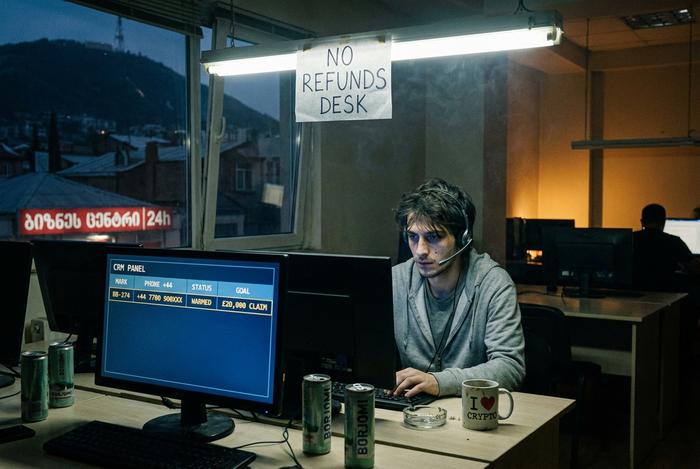
In plain words: the product is a brand. A domain. A landing page. A phone-routing system that funnels sign-ups to call-centre desks in Tel Aviv, Tbilisi, Belgrade and Sofia. There is no proprietary trading tool. There is no proven track record. There are no software engineers behind the "algorithm" because the algorithm doesn't exist. The Organized Crime and Corruption Reporting Project's March 2025 investigation, "Scam Empire," leaked 1.9 terabytes of internal call-centre data covering 32,000 victims and at least $275 million in losses, and that's two arms of the network, not the whole thing.
For anyone curious about cryptocurrency, the bitcoin loophole app and its many clones are the single most common door between casual interest in crypto and a real financial wound. The U.S. FBI logged $9.3 billion in crypto-related fraud in 2024, a 66% jump in a single year. Crypto investment fraud alone: $5.8 billion. By the time IC3 closed its 2025 figures the total had pushed past $11 billion. A big chunk of that money walked out through fake auto-trading platforms shaped exactly like Bitcoin Loophole.
Understanding Bitcoin Loophole as a Trading Platform
Compare the brand to anything real and the gap shows up immediately. Pick a licensed cryptocurrency exchange like Coinbase, Kraken, Bitget, or Gemini. Each names its officers. Each publishes proof-of-reserves audits. Each plugs into banks under anti-money-laundering rules. Each shows up on a regulator's register, whether that's FinCEN's MSB list, the FCA Financial Services Register, or BaFin's MiCAR file. The security features are checkable: cold-storage attestations, two-factor authentication, and bug-bounty programmes with named auditors.
Bitcoin Loophole offers none of that. "Regulated brokers" show up in the marketing copy and vanish the second you go looking. The CFTC, in its October 2022 "Digital Asset Red Flags" advisory, named exactly this pattern: opaque automated trading software promising guaranteed returns. The platform fits the description bullet for bullet. No audit exists. No filing names the owners. Even the URL drifts: bitcoinloophole.com one quarter, bitcoin-loophole.io the next, bitcoinsecretloophole.com a year later.
Two different things share the word bitcoin. The first is a digital currency with a public ledger anyone can inspect. The second is a marketing skin wrapped around a phone pipeline. The skin borrows credibility from the ledger. The ledger owes it nothing back.
How the Bitcoin Loophole App Hooks New Crypto Buyers
The funnel is now well documented. Action Fraud in the UK, the FBI in the U.S., and CTM360 in its July 2025 report have all mapped the same nine-step user journey. CTM360 alone counted more than 17,000 fake CNN, BBC, and CNBC clone sites pushing this exact funnel across more than 50 countries.
It begins with a paid ad on Instagram, Facebook, Snapchat, or a Google search result. The thumbnail features a famous face. Click and you land on a counterfeit news page that mimics a major outlet's layout, complete with logos and fake bylines. Inside that fake article, a fabricated celebrity quote endorses a "controversial new crypto opportunity." A sign-up form harvests your name, phone, and email. Within minutes that data is sold to broker rooms.
Then the call. An "account manager" rings within 90 seconds. You see a demo account showing made-up profits and you are coached to deposit more. A whistleblower from one of these call centers told OCCRP in 2020, "they have no product, they just sell emotions." The withdrawal block follows. When you ask for your money, the agent demands "AML fees," "tax," or "verification" payments. Months later, a "recovery specialist" calls promising to retrieve your funds for an upfront fee. That is the recovery scam, and it is its own multi-million-dollar industry.
The bitcoin loophole app, in this picture, is barely an app at all. It is a customer-service layer wrapped around a phone bank.
The $250 Minimum Deposit Trap and Withdrawal Wall
The minimum deposit of $250 is not random. CTM360 and Sensity AI both found this number across the entire scam-bot cluster, from Bitcoin Era to Immediate Edge to Quantum AI. It sits below most banks' large-transfer fraud thresholds and inside the window where the average impulse buyer will not panic.
Once you deposit funds, the dashboard shows quick paper gains. Some users report seeing their balance multiply within hours. That is by design. The displayed numbers come from a CRM, not from any actual trading activity. Investigate Europe documented one Swiss client who deposited €50,000 across multiple top-ups and could never withdraw a single euro. A UK victim known as "Malcolm" lost £34,000 the same way through Greenfields Capital, a sister brand pushed through the same pipeline.
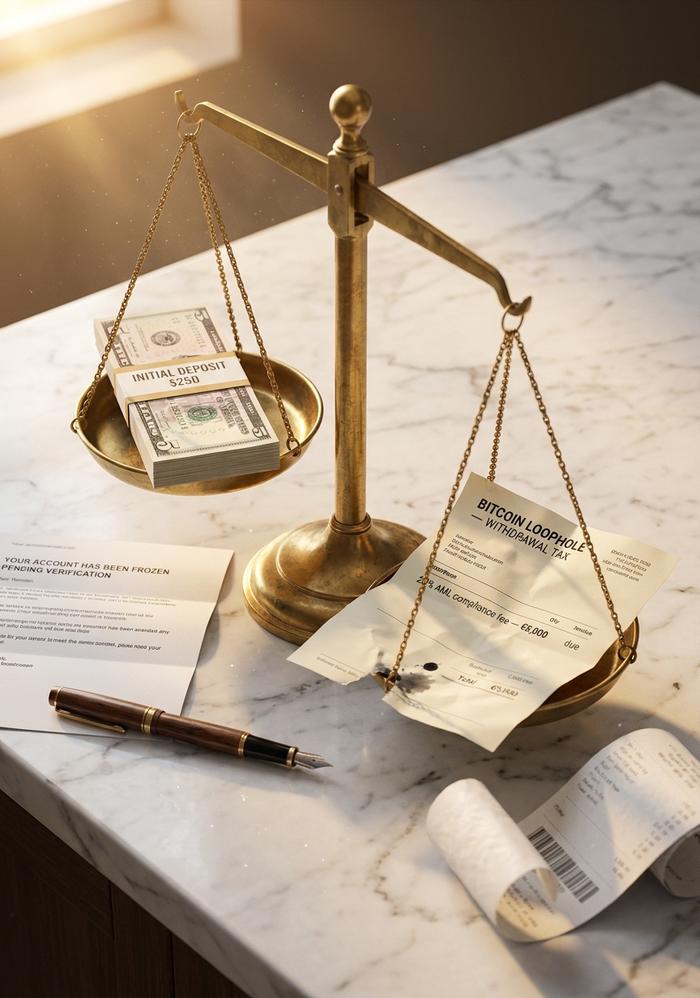
The withdrawal block is the single most important moment in the entire scam. The customer support team will ask for one more deposit. Then another. Then a "20% withdrawal tax." The FBI's IC3 division calls these layered demands a near-universal warning sign of investment fraud. By the time the victim recognizes what is happening, the operation has already booked the deposit funds as gross revenue and routed them through several intermediary accounts.
| Stage in the funnel | What the user sees | What is really happening |
|---|---|---|
| Ad click | Celebrity-endorsed crypto news article | Counterfeit landing page on a clone domain |
| Sign-up | "Free registration process, no fees" | Lead is sold to a call-center room |
| First call | "Account manager" walks through onboarding | Scripted social engineering |
| Initial deposit | $250 minimum, "demo gains" | Real money transferred, fake balance shown |
| Top-ups | Coaching to "scale your gains" | Each top-up locked behind new fees |
| Withdrawal request | Account flagged for "verification" or "tax" | Funds blocked, more deposits demanded |
| Silence | Account inaccessible | Operator drops the lead |
| "Recovery" call | A lawyer offers to retrieve your money for a fee | Second-stage scam by the same network |
Celebrity Deepfakes Pushing Bitcoin Loophole on You
Take the celebrity face away and the whole funnel falls apart. The face is the magnet.
Take Martin Lewis. The UK's MoneySavingExpert founder turns up in 44% of Action Fraud reports that name a celebrity, more than any other public figure in Britain. He took Facebook to court back in April 2018 over more than a thousand fake ads carrying his picture; the writ specifically called out Bitcoin Code and Cloud Trader. They settled on 23 January 2019. Facebook ended up donating £3 million to Citizens Advice and finally building a UK scam-ad reporting tool that, until the suit, it had been happy to leave unbuilt.
After Lewis the list does not get shorter. British viewers have seen counterfeit ads built around Holly Willoughby, Phillip Schofield, Gordon Ramsay, Adele, Jeremy Clarkson, Marcus Rashford, Ed Sheeran, Sir Richard Branson and Deborah Meaden. Across the Pacific the Australian campaigns rotate Hugh Jackman, former NSW premier Mike Baird, breakfast-TV hosts David Koch and Karl Stefanovic, columnist Waleed Aly and mining billionaire Andrew "Twiggy" Forrest. The Canadians had to deal with deepfakes of Justin Trudeau. The French got Kylian Mbappé pasted into a Bitcoin sales pitch. The Swedes saw Filip Hammar and Fredrik Skavlan. One British victim tracked by Which? magazine lost over £370,000 to a single Willoughby/Schofield deepfake on its own.
Video deepfakes changed the ratio. By 2024 Sensity AI had analysed over two thousand fraudulent deepfake clips and was reporting that Musk appeared in roughly a quarter of all deepfake scams across categories, and in nearly 90% of the crypto-specific ones. Throughout 2025 that share kept ratcheting upward.
Three incidents from 2024 illustrate what those statistics actually look like on a screen. On 18 June a two-hour YouTube livestream styled as a Tesla announcement put a deepfake Musk in front of viewers and pulled over $50,000 in crypto deposits. Just over a month later, on 23 July, an AI-generated Musk audio loop running 6 minutes and 42 seconds played continuously for at least seventeen hours and reached 140,000 concurrent viewers at its peak. Across roughly the same window, March 2024 through January 2025, one Quantum AI-branded scheme, a sibling of Bitcoin Loophole inside the same operator network, took at least $5 million on-chain off the back of fake Musk videos.
The largest documented single case lands in April 2025. TLW Solicitors traced one deepfake-driven operation that pulled £27 million out of roughly 6,000 victims spread across Britain, mainland Europe and Canada. The deepfaked faces were Lewis again, broadcaster Zoe Ball and presenter Ben Fogle. The call centres turned out to be operating from Georgia.
Court pressure is, slowly, beginning to reach the ad platforms. Meta turned on a facial-recognition pilot in 2024 once Australia's ACCC had spent two years pushing the matter through the federal courts, beginning with a complaint in March 2022. To date the pilot has pulled close to thirty thousand celeb-bait advertisements. A separate 2025 class action filed in the United States puts $2.7 billion of consumer loss on scams that ran across Meta platforms between 2021 and 2023, citing internal forecasts that projected up to $16 billion in fraud-ad revenue.
Regulators on Bitcoin Loophole and Cryptocurrencies
The first UK alert to call out Bitcoin Loophole by name dates to 6 August 2018. On that date the Financial Conduct Authority paired the brand with "Bitcoin News Trader," logged bitcoinloophole.com as the unauthorised firm, and recorded the two phone numbers being used to cold-call UK consumers. The wording is brutally plain. Anyone dealing with the firm, the FCA wrote, "will not have access to the Financial Ombudsman Service or be protected by the Financial Services Compensation Scheme."
Eight years on, that warning is still live. Around it the FCA has stacked a wall of broader enforcement. The regulator pulled more than 10,000 misleading financial ads in 2023. A 2025 sweep then flagged 1,267 illegal advertisements that had already landed in 2.3 million UK accounts, and 66% of those came from firms already named on the Warning List. In 2024 the regulator received 10,379 reports of fake FCA-related scams. Of those, 991 ended in someone actually wiring money to fraudsters claiming to be the FCA itself. None of it has shut the cluster down.
| Regulator / source | Date | Headline figure |
|---|---|---|
| FCA Warning List (UK) | 6 Aug 2018 | "Bitcoin Loophole / Bitcoin News Trader" — unauthorised firm |
| ASIC (Australia) | 2022 release 22-305MR | Top-10 ways to spot a crypto scam — auto-trading bots flagged |
| CFTC (U.S.) | Oct 2022 | "Digital Asset Red Flags" warns on auto-trading bot fraud |
| FTC (U.S.) | March 2025 | $12.5B total fraud losses 2024; $5.7B in investment scams |
| FBI IC3 (U.S.) | 2024 Annual Report | $9.3B in crypto fraud losses, +66% YoY |
| FBI IC3 (U.S.) | 2025 figures | $11B in crypto fraud; $7.2B in crypto investment fraud |
| City of London Police | April 2025 | £649M in UK investment fraud losses; 66% cited crypto |
| Action Fraud (UK) | Apr 2020 – Mar 2021 | 558 celebrity-endorsement scam reports; £10M+ losses |
| ESMA / EBA / EIOPA | Joint warning | Crypto products often offer "limited or no protection" |
The pattern is consistent. The CFTC, the FCA, ASIC, the FTC, the FBI, and the European Supervisory Authorities all describe the same scheme. Bitcoin Loophole and its clones meet every regulatory definition of consumer fraud, yet operators stay hard to prosecute because they hide behind proxies, offshore registrations, and rotating brand names.
Real Losses When Users Start Trading on the Platform
Numbers that look big in a press release are not abstract for the people they belong to. The City of London Police logged 25,843 investment-fraud reports in 2024, totalling £649,062,146 in losses. Crypto was the asset cited in 66% of those reports. Over £10 million was lost specifically to fraudsters using the identities of Martin Lewis, Elon Musk, and Jeremy Clarkson.
Action Fraud, looking at the rolling year from April 2020 to March 2021, counted 558 reports of bogus celebrity-endorsement investment scams, with reported losses above £10 million and 79% mentioning cryptocurrency as the asset. Victims ranged in age from 31 to 93, and 68% were over 60. The Swedish woman Ingrid Hernvall, named in OCCRP's "Down the Bitcoin Funnel" investigation, lost more than $300,000 after seeing fake ads featuring local TV personalities. A Belgrade-linked ring documented by Investigate Europe in September 2025 was tied to 70,000 victims and €250 million in losses, operating brands such as Greenfields Capital, FX Trade Market, Klips.com, and Coinshype out of Israel, Cyprus, Bulgaria, and Serbia.
If you want a sense of how the price of bitcoin and the volume of these scams move together, you can begin trading and lose money in the same hour. That is not hyperbole. CTM360 logged sign-ups that received call-center contact within 90 seconds. The first deposit funds clear before the user has had time to read a single review. By the time the first withdrawal request is denied, several thousand dollars are gone.
Red Flags vs Honest Cryptocurrency Trading Tools
A real cryptocurrency platform is not shy about boring things. A dashboard from Coinbase, Kraken, or Bitget shows fee schedules, order books, and clear withdrawal procedures, and a regulated cryptocurrency exchange will gladly point at its license number. Major cryptocurrency exchanges publish daily trading volume, list every supported payment method, and document their futures trading and spot order types. An honest cryptocurrency trading tool will publish backtest data, fee transparency, and a clear trading system overview built and signed off by named engineers. Successful trading on any of these platforms still involves risk, and any responsible operator says so on the front page. Real algorithmic traders also speak in measured language about potential returns and proven track records, never about "guaranteed" anything.
| Honest cryptocurrency platform | Bitcoin Loophole-type site |
|---|---|
| Named, regulated entity (FinCEN, FCA, MiCA) | Anonymous operator, offshore proxy |
| Audited proof of reserves | No audit, no balance sheet |
| Transparent fee schedule | "No hidden fees" claim, vague pricing |
| Clear withdrawal procedure with KYC | Withdrawal blocked behind extra fees |
| Risk warnings, "afford to lose" disclosure | "Guaranteed profits," "guaranteed returns" |
| Real engineering team listed | Fictional founder, stock-image headshot |
| Independent reviews on reputable platforms | Forum posts and TrustPilot complaints |
| Customer support is responsive | Customer support pivots to upsells |
The CFTC, the FCA, the FTC, and ASIC all agree on the warning signs. Promises of guaranteed returns. Pressure for limited-time offers. Vague claims about "advanced algorithms" with no published methodology. Demands that you never share account details with third parties, then immediately ask for your password. Initial deposits in the $240-$250 range. Endorsements from celebrities you cannot independently verify.
If a platform requests your money before it can prove its legal standing, that is the warning sign. Investment advice from someone who reached you through a Facebook ad is not investment advice. It is bait.
Safe Ways to Trade Popular Cryptocurrencies Today
Traders who want to trade cryptocurrencies safely have several practical paths. Use a regulated cryptocurrency exchange that publishes its license number and is registered with FinCEN, FCA, or an equivalent authority. Verify the registration on the regulator's own register, not on the platform's website. Start with very small amounts you can afford to lose, and never on borrowed money.
If automated trading is the appeal, use a system that connects through API keys to a regulated exchange and restricts withdrawal permissions. Reputable platforms such as 3Commas, Cryptohopper, and Bitget's bot marketplace publish strategy code, allow you to backtest, and let you turn the system off at will. They also have an advanced trading interface for users who want options beyond basic spot trades. Mobile-friendly tools exist, but they should never ask you to deposit funds into a third-party "account manager." If they do, the scammer has dressed up as a tool. The right amount of trading experience for a beginner is several months of paper trading on a simulator before any real capital, and the cryptocurrency market is brutal toward people who skip that step. Real edge comes from spotting market inefficiencies, not from clicking a banner.
For cautious buyers, dollar-cost averaging into BTC or another popular cryptocurrency through a regulated exchange is, statistically, more profitable over years than any auto-trader claims to be over weeks. The cryptocurrency market rewards patience more reliably than it rewards algorithmic shortcuts. Bitcoin remains the most liquid digital currency, and stablecoins offer a less volatile entry point for first-time buyers, but neither requires you to surrender money to a phone-call salesperson to gain exposure.
Do thorough research before any deposit. Check the company name on the FCA Financial Services Register. Search the platform's name plus the word "scam" and read the first three pages of results. If the founder is a "Steve McKay," reverse-image-search the headshot. If the platform claims partnerships with banks, call those banks. The five minutes spent on transparency regarding the operator are worth more than any tutorial on the registration process.
What to Do If You Used the Bitcoin Loophole App
Stop. Do not send another penny. The "withdrawal fee," the "AML tax," the "verification" charge — every one of them is fake. Paying any of them only deepens the loss.
Save the evidence before the dashboard goes dark. Screenshot every page, every chat thread, every email, every wire receipt. Note down the URLs and the phone numbers of every agent who called you. After that, the report. UK readers should go to Action Fraud (0300 123 2040) and the FCA Consumer Helpline (0800 111 6768). U.S. victims file at the FBI's Internet Crime Complaint Center on ic3.gov and at the FTC's reportfraud.ftc.gov. In Australia, ASIC's Scamwatch. Anywhere else, your country's financial regulator is the right first stop.
Then call your bank. Ask for a chargeback on every card payment. Section 75 of the UK Consumer Credit Act has helped some victims recover credit-card deposits in full. Wire transfers are tougher; banks have a fraud-recall window of a few days that closes fast.
Lock the rest down. Change the password on every email and exchange account, ideally from a different device than the one you used during the scam. Block the agents' numbers. Some of these operations get remote-access software onto your computer under the cover of "helping you trade." If that happened, wipe the machine and reinstall the operating system before logging back into anything financial.
The follow-up call is where the second wound happens. Operation Level Up, the FBI initiative launched in 2024, has so far reached over 8,000 active victims and headed off an estimated $500 million in further losses by warning people before they paid for "recovery." Anyone phoning later as a "recovery specialist," a "blockchain investigator," or a lawyer who has somehow already "tracked your funds" is the same network coming back for round two. IC3 logged 10,516 recovery-scam complaints during 2024. The bill that year: $1.4 billion on top of the original theft. A June 2024 FBI public service announcement put $9.9 million in losses to fictitious law firms targeting crypto-fraud victims between February 2023 and February 2024.
If you genuinely want on-chain analysis, contact Chainalysis, TRM Labs, or a court-recognised blockchain forensics firm. Don't reply to the unsolicited email that lands in your inbox two weeks after the loss.
Bitcoin Loophole is not a trading product. It's the brand on the front door of a much bigger machine built on misdirection. Spotting that difference is what separates curiosity that costs nothing from one Facebook click that costs your savings.