Crypto Wallet Tracker Guide: Best Tools and Whale Tracking 2026

Bybit lost roughly $1.5 billion in ether and staked ETH on the morning of 21 February 2025, the largest crypto heist on record. Within twenty-four hours, the on-chain investigator known as ZachXBT had pinned the theft to North Korea's Lazarus Group using a public crypto wallet tracker called Arkham Intelligence, and walked away with a 50,000 ARKM bounty worth roughly $31,500. Chainalysis later credited Lazarus with about $2 billion in stolen Bitcoin and Ethereum across 2025, with Bybit as the centerpiece. The forensics did not need a subpoena, a court order, or a leaked database. The blockchain itself was the evidence, and the wallet tracker was the magnifying glass.
That story is the cleanest way to understand why a crypto wallet tracker stopped being a hobbyist toy. Chainalysis's 2026 Crypto Crime Report put illicit on-chain volume at $154 billion for 2025, a 162% year-over-year jump, while illicit activity stayed under 1% of total crypto volume, and 84% of that illicit flow moved through stablecoins. Once you can label entities at that scale, "tracking a wallet" is not a Reddit pastime; it is the compliance layer of an entire industry. This guide walks through what a tracker actually does, the tools that matter in 2026, the realistic edge from copying whales, and the privacy trade-off nobody really tells beginners about.
What a crypto wallet tracker is and how to track your crypto
A crypto wallet tracker is a read-only dashboard sitting on top of public blockchain data across multiple blockchains. You feed it a wallet address — your own or somebody else's — and it returns wallet balances, transaction history, token holdings, NFT holdings, and DeFi positions in one single view of your crypto portfolio. It does not custody your assets, and the better products never ask for a private key or a seed phrase.
Three flavors dominate the category. Crypto portfolio tracker apps (Zerion, CoinStats, DeBank) focus on retail users who hold crypto assets across exchanges and wallets and just want portfolio value in one place. On-chain analytics platforms (Nansen, Arkham, Dune) are built for traders who care about which entities are moving the market and surface insight that raw block explorers cannot. Tax-first trackers (CoinTracking, Koinly, CoinLedger) prioritize cost-basis math and country-specific crypto tax filings over real-time price feeds. Some products try to span all three, but the trade-offs show up fast in the depth of any single feature.
The "watch-only" model matters because it eliminates the most common beginner fear. A tracker reading a public address can no more move your funds than a Bloomberg terminal can sell your stocks. The risk lives elsewhere, and we will get to it.

How wallet trackers handle transaction data in real-time
Three ingredients do almost all the work. The first is full-node scraping: every block on every chain the tracker supports gets parsed, decoded, and indexed in near real-time. Public chains broadcast everything, so this part is just engineering: keep up with the firehose, decode the ABIs, store the result.
The second is address clustering. A bare blockchain explorer like Etherscan or Solscan shows you raw transactions tied to anonymous 0x-prefixed strings. A labeled platform takes the same data and answers a different question: which human entity is behind that address? Chainalysis has clustered more than one billion wallet addresses into 107,000 named entities, ranging from individual exchanges and DeFi protocols to suspected sanctioned actors and ETF treasuries. That labeling is the moat.
The third is integration with off-chain rails. Centralized exchanges (Coinbase, Binance, Bybit, Kraken) hold most retail cryptocurrencies and NFTs, and the only way to see them is through read-only API keys the user pastes into the tracker. The same applies to tax trackers pulling trade history. The keys should be scoped to "read" only. This is where users routinely cut corners, because the exchanges sometimes default the permissions to broader scopes that the average person never reviews.
| Layer | What it does | Typical platform |
|---|---|---|
| Block indexing | Parses raw on-chain data into queryable shape | Etherscan, Solscan, Blockchair |
| Entity labeling | Maps addresses to named actors | Arkham, Nansen, Chainalysis |
| Off-chain API | Pulls CEX balances and trade history | CoinStats, CoinTracking, Koinly |
| Aggregation UI | Consolidates everything into one dashboard | Zerion, DeBank, Zapper |
Best crypto wallet tracker apps to manage your portfolio in 2026
The right wallet tracker is the one whose primary job matches your primary problem. Spreading thin across six dashboards is the most common waste of time in this space. Pick the best crypto wallet tracker by job, not by feature count.
For multi-chain DeFi-heavy retail, Zerion stands out. It covers more than 50 EVM chains plus Solana and TRON, indexes over 8,000 DeFi protocols, and has the cleanest "see all my positions" view of any free product. CoinStats targets the mainstream retail user who mixes a Coinbase account with a MetaMask and a couple of altcoin wallets: 1.2 million monthly active users, 300+ integrations, 100+ chains, and a tax module bolted on. CoinStats charges $13.99 a month on the entry paid tier and offers a $399 lifetime subscription, which is unusual pricing in this category.
For on-chain alpha, the two names worth paying for are Nansen and Arkham. Nansen labels more than 300 million wallet addresses across 30 chains and runs a "Smart Money" tag for wallets it has identified as historically profitable. In 2026 Nansen quietly collapsed its tiered pricing: the old Pioneer ($129/mo) and Professional ($999/mo) plans folded into a single Pro plan at $49 per month on annual billing. Arkham crossed 3 million registered users by early 2026 and labels more than a billion addresses against 350,000 entities; its Intel Exchange is a bounty marketplace where investigators get paid in ARKM tokens for verified attributions like the Bybit one.
DeBank is the DeFi-native option, covering 35+ chains and 1,300 protocols, with a Q1 2025 mainnet showing more than 80,000 daily active addresses. Zapper takes a similar DeFi angle across 60+ chains and is popular for its API among builders.
Tax filers should look at CoinTracking, which integrates with 400+ exchanges and emits country-specific tax reporting (IRS Form 8949, HMRC, and so on) for over 100 jurisdictions, priced from $49 to $159 per year on the consumer plans. Koinly serves the same job in a friendlier UI and covers the same supported chains for most users.
| Tracker | Best for | Chains | Free? | Paid entry |
|---|---|---|---|---|
| Zerion | Multi-chain DeFi retail | 50+ EVM + SOL/TRON | Yes | Premium (undisclosed) |
| CoinStats | Mainstream portfolio | 100+ | Yes (limited) | $13.99/mo |
| DeBank | DeFi power users | 35+ | Yes | Optional Pro |
| Nansen | Smart-money alpha | 30+ | Limited | $49/mo annual |
| Arkham | Entity intelligence | 20+ | Yes | Intel bounties |
| CoinTracking | Tax filing | 400+ exchanges | Yes (200 tx) | $49/year |
| Koinly | Tax filing, retail-friendly | 100+ countries | Yes | from $49/year |
| Zapper | DeFi & API | 60+ | Yes | API tier |
Whale wallets and smart money: alpha tracking with AI insight
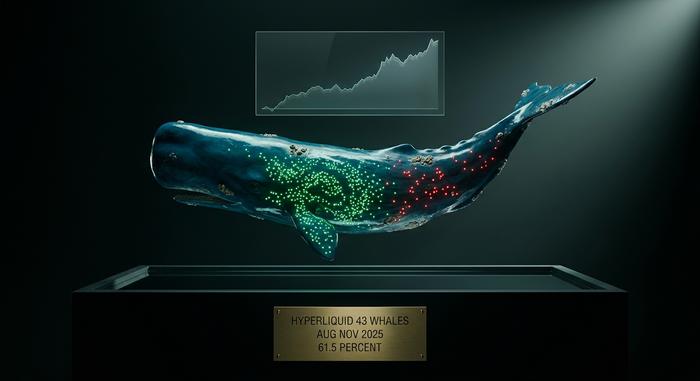
The myth around whale wallets is that you find one, copy the trade, and print. The reality is calibrated edge, not magic. A November 2025 study analyzed 43 whale addresses on Hyperliquid across August through November of that year, 7,716 trades in total. The whales were profitable on 4,744 of them, or about 61.5%. That is a meaningful win rate, well above coin-flip, but 38.5% of those trades still lost money. A retail trader copying without sizing discipline can easily blow up on the loss tail.
Three things make whale-tracking genuinely useful when you do it right. First, entity labeling. Nansen's Smart Money tag and Arkham's ULTRA AI engine surface wallets that have already cleared a profitability filter; you are not picking randomly from anyone with a big balance. Second, real-time alerts. If a labeled fund opens a $40 million position on a token in a forty-minute window, you want a Telegram ping the moment the on-chain confirmation lands, not when CoinDesk writes about it three hours later. Third, position context. A whale buying ETH spot is a different signal than the same whale buying perp shorts on Hyperliquid; modern trackers display both side by side.
The risks are equally specific. Whales can front-run their own positions. They buy, they wait for the copy-trade reaction, they dump. Survivorship bias is everywhere in "smart money" lists; the wallets that look brilliant today were sometimes lucky. And the on-chain lag, while short, is non-zero. By the time you see the trade and click, the entry price has often moved against you. I keep coming back to the Hyperliquid numbers: a 38.5% loss rate is the price of admission. Treat whale-following as one input, not as a system.
Real-time analytics: alerts, PnL, and multi-chain widgets
The dashboard is the boring part of any wallet tracker. The interesting feature, especially as a wallet collection grows, is the alert layer, where custom alerts turn passive monitoring into proactive insight. A service like cryptocurrencyalerting.com supports notification routes through email, SMS, push, browser, webhooks, Slack, Discord, Telegram, and even phone calls, with triggers on balance changes, specific transaction sizes, or any movement on a watched address. Set one alert on each exchange hot wallet you care about and you have a personal compliance officer running in the background.
PnL analytics matter once you start trading rather than just holding. Cost-basis tracking, realized vs unrealized splits, and per-token return curves help you quickly assess performance across multiple chains and make informed decisions about DeFi investments. Multi-chain widgets, embeddable real-time prices and portfolio mini-dashboards, let traders pin live crypto data into their own monitoring stack without rebuilding it.
Privacy paradox: how trackers see your wallet balances
The same wallet tracker machinery that lets you watch a whale lets Chainalysis watch you. By 2025, the firm had clustered more than one billion wallet addresses into 107,000-plus named entities, and academic research that year found AI-driven deanonymization costs under $4 per attempt. At that price, mass attribution is no longer theoretical. The blockchain analytics market hit $2.45 billion in 2025 by 360iResearch's count, up to $4.4 billion by GII Research, and is on a 22% to 26% compound growth track through 2032. Somebody is paying for that: usually exchanges, governments, and compliance vendors.
What does that mean for an ordinary user? If you ever cashed out through a regulated exchange, every wallet you funded from that exchange is at minimum pseudonymous-to-them and almost certainly already labeled in commercial datasets. Stablecoin usage makes this worse: USDT and USDC together carried 84% of illicit on-chain volume in 2025, which is why the largest compliance budgets are focused on stablecoin trails. Sanctions evasion at industrial scale — Russia's A7A5 ruble-backed token moved an estimated $93.3 billion in under a year, per Chainalysis — drives even more aggressive labeling.
The defensive playbook is not exotic. Use fresh wallets for new activities rather than reusing one address for everything. Treat any wallet that has ever touched a KYC venue as effectively named. Mixer-style tools have their own legal and counterparty risks and are not a magic eraser. The honest framing is that wallet trackers and privacy tools have become an arms race, and most retail users started the race far behind.
Non-custodial safety and API token security
The single most common mistake is granting trade or withdrawal scope to a crypto portfolio tracker. There is no reason a CoinStats or CoinTracking integration needs anything beyond read permissions; a non-custodial tracker that asks for more should be treated as suspect. Rotate exchange API keys quarterly, lock them to specific IP ranges where the exchange supports it, and enable two-factor authentication on both the exchange and the tracker login. Never paste a seed phrase or private key into any portfolio tool, ever. Read-only platforms do not ask for them, and one that does is not a tracker, it is a wallet drainer.
The takeaway: wallet trackers as compliance infrastructure
Crypto wallet trackers crossed a threshold sometime in 2024 and there is no going back. A $2.45 billion analytics market growing 22% a year is not a hobbyist scene; it is compliance infrastructure that retail traders happen to share with regulators. Pick one product that matches the job you actually have, set alerts that match the events you actually care about, and accept that watching is now a two-way street. The open question for 2026 is how long until the same dashboards retail uses to find alpha get used by the IRS to find taxable events.