Ethereum Name Service (ENS): how .eth domains became Web3 identity
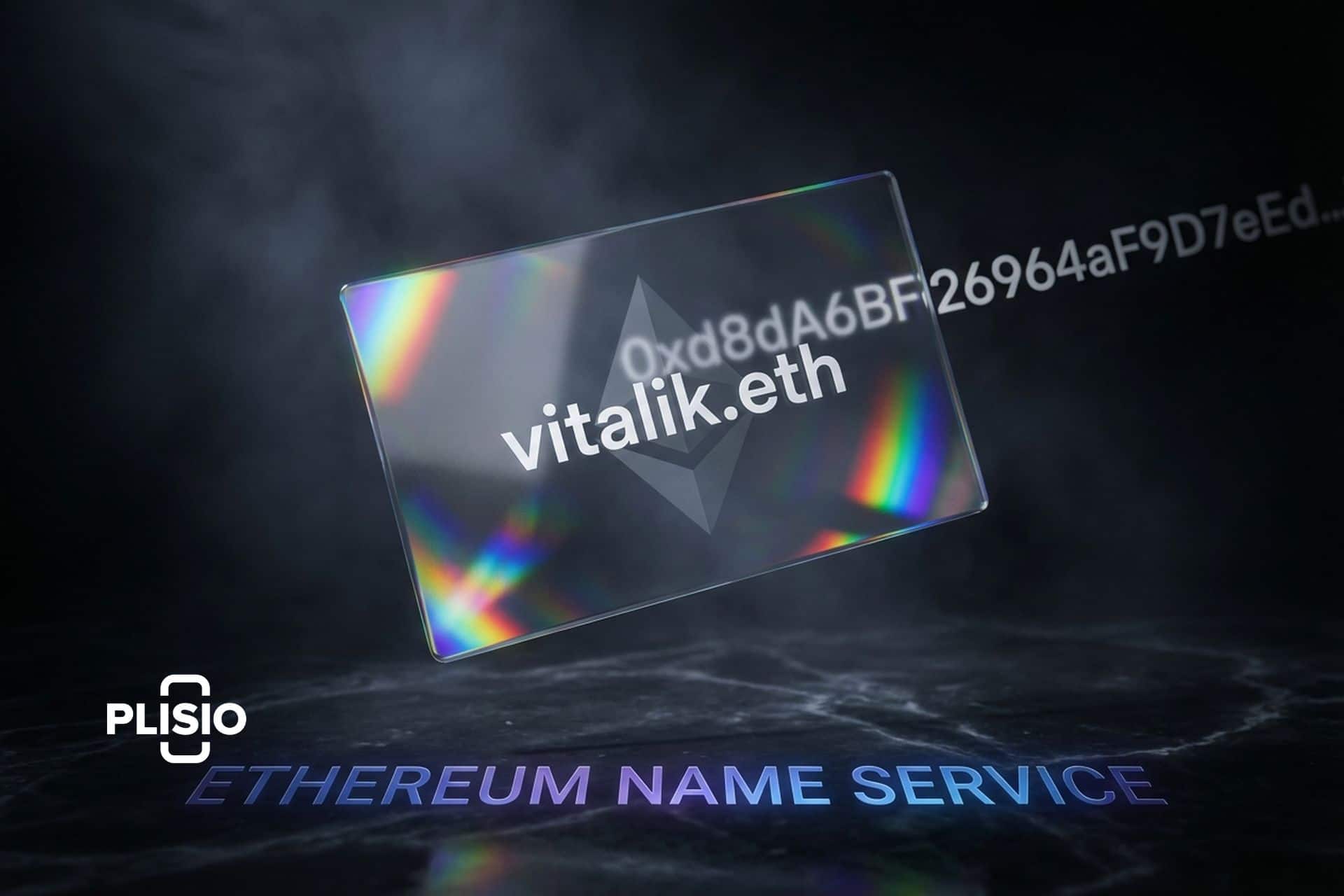
Quick test. Read this out loud: 0xd8dA6BF26964aF9D7eEd9e03E53415D37aA96045. That is Vitalik Buterin's Ethereum wallet address. Now read this: vitalik.eth. Same destination. One of them you will remember tomorrow. The other one you already forgot.
That is what the Ethereum Name Service does. It took the 42-character hex addresses that make crypto feel like a DOS command prompt and replaced them with names that actual humans can type, share, and remember. Send ETH to vitalik.eth in MetaMask and it arrives at the right wallet. No copy-paste gymnastics. No "did I get every character right?" anxiety when moving five figures between wallets.
Nick Johnson shipped the first version in 2017. Since then more than 2 million .eth names have been registered. The ENS governance token airdropped in November 2021 and made early adopters anywhere from hundreds to six figures overnight. ENS domains trade on OpenSea like any other NFT. People have paid hundreds of thousands for short .eth names the same way they paid millions for three-letter .com domains in the early internet. 000.eth sold for 300 ETH. And what started as a naming system is turning into something bigger: a decentralized identity layer where your .eth name is your profile, your wallet, your website, and your reputation across all of Web3.
I registered my first .eth name in 2022 for $5 plus gas. Two years later I use it more than any other crypto tool. Here is everything I wish someone had explained to me before I started.
How ENS works: the DNS of Ethereum
You know how the internet works. You type google.com and your browser figures out that "google.com" actually means the server at 142.250.80.46. DNS does that translation. ENS does the exact same thing, except instead of translating website names to server addresses, it translates .eth names to crypto wallet addresses, IPFS content hashes, and pretty much any other blockchain data you want to attach to a name.
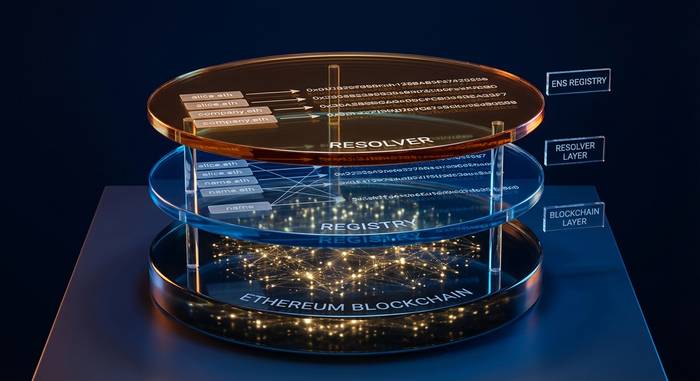
Under the hood, three smart contracts make this work on Ethereum.
The Registry is the master list. It tracks who owns which name and which resolver contract handles the lookups. Think of it as the address book's table of contents. It knows alice.eth belongs to wallet 0xABC... but it does not store where alice.eth actually points. That is somebody else's job.
The Resolver does the actual work. Someone types alice.eth into MetaMask? The resolver figures out which wallet address that name maps to. But resolvers are not limited to Ethereum addresses. You can attach a Bitcoin address, a Solana address, an IPFS website, your email, your Twitter handle. One ENS name becomes the anchor for everything about your online identity.
The Registrar handles the business side. Registration, pricing, renewal, the whole enrollment process for .eth domains.
| Component | What it does |
|---|---|
| Registry | Stores name ownership and resolver pointers |
| Resolver | Translates names to addresses and other records |
| Registrar | Manages .eth domain registration, pricing, renewal |
| ERC-721 NFT | Each .eth name is a tradeable NFT on Ethereum |
Here is what makes ENS different from a normal database: nobody controls it. There is no company that can revoke your name, change your records, or shut down the service. The smart contracts run on Ethereum, which means they run as long as Ethereum runs. Your .eth domain is yours until it expires and you choose not to renew it.
Subdomains are where ENS gets interesting for organizations. Own yourname.eth? You can spin up pay.yourname.eth, blog.yourname.eth, anything you want. Each subdomain can point somewhere different. A DAO might own project.eth and hand out member.project.eth to every contributor. Coinbase did something similar with cb.id names for their users. The parent domain owner controls the subdomains, which means companies can issue and revoke employee identities without touching the main registration.
The fact that ENS names are ERC-721 NFTs adds another layer. Your .eth domain lives in your wallet like any other token. You can transfer it, sell it on OpenSea, or use it as collateral in DeFi protocols that accept NFTs. This turns domain names into liquid digital assets, which is something traditional DNS never offered.
How to register an .eth domain name
Five minutes and a few bucks. That is all it takes.
Open app.ens.domains in your browser. Connect whatever Ethereum wallet you use: MetaMask, Rainbow, Coinbase Wallet, anything that supports WalletConnect. Type the name you want into the search bar. If nobody has taken it, the price shows up right there.
| Name length | Annual cost |
|---|---|
| 5+ characters | $5/year |
| 4 characters | $160/year |
| 3 characters | $640/year |
Gas fees add to the cost. On a busy day, registering a name might cost $10-30 in gas on top of the registration fee. On a quiet day, gas might be $2-5. The registration process requires two on-chain transactions (to prevent frontrunning), so you will confirm your wallet twice with a short wait between them.
Pick how long you want it. One year minimum. I registered mine for three years because I know myself and I know I will forget to renew. Pro tip: if your registration lapses and you miss the 90-day grace period, that name goes to auction and you lose it. I have seen people lose five-figure domain names because a renewal reminder landed in their spam folder.
After registration, set your resolver. The default resolver works for most users. Point the name to your wallet address so people can send crypto to yourname.eth. Add additional records if you want: Bitcoin address, social links, an IPFS website hash, or a profile avatar.
Your .eth domain is now an ERC-721 NFT in your wallet. You can see it on OpenSea. You can transfer it. You can sell it. Some three and four letter .eth names have sold for over $100,000. The secondary market for ENS domains is active but highly speculative.
The ENS token: governance, airdrop, and market data
The ENS token launched on November 8, 2021 with one of the most talked-about airdrops in crypto history. Anyone who had registered a .eth domain before October 31, 2021 received tokens based on how long they had held their domain and whether they had set it as their primary ENS name.
Some early registrants received thousands of ENS tokens. At the peak price of over $80, those airdrops were worth six figures. The token hit an all-time high of roughly $83.41 in November 2021, right after launch. Like most governance tokens from that era, it has traded well below that peak since then.
| ENS token data | Value |
|---|---|
| Token type | ERC-20 (governance) |
| Total supply | 100 million ENS |
| Airdrop allocation | 25% to .eth holders |
| DAO treasury | 50% (10% unlocked at launch, rest vested 4 years) |
| Contributors | 25% (4-year vesting) |
| Launch date | November 8, 2021 |
| Launch price | ~$51 |
| All-time high | ~$83.41 |
The token exists for one purpose: governance over the ENS protocol through the ENS DAO. Token holders vote on protocol changes, treasury spending, pricing adjustments, and ecosystem grants. The DAO treasury held hundreds of millions of dollars worth of ENS and ETH, making it one of the largest DAO treasuries in crypto.
Whether ENS is a good investment depends on your view of Web3 identity as a category. If .eth names become the standard way people identify themselves across Web3 applications, demand for the protocol grows and the governance token accrues value through protocol fees and treasury appreciation. If Web3 identity fragments across multiple competing systems, the thesis weakens.
The honest assessment: ENS has the first-mover advantage, the brand recognition, and the deepest integration across wallets and dApps. No competitor comes close on adoption. But governance tokens in general have struggled to maintain value because voting rights alone do not generate cash flow for holders.
ENSv2 and the Layer 2 future
Here is the thing nobody on the ENS team likes admitting: gas fees are killing casual adoption. You want a $5 name but Ethereum charges you $15 in gas to register it. That is three times the actual price of the product you are buying. Updating a record? Gas. Renewing? Gas. Setting an avatar? Believe it or not, gas. For power users who live on Ethereum, the cost is noise. For the next million people ENS wants to onboard, it is a wall.
ENSv2 is the plan to knock that wall down. Move the heavy lifting to Layer 2 networks where gas runs in pennies. Subnames (subdomains) can already be created gaslessly through offchain resolution using CCIP-Read, a cross-chain interoperability protocol that lets ENS resolvers fetch data from L2s or even offchain databases without putting every record on Ethereum mainnet.
This matters for adoption at scale. If a company wants to give 10,000 employees ENS subnames, the current gas costs make it impractical. With L2 subnames and offchain resolution, the cost drops to near zero per name. The resolution still happens through Ethereum's security model, but the storage and updates happen on cheaper infrastructure.
ENSv2 also expands multi-chain support. Your .eth name can already resolve to addresses on Bitcoin, Solana, Cosmos, and dozens of other chains. You set different addresses for different chains, and the resolver returns the right one depending on the context. One name, every chain. The same vision that NEAR calls "chain abstraction" shows up in ENS as multi-chain name resolution.
The ENS ecosystem is also working on more integrations with traditional DNS. ENS already supports .eth, and there has been work on allowing traditional DNS domain owners to claim their names in ENS. If you own yourname.com, you could potentially use it as an ENS name too, bridging Web2 and Web3 identity.
Nick Johnson said it best in a 2024 interview: "We want .eth to be as natural as .com." Bold claim. But look at the trajectory. Seven years ago .eth names were a novelty for Ethereum nerds. Today MetaMask auto-resolves them. Coinbase shows them. Etherscan displays them. dApps across the ecosystem treat them as first-class identities. The infrastructure is already there. Gas costs are the bottleneck, and ENSv2 is the answer.
I will say one honest thing about the ENS DAO though: governance participation is low. The treasury holds hundreds of millions in ETH and ENS tokens. Funding goes to development grants, integration partnerships, and public goods. Major votes shaped pricing changes and the ENSv2 roadmap. But the number of token holders who actually show up to vote? A tiny fraction of total supply. That is a problem every DAO faces. ENS is no exception, and the community talks about it openly, which is at least better than pretending it is fine.
ENS vs competitors: who else builds Web3 naming
ENS is not the only naming protocol in crypto, but it is the most established by a wide margin.
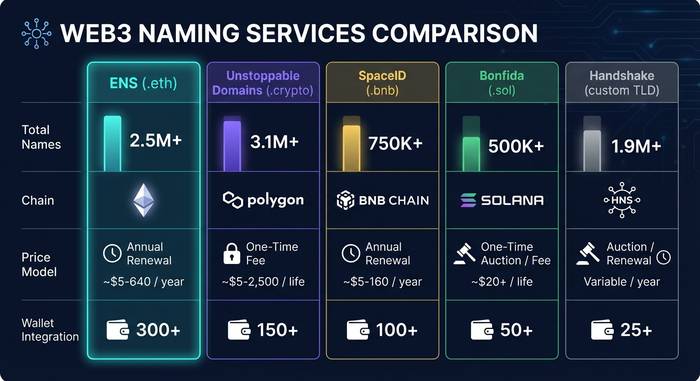
| Platform | TLD | Chain | Total names | Price | Key difference |
|---|---|---|---|---|---|
| ENS | .eth | Ethereum | 2M+ | $5-640/year | First mover, deepest integrations |
| Unstoppable Domains | .crypto, .x, .wallet | Polygon | 4M+ claims | One-time $5-40+ | No renewal fees (lifetime ownership) |
| SpaceID | .bnb, .arb, etc. | Multi-chain | 500K+ | Varies | Multi-chain native from start |
| Handshake | Custom TLDs | Handshake chain | Limited adoption | Auction-based | Decentralized root DNS |
| Bonfida (SNS) | .sol | Solana | 400K+ | ~$5+/year | Native Solana naming |
Unstoppable Domains claims more total registrations, but the comparison is complicated. Unstoppable gives away free names through promotional campaigns and charges a one-time fee instead of annual renewal. The no-renewal model means a lot of names sit registered but unused. ENS's annual renewal model means active names represent active users.
SpaceID took a multi-chain approach from day one, offering names on BNB Chain, Arbitrum, and other networks. It is growing but has not achieved the wallet and dApp integration depth that ENS has.
Integration is where ENS wins and nobody else comes close. I counted: MetaMask, Rainbow, Coinbase Wallet, Trust Wallet, Phantom (for Ethereum), and basically every wallet you have heard of resolves .eth names natively. Etherscan shows them next to addresses. OpenSea uses them as profile names. Uniswap, Aave, and hundreds of dApps recognize .eth out of the box. Unstoppable Domains has been fighting for that same level of integration for years and still has not matched it. That moat took ENS half a decade to build. Catching up is not a matter of money. It is a matter of time and trust.
What you can actually do with an ENS domain
Beyond replacing wallet addresses, ENS domains serve as a broader Web3 identity layer.
Receive crypto from anyone. Give someone your .eth name instead of a 42-character address. Works for ETH, ERC-20 tokens, NFTs, and with multi-chain resolution, even Bitcoin and Solana.
Host a decentralized website. Point your ENS name to an IPFS hash and you have a censorship-resistant website. Access it through browsers that support ENS resolution or through gateways like eth.limo. No server, no hosting bill, no one can take it down.
Build a Web3 profile. Set an avatar, add social links, write a bio. Your ENS name becomes your identity across dApps, DAOs, and Web3 social platforms. Farcaster, Lens Protocol, and other decentralized social networks recognize ENS names.
Trade domains as NFTs. Every .eth name is an ERC-721 token. List it on OpenSea, LooksRare, or any NFT marketplace. Three-letter names, dictionary words, and numbers have active secondary markets. 000.eth sold for 300 ETH. brantly.eth, a common first name, sold for substantial sums. The domain market is real but volatile.
Issue subdomains to a community. DAOs give members DAO-name.eth subdomains. Companies issue employee subnames. Projects create membership identities. Subdomains are free to create (gas costs only) and can be revoked by the parent domain owner.