Coinbase Withdrawal Code Text: Understanding the Scam and How to Stay Safe
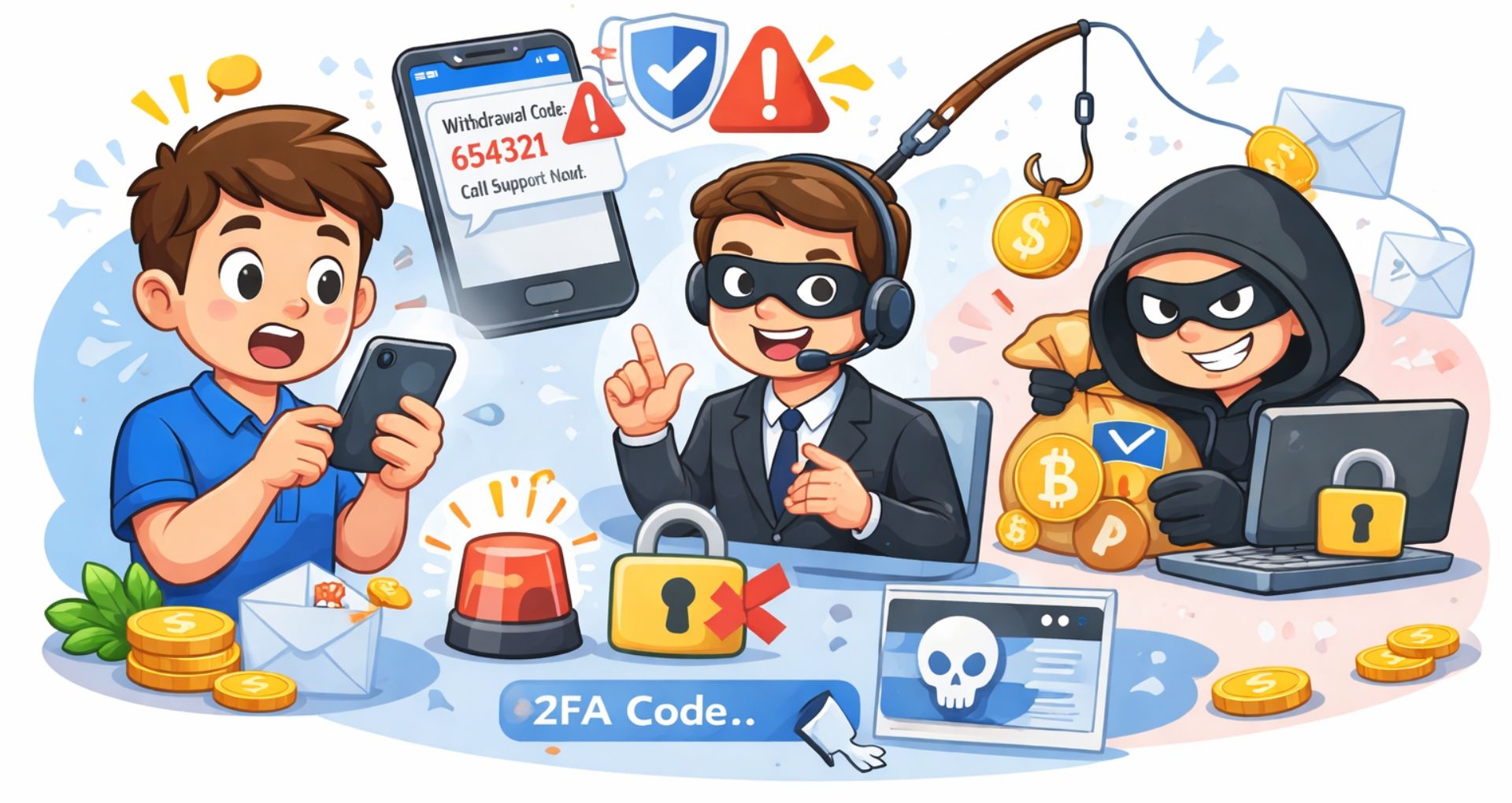
Cryptocurrency platforms have become prime targets for cybercriminals, and users of popular exchanges are increasingly encountering fraudulent messages. One common threat is the coinbase withdrawal code text scam — a deceptive tactic that attempts to trick people into revealing sensitive information or contacting fake support agents.
Understanding how this scheme works can help users recognize warning signs and protect their digital assets.
What Is the Coinbase Withdrawal Code Text Scam?
The coinbase withdrawal code scam typically begins with an unexpected text message sent to a victim’s phone. The message claims that a withdrawal from a coinbase account is being processed and includes a one‑time withdrawal code or verification code.
The message often looks something like this:
"Coinbase: Your withdrawal code is 673456. If you didn’t request this, call our support immediately."
At first glance, the alert appears legitimate. However, it is usually part of a phishing attempt designed to manipulate users into contacting a scammer or visiting malicious websites.
These fake texts are part of a new sms scam targeting people involved in cryptocurrency trading. Attackers send thousands of messages hoping some recipients will panic and respond.
When victims call the number provided, they often reach someone claiming to be from coinbase customer support. The person may ask for confidential personal information, login credentials, or 2fa codes, which are then used to access accounts and steal funds.
How the Scam Works
The coinbase scam text uses psychological tricks. Attackers create a sense of urgency by suggesting that unauthorized activity is happening. The victim fears moving your funds or losing them, so they act quickly.
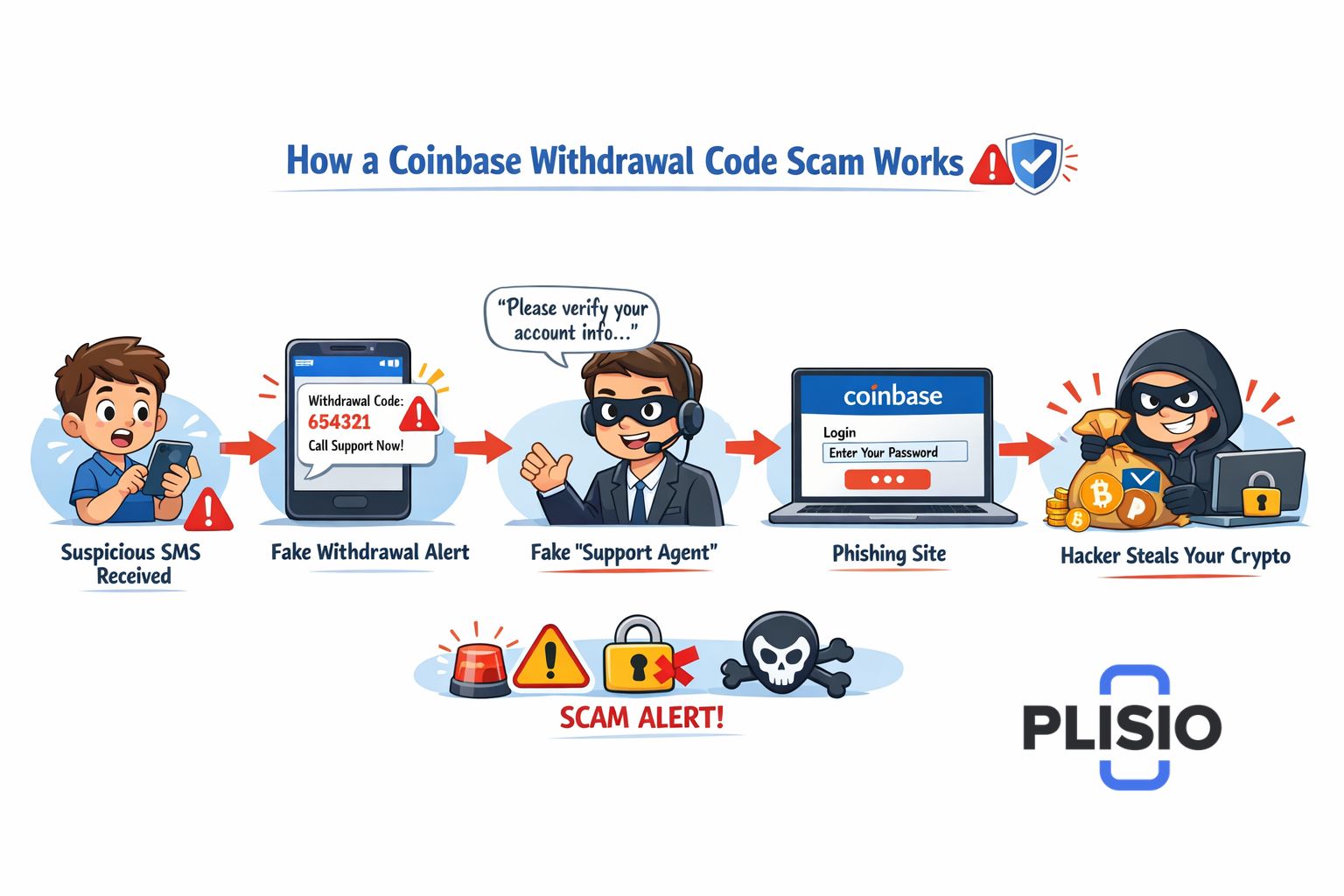
Here is the typical sequence of the attack:
- A user receive a text with a suspicious sms alert about a withdrawal.
- The message contains a fake withdrawal code and a phone number to call.
- The victim calls and reaches a customer service call impersonator.
- The attacker asks for entering their login credentials, passwords, or 2fa verification codes.
- Once access is obtained, the scammer transfers assets or asks the victim to send cryptocurrency to external addresses.
Authorities warn that the scam seems convincing because the message was sent from a normal phone number and may include reference numbers or official‑looking wording.
Example of a Coinbase Scam Text
Below is a typical scam text used in many phishing attacks.
|
Element |
Example |
|
Sender |
Unknown phone number |
|
Message |
“Coinbase: OTP for your withdrawal is 736191. If this was not you, call us immediately.” |
|
Goal |
Create panic and push the user to call a fake support line |
|
Result |
Victim shares login credentials or security codes |
Security researchers say many of these fraudulent message campaigns use bulk messaging systems to reach thousands of victims at once.
Why These Phishing Messages Are Dangerous
These attacks rely on phishing message techniques. Phishing sites are malicious websites that imitate legitimate services.
In many cases, attackers also send links to malicious websites which mimic the real exchange interface. These websites which mimic an authentic platform are designed to mimic an authentic site and steal credentials.
The attack process typically works like this:
|
Stage |
Description |
|
Message Delivery |
Victim receives a phishing text in a message claiming suspicious activity |
|
Fake Website |
Link directs the user to a page designed to mimic an authentic site |
|
Credential Theft |
The site exists in order to trick victims |
|
Data Capture |
The system tries trick visitors into entering credentials |
|
Account Access |
Attackers obtain entering their login credentials |
These malicious websites which mimic official platforms exist site in order to trick users and gain access to accounts.
How to Spot a Coinbase Phishing Attempt
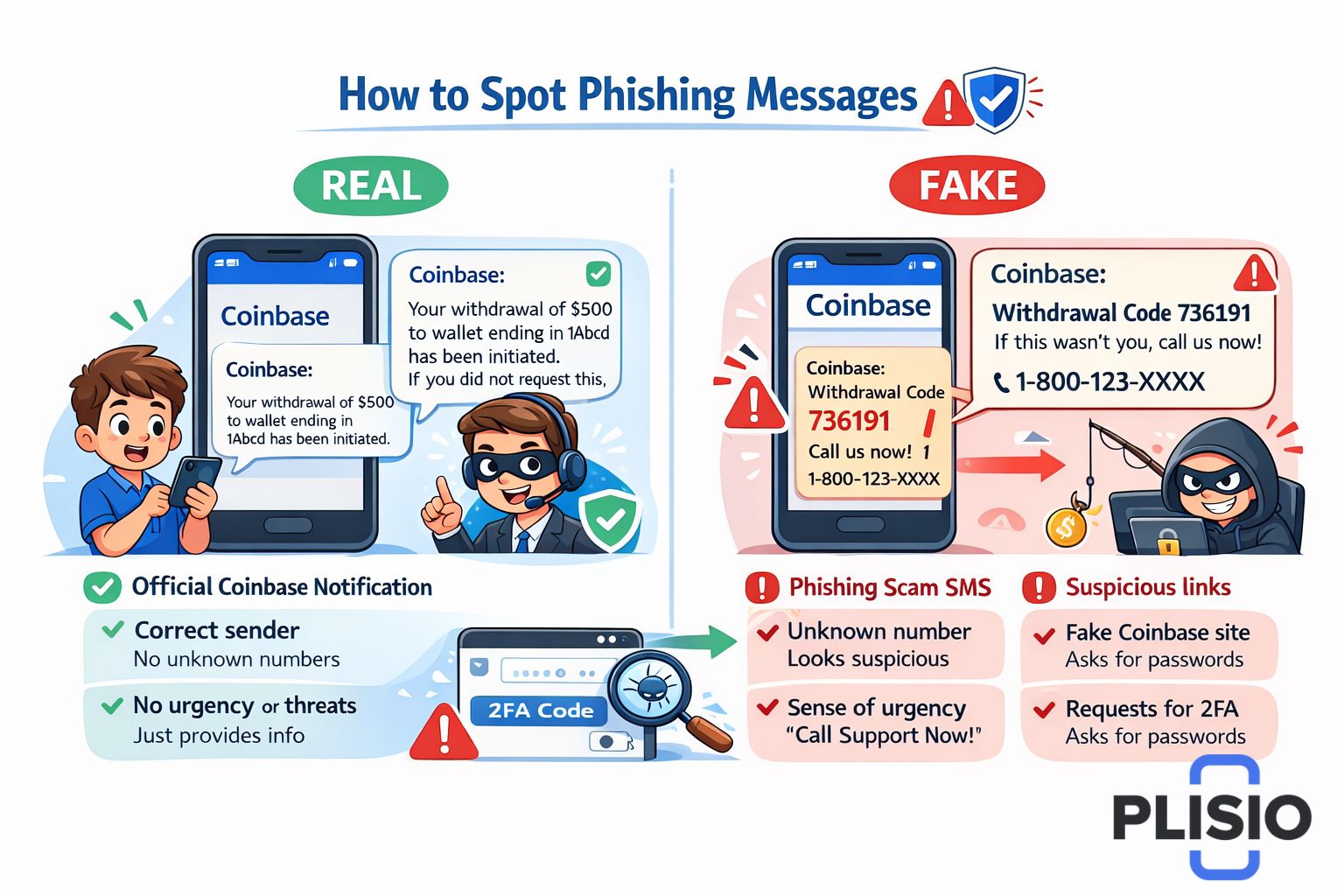
A legitimate exchange takes security seriously. According to official security guidance, coinbase will never request passwords, private keys, or verification codes through messages.
Some common red flags include:
- A phishing text from an unknown number.
- Messages claiming to be from coinbase but asking for sensitive data.
- Requests to share 2fa codes.
- Links that do not lead to the official coinbase domain.
- Messages pressuring you to act quickly.
Remember that coinbase will never ask users to provide login credentials or verification codes through text.
In fact, coinbase will never text you requesting security information or telling you to transfer funds.
What Coinbase Customers Should Do
If coinbase customers receive a suspicious message, security experts recommend several steps.
- Do not reply or call the number.
- Do not click links in the phishing message.
- Check your coinbase account directly using the official website or app.
- Enable strong authentication such as app‑based 2fa.
If you encounter suspicious messages, report them to the security team.
How to Report a Coinbase Scam
If you get a coinbase withdrawal code text, reporting it helps stop attackers.
- Take a screenshot of the phishing text.
- Send the screenshot in a message to [email protected] or directly email [email protected].
- Forward the sms content to 7726, a service used by a us-based cell phone network to fight spam.
This service is free and allows mobile carriers to detect suspicious activity. It helps carriers to detect and block threats and stop malicious messages on their network.
Reporting helps investigators detect and block malicious messages before they reach more victims.
Some people also report scams to local law enforcement or a county sheriff's office if they believe financial fraud occurred.
Best Ways to Avoid Phishing
Security specialists highlight several best ways to avoid phishing and protect your funds.
- Always make sure you're accessing the correct website before entering data.
- One of the best ways to avoid phishing sites is bookmarking the real platform.
- The safest practice regarding phishing sites is to always verify URLs manually.
- Experts say the rule for suspicious sites is to always make sure the domain matches the real service.
Attackers sometimes support phone lines and impersonate companies, including coinbase, to convince users they are legitimate.
Because of this, users should stay alert and only contact coinbase through official channels if they need more help from customer support.
Final Thoughts
The coinbase withdrawal code scam highlights how cybercriminals adapt to the growing popularity of crypto services. By sending convincing sms alerts, attackers attempt to steal funds or gain access to accounts.
A simple rule helps prevent most attacks: coinbase staff will never request passwords, private keys, or authentication codes through messages.
If you ever receive this call or a suspicious text, treat it as a scam alert. Verify the situation directly through the official website before taking any action.
Remaining cautious when dealing with cryptocurrency transactions — especially unexpected messages — is one of the strongest defenses against digital fraud.