
USDT Transfer Fee in 2026 : Cost to Send Tether USD

Sending $1,000 in Tether USD can cost you two cents on one blockchain and fifteen dollars on another. Same token, same amount, same second. The only thing that changes is the network.
That is the single most confusing thing about USDT for newcomers, and the single most underrated cost among cryptocurrencies for regular senders. Tether processed over $28 trillion of transaction volume on Tron alone in the first quarter of 2026, according to CoinDesk's Tron Network Q1 2026 report. Most of those transfers settled for a dollar or less. At the same time, somebody somewhere paid $15 in Ethereum gas to move the same USDT token because they picked the wrong rail.
This guide breaks down exactly how much does it cost to send USDT in 2026 across every major blockchain, what actually drives the numbers, and how to avoid the two most common mistakes that burn money on every transfer. The price of sending Tether USDT is one of the most misunderstood line items in crypto, and the cost you end up paying can shift by several orders of magnitude depending on choices made in the first ten seconds of the send flow.
Why USDT transfer fees vary across crypto networks
Here is what confuses people. USDT is not one thing. It is the same digital currency, shipped natively on a dozen different rails: Ethereum, Tron, Solana, BNB Smart Chain, Polygon, Avalanche, TON, Aptos, Arbitrum, Optimism, Near, Algorand and more. Each of those rails has its own fee auction. Its own congestion. Its own native gas token.
So when you tap "send" in your wallet, Tether is not the one charging you. The blockchain is. Tether Ltd., which launched in 2014 on roughly $4 million in funding, takes zero on the transfer itself. The company earns its revenue elsewhere, mostly on Treasury yield. The number you see before you confirm is the cost of getting your send included in a block on whichever chain you picked.
Three moving pieces drive the fee on any given chain, and a higher fee reading almost always ties back to at least one of them:
- The blockchain protocol itself. A slow, proof-of-work-style network costs more per operation than a high-throughput chain built from day one for cheap transfers.
- Network congestion: how many other people are fighting for block space right now. During periods of high demand, gas prices spike fast and nothing in your wallet can stop it.
- Transaction complexity. A plain USDT send is cheap. A swap is more expensive. A leveraged DeFi trade eats gas.
Sitting on top of all that is a second layer: the wallet or exchange you are sending from. A self-custodial wallet like MetaMask charges you only the gas fee. An exchange bolts on its own withdrawal markup, and that markup is often bigger than the on-chain cost. We will get to the numbers in a second.
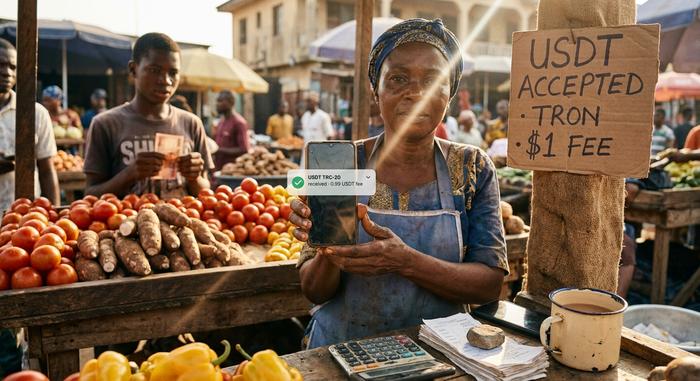
USDT transfer fee comparison: 12 blockchains in 2026
So what do the numbers actually look like? Here they are. These figures are for a plain on-chain transfer between two normal wallets. No DeFi, no bridge, no exchange markup. Just the raw cost of a USDT send on each chain, pulled in mid-April 2026.
| Network | Typical USDT transfer fee | Confirmation time | Native gas token | Notable in 2026 |
|---|---|---|---|---|
| Tron (TRC-20) | $1.44 – $2.89 (rented energy); near zero if sender stakes TRX | ~3 seconds | TRX | Hosts ~46% of USDT by market-cap share |
| Ethereum (ERC-20) | $0.20 – $2.00 typical; can spike above $10 | ~12 seconds | ETH | Post-Dencun gas collapsed to record lows |
| BNB Smart Chain / Binance Smart Chain (BEP-20) | $0.05 – $0.50 (avg ~$0.10) | ~3 seconds | BNB | Still the cheap CEX-friendly option |
| Polygon PoS | $0.0005 – $0.002 | ~2 seconds | POL | Fractions of a cent, reliably |
| Solana (SPL) | $0.0001 – $0.0005 | ~1–2 seconds | SOL | Highest throughput stablecoin rail |
| Arbitrum One | $0.005 – $0.20 | ~1–2 seconds | ETH | Native USDT0 with direct exchange support |
| Optimism | $0.01 – $0.30 | ~2 seconds | ETH | Comparable to Arbitrum after Dencun |
| Avalanche C-Chain | Under $0.10 | ~1–2 seconds | AVAX | Steady, low-variance fees |
| TON (The Open Network) | $0.01 – $0.05 (zero in Telegram contacts) | ~5 seconds | TON | Fast growth via Telegram integration |
| Aptos | Under $0.01 | ~1 second | APT | Tether promised sub-penny fees at launch |
| Near Protocol | Under $0.01 | ~1.2 seconds | NEAR | Sub-second blocks after 2025 upgrade |
| Algorand | ~$0.0002 (fixed 0.001 ALGO) | ~3 seconds | ALGO | Fee is protocol-set, not market-driven |
Two things jump out. You are looking at three orders of magnitude of difference between the cheapest row and the most expensive. And yet the two "expensive" rails, Tron and Ethereum, still host nearly all of the USDT supply and almost all of the daily volume. That paradox is what this guide is really about.
How network fees work behind every USDT transfer
Every USDT transfer, at the protocol level, is just a token move inside a smart contract. The blockchain does not care that your token happens to be a stablecoin. It charges you for computation, measured in whatever unit that chain happens to use.
On Ethereum and its Layer 2s, that unit is gas. Gas is priced in gwei (one billionth of an ETH). A plain USDT transfer burns roughly 65,000 gas. Multiply 65,000 × gwei price × current ETH price, and there is your fee in dollars. Speed and fee move together too: pay a higher fee and your tx lands in the next block. Pay less and you might wait. When Etherscan's tracker reads 0.5 gwei and ETH sits at $3,000, a USDT send runs roughly $0.10. At 30 gwei? Closer to $6 for the same transaction.
On Tron, gas is called energy (and bandwidth, for small send data). You can burn TRX on the fly to pay, or you can stake TRX up front and earn free energy forever. A first-time send to an empty USDT wallet eats 130,000 energy. Repeat sends to an already-active wallet cost 65,000. TRON proposal #104, which passed in August 2025, halved the energy unit price from 210 sun to 100. That cut a standard burn-pay USDT send from about 27 TRX down to 13.
On Solana, every transaction pays a flat base fee of 5,000 lamports, which is roughly $0.001 at current SOL prices. You can optionally tack on a priority fee to push through. Algorand takes a different route entirely: the fee is fixed at the protocol level (0.001 ALGO, every time), no auction. TON floats its gas market but keeps a simple Jetton send firmly in the fraction-of-a-cent range.
So the practical rule: any time you see a USDT fee quoted somewhere, ask two questions. Which chain? And what was gas doing in the ten minutes around that quote? Two quotes for the "same" transaction can differ by 10,000x on the same day.
TRC-20: the cheapest way to send USDT in 2026
Tron still dominates retail-sized USDT transfers. A CoinDesk research report on Tron's Q1 2026 performance found the network holding a 78% share of peer-to-peer users and 56% of sub-$1,000 retail transfers globally. The reason is not branding. It is economics.
TRC-20 USDT has two cost paths. If you stake TRX for energy (a reversible deposit, not a burn), your transfers are effectively free after the initial setup. If you pay per transaction, you either burn TRX directly or rent energy from marketplaces like Tronsave or Energy Market. As of January 2026, renting 65,000 energy costs about $1.44, and renting 130,000 energy for a fresh-wallet transfer runs about $2.89.
That is more expensive than the literal gas on Polygon or Solana. But it is far cheaper than Ethereum during any period of network congestion, and Tron gives you two things the cheaper chains often cannot: deep liquidity at most exchanges and near-universal merchant acceptance. Binance's 2026 withdrawal schedule lists TRC-20 USDT at $1.00, one of the lowest withdrawal fees of any supported network.
Tron's trade-offs are real. It is more centralized than Ethereum. Tether froze $182 million across five Tron addresses in early 2026, part of a wider 2025 crackdown in which Tether blacklisted 4,163 addresses and destroyed $698 million of frozen USDT. If you care about censorship resistance more than fee efficiency, Tron may not be your rail. If you want a cost-effective way to transact between wallets every day, it still is.
ERC-20 USDT transactions after Ethereum's Dencun
The Ethereum USDT fee story in 2026 looks very different from 2021. The Dencun upgrade in March 2024 introduced blob transactions, which dramatically cut the cost of Layer 2 data settlement. L2s then pulled most small-transfer activity off of mainnet. The result: Ethereum itself got much cheaper.
Average Ethereum gas hit a record low of 0.067 gwei in November 2025, according to a CoinLedger analysis of 2020–2025 fee data. A simple swap that cost $86 before Dencun averaged $0.39 that month. Record-low periods have continued into 2026. During quiet hours, a plain USDT transfer on Ethereum can settle for $0.20 or less.
The catch is that Ethereum fees remain volatile. Major real-world-asset tokenization events in 2025 briefly pushed average gas to $8.50. A congested afternoon can still make ERC-20 USDT the most expensive option on this list. The historical all-time peak was $53.16 in average per-transaction fees on May 10, 2021.
ERC-20 USDT is still the institutional default. It has the deepest DeFi integration, the widest exchange support, the most audited smart-contract infrastructure. Tether claims ERC-20 remains the single largest USDT host by dollar value. For transfers above $10,000, a few dollars of gas is negligible. For transfers under $100, it is 5–20% of the amount sent.
Low-fee USDT networks: Solana, Polygon, TON, Aptos
The cheapest USDT rails in 2026 all share a design choice: they were built for high throughput from day one. On these networks, the network fee is not a meaningful line item.
Solana settles USDT transfers in around one second for fractions of a cent. CoinDesk research on Q1 2026 stablecoin activity puts Solana's share of global stablecoin transfer volume at roughly 8%, the largest of any non-Tron, non-Ethereum chain. Exchange support is now broad: Binance lists Solana USDT withdrawal at $0.50, the cheapest fee in their USDT menu.
Polygon PoS stays reliably in the fractions-of-a-cent range. A standard USDT transfer costs around $0.001. Polygon's trade-off is slightly longer confirmation compared with Solana, but the network rarely congests under normal load.
TON has become the stablecoin backbone of Telegram. A Jetton USDT transfer costs a few cents; transfers between Telegram contacts are free. TON is now one of the widely used stablecoins networks for everyday messaging-layer payments, particularly in emerging markets where Telegram is the default consumer app.
Aptos and Near Protocol both deliver sub-penny USDT fees. When Tether issued its digital tokens as USD₮ on Aptos in August 2024, the announcement promised "gas fees below $0.01 per transfer." The Aptos network still delivers that number in 2026, thanks to parallel execution and sub-second finality. Near completed a mainnet upgrade in May 2025 that cut block time to 600 ms, which translates into fast, cheap transfers but limited exchange support compared with Tron or Solana.
The honest caveat: these networks are cheap, but exchange support for small-cap chains is uneven. Confirm your destination wallet and your exchange both support the specific chain before transferring.
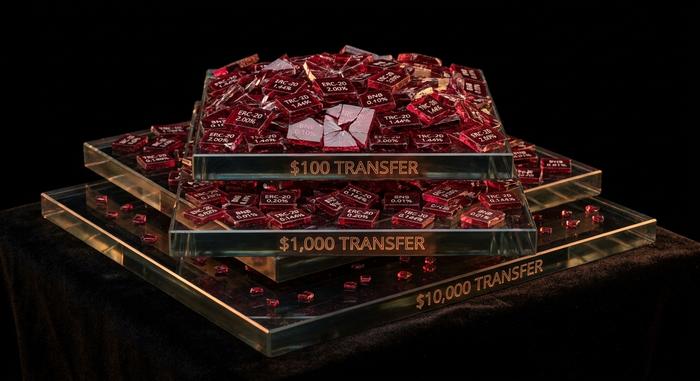
Layer 2 USDT transfers on Arbitrum and Optimism
Layer 2 networks are the middle ground. They settle on Ethereum for security but charge fees closer to Solana than to ERC-20 mainnet. A USDT transfer on Arbitrum One typically runs $0.005 to $0.20. On Optimism, $0.01 to $0.30. Both are well below Ethereum mainnet under congestion and competitive with BNB Smart Chain under most conditions.
Arbitrum supports native USDT0 (a canonical, multi-chain version of USDT), with direct deposit and withdrawal to Binance, Kraken and several other exchanges. That removed the biggest historical barrier to L2 stablecoin adoption, namely that users used to need to bridge USDT manually to get in and out.
The practical L2 decision is less about fees today and more about where the rest of your assets live. If you already hold DeFi positions on Arbitrum, sending USDT there means no bridge. If you are moving USDT between two centralized exchanges that support native Solana or Tron, a Layer 2 is overkill.
Exchange USDT withdrawal fees: Binance to Kraken
And now we hit the part where the table above collides with how most people actually use USDT. The vast majority of sends do not go wallet-to-wallet. They go "withdraw from exchange to wallet", or "withdraw from exchange to another exchange". Exchange withdrawal fees are set by the platform, not by the chain. They are almost always higher than the raw on-chain fee, because the platform quietly pockets the spread.
| Exchange | TRC-20 | ERC-20 | BEP-20 | Solana | Arbitrum | Polygon |
|---|---|---|---|---|---|---|
| Binance | $1.00 | $1.00 (up to $10–25 during congestion) | $0.29 | $0.50 | $0.60 | $0.80 |
| Coinbase | Under $1 | $10–$20 in congestion; lower post-Dencun | Supported | Supported | Supported | Supported |
| Kraken | ~1 USDT | 10–20 USDT in congestion | Not supported | ~1 USDT | ~0.60 USDT | ~1 USDT |
| OKX | ~1 USDT | $3–$10 variable | $0.29 | ~$1 | ~$0.30 | ~$0.80 |
| KuCoin | 2.5 USDT | 25 USDT | 1 USDT | 1 USDT | 1 USDT | 5 USDT |
These figures float with on-chain gas. Treat the table as an April 2026 benchmark, not a locked quote. The pattern is hard to miss though: the exchange adds a premium over raw gas, and that premium gets proportionally bigger on the chains where gas is basically free. Binance charges $0.50 to withdraw USDT on Solana. The Solana network itself collects $0.0003. Do the math: that is a 1,600x markup.
If you are moving USDT often, picking the right exchange matters more than picking the right chain. A $0.70 difference on a single withdrawal does not sound like much. Multiply it by a month of contractor payouts or business transfers, and you are paying for a nice dinner.
The real cost of using USDT at every transfer size
Here is a detail that trips up beginners. Network fees are flat per transaction. They do not scale with the amount you send. Send $10 or send $10,000, the gas is the same. That is why the percentage cost collapses as your transfer gets bigger, and it is also why the "best" network flips depending on how much money you are actually moving.
| Network | Typical fee | % cost of $100 | % cost of $1,000 | % cost of $10,000 |
|---|---|---|---|---|
| Tron (rented energy) | $1.44 | 1.44% | 0.144% | 0.014% |
| Ethereum (typical 2026) | $2.00 | 2.00% | 0.20% | 0.02% |
| BNB Smart Chain | $0.10 | 0.10% | 0.010% | 0.001% |
| Polygon | $0.001 | 0.001% | 0.0001% | 0.00001% |
| Solana | $0.0003 | 0.0003% | 0.00003% | 0.000003% |
| Arbitrum | $0.05 | 0.05% | 0.005% | 0.0005% |
| TON | $0.02 | 0.02% | 0.002% | 0.0002% |
| Aptos | Under $0.01 | <0.01% | <0.001% | <0.0001% |
Three reads of this table:
- For retail sends under $500, the chain you pick matters more than the amount you are sending. A $100 ERC-20 transfer at $2 in gas eats 2% of the transfer. That is worse than most cross-border wire fees, and you still have not paid the exchange's withdrawal markup on top.
- For $10,000-and-up whale transfers, every on-chain fee becomes rounding error. Institutions default to ERC-20 for liquidity and the audit trail. The fee math supports that choice. Nothing else in this table matters to them.
- For repeated payments (payroll, subscription flows, remittances), it is fee × frequency that bites. One hundred $50 payouts on ERC-20 can cost more in gas than the underlying payroll itself. Think of the percentage on each payment, not on the batch.
How to minimize your Tether USD transaction fees
A few moves, in rough order of how much money they save:
Pick the right chain for the amount. Under $500, avoid ERC-20 unless you specifically need Ethereum integration. Solana, Polygon and TON are almost always better for small transfers. Between $500 and $10,000, Tron still offers the best balance of cost, liquidity and support.
Pre-stake where you can. If you use Tron every week, staking TRX for energy eliminates per-transaction cost entirely after the initial setup. The stake is reversible; you get your TRX back.
Compare the exchange, not just the chain. A $2 difference in exchange withdrawal fees dwarfs the on-chain cost on Solana or TON. Binance, OKX and Bitget typically come in cheapest on USDT withdrawals; premium exchanges like Gemini often charge twice as much.
Time Ethereum transfers. Gas prices have daily and weekly cycles. Etherscan's gas tracker shows cheaper fees on weekends and during US off-hours. A simple cost-to-send delay of six hours can cut a congested ERC-20 fee in half.
Batch when possible. If you are paying five contractors, sending one batch transaction on an appropriate chain (via a smart-contract disperser on Arbitrum, for instance) costs far less than five separate transfers. Some wallets expose this natively.
Use a dedicated USDT wallet. MetaMask, Trust Wallet and TonKeeper charge only the underlying gas fee. Exchange-based "send" buttons usually bundle a withdrawal fee on top, even when you are sending from exchange to exchange.
Common mistakes when sending USDT between chains
Two mistakes account for most lost USDT in 2025 and 2026. Both are avoidable.
Sending to the wrong network. This is the single most common way to lose money with USDT. If you send TRC-20 USDT to an ERC-20 address (or vice versa), your tokens land at an address that technically exists but is not controlled by the recipient on that chain. Recovery is sometimes possible through an exchange, usually not. Always confirm the network your recipient's wallet supports before the transaction is confirmed.
Underestimating the gas buffer. On Ethereum and its L2s, you need enough ETH in the sending wallet to cover gas, not just USDT. A wallet holding $500 USDT but zero ETH cannot transfer anything. On Tron you need TRX or staked energy. Many first-time users buy a stablecoin and no native gas token, then cannot move their funds. Keep a small buffer of the network's native coin in every wallet you use.
A few second-tier mistakes:
- Using exchange-to-exchange transfers on ERC-20 during congestion, when the same send on Solana or Arbitrum would cost 95% less.
- Sending very small amounts on chains that have a transaction minimum.
- Ignoring the fact that Tether can freeze USDT at any time on any supported chain. Tether's 2025 blacklist operations froze $1.26 billion across 4,163 addresses, according to BlockSec's published analysis.
USDT transfer fees: the practical takeaway
USDT is the most widely used stablecoins on the planet, with $187 billion circulating as of April 2026 and daily trading volume often on par with Bitcoin itself. But the cost of moving that token is one of the most variable numbers in crypto, a factor of 10,000 between the cheapest and most expensive rails.
The short version: for any transfer under $10,000, pick your chain based on the amount and the recipient's wallet. Tron for high-frequency retail. Solana, Polygon, TON or Aptos for near-zero-fee sends. Ethereum for institutional or DeFi-heavy flows. And always match the network on both ends before you hit confirm.



