How to Create a Meme Coin: Step-by-Step Guide
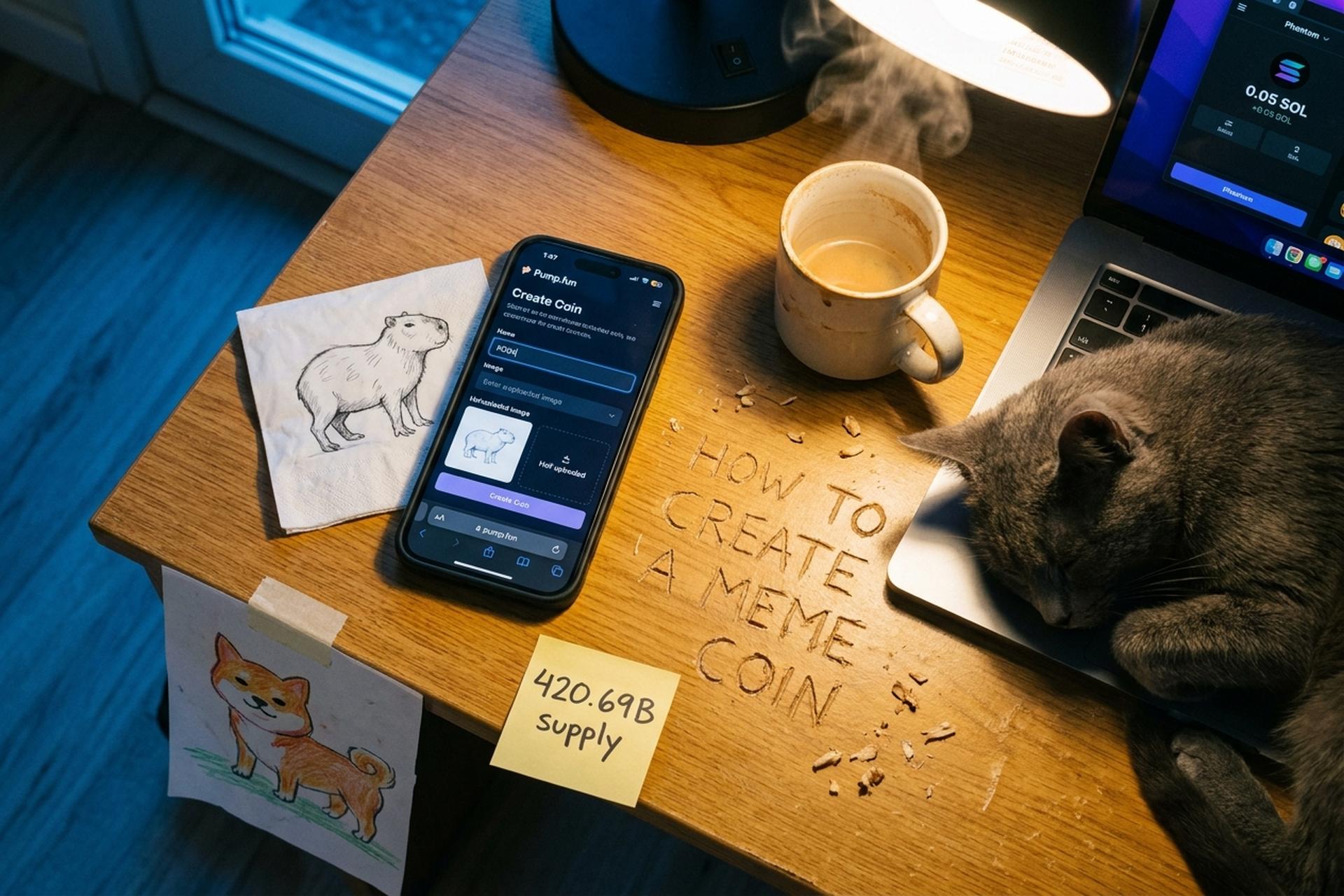
Picture this. March 2025. A Peruvian capybara meme starts trending. Someone spins up a token. In 72 hours it's worth half a billion dollars. By Friday, most of that is gone. Repeat this story thousands of times a month and you have the shape of the meme coin market today, which is why people keep asking the same question: how to create a meme coin, and do it without getting rugged, sued, or laughed out of the room.
This is a practical, step-by-step guide for beginners. We'll cover what a meme coin actually is, which blockchain to pick, and how to launch a memecoin on Pump.fun or as a Solana-based or Ethereum ERC20 token. We'll also cover costs, the scam patterns to avoid, the legal lines you don't want to cross, and what early marketing actually looks like in 2026. No prior coding needed. A few honest warnings along the way.
What Is a Meme Coin and Why They Matter
A meme coin is a cryptocurrency inspired by internet humor: a joke, a cartoon animal, a pop culture moment, or whatever's trending online. It doesn't try to solve a problem. Utility tokens and other cryptocurrencies power apps and protocols; meme coins live off attention, humor, and story. The coin itself is just a standard token on a blockchain. What makes it a meme coin is the narrative people attach to it. Market capitalization in this category is really a function of how loud and sticky that story gets.
Dogecoin started the category on December 6, 2013, when Billy Markus and Jackson Palmer forked Litecoin and slapped a Shiba Inu on it as a parody; within 30 days the site had over 1 million visitors. Shiba Inu followed in August 2020 with an initial 1 quadrillion token supply, adding its own decentralized exchange and NFT ecosystem. PEPE launched on April 14, 2023 with no roadmap, a fixed supply of 420.69 trillion tokens, and hit a $1.6 billion market cap within three weeks. BONK launched on Christmas Day 2022 with 50 percent of its supply airdropped to Solana developers, NFT collectors, and traders. Dogwifhat (WIF) followed in November 2023 on Solana with no presale and no team allocation.
Where are we now? As of April 2026, CoinGecko puts the meme coin category at about $38 billion in combined market cap. That's way down from the November 2024 peak near $150 billion. The top names on 2026-04-24: Dogecoin at $15.15 billion, MemeCore at $5.95 billion, Shiba Inu at $3.67 billion, PEPE at $1.62 billion, and Pump.fun's own PUMP token at $1.07 billion. Even post-correction, this sector is larger than most DeFi subcategories.
So why do they matter? Meme coins are the loudest on-ramp to crypto for new retail users. They're fun. They're cheap to trade. And they show, in the clearest way possible, how markets price pure narrative. The best ones blur the line between a joke and a real use case. BONK became a pillar of Solana's recovery after FTX. WIF paid for a Las Vegas billboard. But meme coins also expose the significant risks involved in speculative crypto: extreme volatility, rug pulls, and coins that lose 95 percent inside a week. Anyone creating a meme coin works inside that reality, not around it.
Choosing a Blockchain: Solana, EVM, or Else
Your first real technical call is the chosen blockchain. Each network has its own network fees, speed, tooling, and crowd. And meme coins are cryptocurrencies that live and die by liquidity, so this choice isn't only technical. It shapes which decentralized exchanges you can list on. Which wallets your community already uses. How fast your dapp or companion site can plug in. Here's how the blockchains meme coin creators use in 2026 actually compare.
| Blockchain | Typical deploy cost | Speed | Main DEX | Notes |
|---|---|---|---|---|
| Solana | ~$2 to $15 | 400 ms blocks, up to 65,000 TPS | Raydium, Orca, PumpSwap | Home of Pump.fun, lowest barrier to entry |
| Ethereum | $50 to $300 gas | 12 s blocks | Uniswap | Legitimacy, highest fees, deep liquidity |
| Base (L2) | $5 to $20 | Seconds | Aerodrome, Uniswap | Coinbase-backed, AI-meme scene (Virtuals) |
| BNB Chain (Binance Smart Chain) | $5 to $15 | 3 s blocks | PancakeSwap | Four.meme launchpad, retail-heavy |
| Arbitrum | $5 to $25 | Seconds | Camelot, Uniswap | DeFi-native audience, moderate traffic |
| TON | $3 to $10 | Seconds | DeDust, STON.fi | Telegram integration, mini-app ecosystem |
Solana leads meme coin creation by volume. In early 2026, Pump.fun alone was pushing out around 30,000 tokens a day. Under 0.5 percent ever graduate to a real decentralized exchange. Lifetime creations run into the tens of millions. Ethereum still carries the cultural weight for top-tier coins like PEPE and MOG, but the gas makes experimentation expensive. Base and BNB Chain sit in the middle: cheap enough to try, big enough to get noticed. Still not sure? Go with Solana. The tooling's simpler, and launching a coin costs less than lunch.
Step-by-Step Guide to Meme Coin Creation
The full meme coin creation process has five stages, regardless of chain. Work them in order. Skipping ahead is how projects die on day one.
Step 1. Shape the idea. A meme coin needs a character, a story, and a reason anyone would want to talk about it. Dogecoin had the Shiba Inu and a built-in joke. WIF had a literal dog in a knitted hat. The concept doesn't have to be deep. It has to be shareable. Write a one-sentence pitch before you do anything else. If you can't describe it in one line, it's not ready.
Step 2. Pick the chain and set up a wallet. For Solana, grab Phantom or Solflare and load a few SOL. For Ethereum or any EVM chain, use MetaMask and fund it with a few hundred dollars of ETH or BNB. This wallet pays for deployment, the liquidity pool, and your initial trading. Don't reuse your main wallet. Spin up a fresh one for the project.
Step 3. Create the token. This is the core of token creation. Two paths: a no-code meme coin generator, or a custom smart contract. User-friendly platforms like Pump.fun, Four.meme, CoinTool, Token Tool by Bitbond, and iMintify let you launch in minutes with almost no technical expertise needed. Want more control? Write an ERC-20 contract with OpenZeppelin templates and deploy through Remix IDE. More on both paths below.
Step 4. Add liquidity. A token is not tradable without a liquidity pool. On Solana, most creators head to Raydium or PumpSwap once they graduate from Pump.fun. On Ethereum, it's Uniswap V2 or V3. You pair the token with SOL, ETH, or a stablecoin and deposit both sides. Bigger pool, smaller price impact when someone trades. Serious projects lock their LP tokens for six to twelve months through Unicrypt or PinkLock to prove they can't drain the pool.
Step 5. Launch and promote. Publish the contract address on X, Telegram, and a simple site. Apply to listing trackers: DexScreener, CoinGecko, CoinMarketCap. Then the real work begins. Community engagement is what keeps the chat alive past day three.
This process sounds mechanical, and technically it is. The creative part, the part that decides whether the coin goes anywhere, happens before step one and after step five.
How to Launch a Memecoin on Pump.fun Fast
Pump.fun is the easiest on-ramp for first-time creators because its user-friendly interface streamlines the hard parts for you. No coding. No liquidity math. No manual DEX listing. Submit a token idea and the platform mints it, bonds it to a price curve, and lists it automatically. It's the reference memecoin generator of the world of memecoins in 2026. Almost every competitor copies the template.
The mechanics are simple. Each new token starts on a bonding curve: as people buy, the price climbs along a predetermined math curve. Sells burn supply and drop the price. Creation costs around 0.02 SOL, or roughly $2. The platform takes a 1 percent trading fee. Hit about $69,000 market cap and the token "graduates" to PumpSwap, Pump.fun's native DEX after its Raydium split in early 2025. Liquidity locks permanently at that point. Below the threshold, the token lives on the bonding curve alone.
To launch one, the workflow looks like this:
1. Visit pump.fun and connect a Solana wallet holding at least 0.05 SOL.
2. Click "Create Coin" and fill in name, ticker, description, image, and optional Telegram or X links.
3. Decide whether to make a small opening buy. Many creators buy a bag at launch so the first chart does not start at zero. This is disclosed publicly on the token's page.
4. Confirm the transaction. The token is live within seconds.
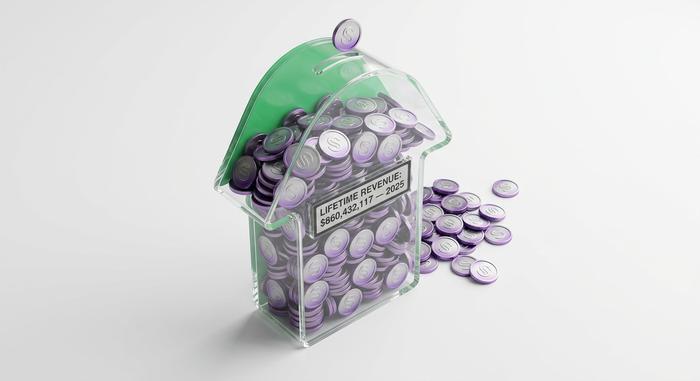
By August 2025, Pump.fun crossed $800 million in lifetime revenue. By year-end it was past $860 million. Household names have come out of it: MOTHER briefly hit a $200 million market cap, MOODENG cleared $170 million. The other side is uglier. Under 3 percent of wallets that ever used the platform have made more than $1,000, per platform data. A 2024 industry analysis tagged 98 percent of its launches as rug pulls or pump-and-dump patterns; Pump.fun publicly disputes the methodology. Either way, most tokens die within hours.
Rivals are closing the gap. LetsBonk.fun briefly took the top spot in daily Solana memecoin launches in early July 2025, grabbing about 65.9 percent of launches on 8 July before falling back to single digits by August. Moonshot has grown on the mobile-native side. Virtuals Protocol owns the Base launchpad scene for AI-agent tokens. Four.meme owns BNB Chain. The mechanics are nearly identical everywhere: bonding curve, auto-graduation, instant liquidity.
Creating a Meme Coin with ERC20 Tokens
If you want a coin on Ethereum or any EVM chain (Base, Arbitrum, BNB, Polygon, Avalanche, Blast), you will be creating an ERC-20 token. These follow a standard interface, which means any wallet, DEX, and block explorer already knows how to handle them.
The cheapest path for non-coders is a no-code factory like CoinTool, Token Tool, Smithii, or Pinksale. You fill out a form (name, symbol, decimals, total supply, ownership rules), pay a small fee plus gas, and the platform deploys a contract that has already been audited. Deploy costs range from 0.01 ETH on Ethereum (roughly $30 to $60 depending on gas) to 0.19 BNB on BNB Chain (about $60) to 49 POL on Polygon (around $12).
If you want full control, you write the contract yourself. The standard approach is to inherit from OpenZeppelin's ERC20 base contract in Solidity, add any extra functions like reflection, burn, or pausing, compile in Remix, and deploy through MetaMask.
Pick a short, memorable name and symbol with no overlap with existing projects. Decimals are 18 on Ethereum and 9 on Solana. For total supply, 1 billion and 1 trillion are the most common round numbers, and 420.69 billion is the meme-coded classic. Renounce mint authority right after deployment so no new tokens can ever be created. Skip pause and blacklist functions unless you have a good reason, because traders read the contract and adjustable restrictions look predatory.
After deployment, the token exists on-chain but has no price. You open Uniswap V3, create a new pool pairing your token with ETH or USDC, deposit both sides, and set a starting price. Burn or lock the LP tokens immediately. Then publish the contract address.
An ERC-20 launch on Ethereum will typically cost between $300 and $1,200 when you include gas, liquidity, and a basic security review. A Base or BNB launch can come in under $150. If you plan to spend on listings, influencers, and exchange applications later, set that budget separately.
Tokenomics, Airdrop, and Liquidity Setup
Tokenomics is how the total supply is divided and how it flows. Bad tokenomics is the single most common reason a meme coin dies quietly, because experienced traders read the distribution before they buy.
A fair meme coin structure usually looks like this:
| Allocation | Typical share | Purpose |
|---|---|---|
| Liquidity pool | 80 to 100% | Goes into the DEX, LP tokens burned or locked |
| Community airdrop | 0 to 10% | Distributed to early users, past holders of a related coin, or Telegram members |
| Team or dev | 0 to 5% | Vested over 6 to 24 months if used at all |
| Marketing wallet | 0 to 5% | Covers CEX listings, influencer fees, campaigns |
| Treasury | 0 to 10% | Reserved for future incentives, held in a multisig |
These ranges are guidance, not law. Allocate the percentages that match your story, but publish them before launch and stick to the schedule.
On Pump.fun, the allocation is fixed: the bonding curve holds all of it, and the creator has to buy in the open market like everyone else. That is why fair-launch platforms carry more trust than self-deployed contracts.
An airdrop can accelerate community growth if done carefully. Pick a snapshot date, decide eligibility (for example, holders of WIF over a certain amount, or members of a launch Telegram active before a set date), and use tools like Jupiter's airdrop module on Solana or Disperse on Ethereum. Never airdrop to random wallets: they dump immediately and crash your price.
Liquidity math: if you pair 10 SOL with 1 billion tokens, the initial price is 0.00000001 SOL per token. Early trades will move the price hard because the pool is thin. A larger initial pool (50 to 200 SOL or 5 to 20 ETH equivalent) smooths the chart and makes the token look less manipulable. Remember that whatever you deposit is effectively the floor: if your LP pair is 10 SOL, a coordinated sell can drain that SOL out quickly.
What a Meme Coin Creator Must Avoid
Most meme coins fail. The question is whether they fail honestly, through loss of attention, or dishonestly, through a rug pull. A responsible creator designs the launch so the second option is technically impossible.
The most common fatal errors:
- Keeping the mint authority live. If you can mint new tokens after launch, holders assume you will. Revoke mint authority on Solana or renounce contract ownership on EVM. Both are one-click actions.
- Holding LP tokens. If you can withdraw the liquidity, you will be suspected of planning to. Send the LP tokens to a burn address or lock them for at least six months.
- Freeze authority left enabled. On Solana, a live freeze authority lets you stop any wallet from trading. Major DEX aggregators flag this and traders will leave immediately. Revoke it.
- Honeypot contracts. A contract that allows buys but silently blocks sells. This is the oldest scam in the book and one of the reasons automated contract scanners exist. Never ship a contract you have not read.
- Hidden taxes or blacklists. A 40 percent sell tax that you can change at will is a rug pull in slow motion. If you need taxes (some meme coins use a small 1 to 3 percent for liquidity or reflections), make them fixed at deploy time and visible in the code.
The scale of failure is larger than most newcomers assume. Investors lost more than $500 million to memecoin rug pulls and scams in 2024 alone, according to CoinDesk. Across Pump.fun, LetsBonk, and similar platforms, the graduation rate to real DEX liquidity in early 2026 was under 0.5 percent. Of the graduated tokens, the majority have lost more than 90 percent of their peak value within 30 days. Some of the most visible recent disasters:
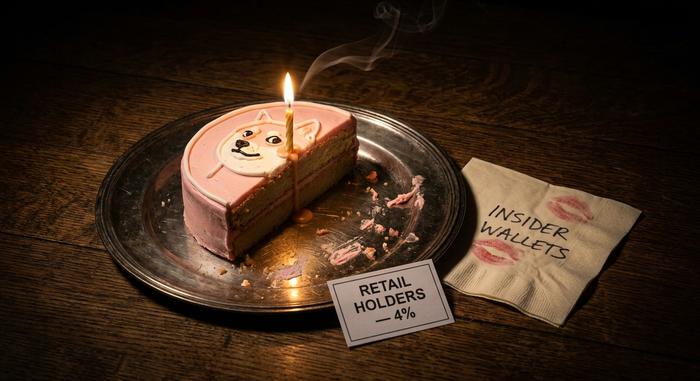
- HAWK launched on December 4, 2024 and peaked near a $490 million market cap within hours before collapsing more than 90 percent. On-chain analysis showed roughly 96 percent of the supply held by insider wallets at launch. Promoter Haliey Welch was reportedly paid up to $325,000 in cash plus tokens; a class action is ongoing in the Southern District of New York.
- LIBRA, promoted by Argentine president Javier Milei on X on February 14, 2025, peaked near a $4.6 billion market cap and crashed more than 90 percent within an hour. Insider wallets withdrew an estimated $80 to $100 million in liquidity. Roughly 114,000 wallets lost a combined $251 million, and a federal investigation in Argentina remains active.
- MetaYield Farm, a February 2025 rug, drained around $290 million, making it the largest single rug pull of the year to date.
Both the HAWK and LIBRA cases are now standard references in regulatory and enforcement discussions.
If your goal is simply to have a meme coin and a community, none of this is disqualifying. The point is to design the launch so that when the coin does fade, holders lose out to the market, not to you.
Costs to Create Meme Coins in 2026
The headline number to create meme coins has dropped sharply over the last two years, but total launch costs still vary by two orders of magnitude depending on ambition. Here is a practical breakdown.
| Cost category | Minimum | Realistic beginner | Full launch |
|---|---|---|---|
| Token deployment | $2 (Pump.fun) | $50 (Solana SPL, BNB) | $300 (Ethereum ERC-20) |
| Initial liquidity | $0 (Pump.fun bonding curve) | $1,000 to $5,000 | $20,000 to $100,000 |
| Branding and website | $0 (free templates) | $200 to $1,000 | $5,000 to $20,000 |
| Smart contract audit | $0 (skip) | $500 to $2,000 | $5,000 to $50,000 |
| Marketing and KOLs | $0 | $500 to $5,000 | $10,000 to $100,000 |
| CEX listings | $0 | $0 to $10,000 | $50,000 to $500,000+ |
| Legal review | $0 | $500 to $1,500 | $10,000 to $50,000 |
| Total | ~$2 | $2,500 to $25,000 | $100,000 to $800,000+ |
A minimalist Pump.fun launch costs less than a single meal out. A typical "try to make this a real project" budget sits between $5,000 and $30,000. A full institutional-style launch with CEX listings, audits, and paid marketing reaches into six figures and rarely outperforms the cheaper versions, because the bottleneck is attention, not capital.
Legal Risks of Creating a Meme Coin
This is the part most guides skip, and it is the part that has started biting creators in 2025 and 2026.
The headline change came on February 27, 2025, when the US Securities and Exchange Commission's Division of Corporation Finance issued a public staff statement that "transactions in the types of meme coins described in this statement do not involve the offer and sale of securities under the federal securities laws." The statement described meme coins as "akin to collectibles" with "limited or no use or functionality." That relaxed the earlier regulatory chill but came with several heavy asterisks. The staff statement has no legal force and was never voted on by the full Commission. Commissioner Caroline Crenshaw issued a same-day dissent arguing it was inconsistent with Howey analysis. And the carve-out applies only to "typical" meme coins: a coin marketed as an investment, one that promises returns, revenue sharing, or a business plan, can still be prosecuted as an unregistered security. The statement explicitly warned that fraud, market manipulation, and deceptive promotion remain fully in scope regardless of securities status.
Outside the US, the picture is stricter. The EU's MiCA regulation phased in through 2024, with the full Crypto-Asset Service Provider regime effective December 30, 2024. There is no explicit meme coin carve-out. Meme tokens fall into the "other crypto-assets" category and trigger a white paper obligation unless a narrow exemption applies (for example, a public offer to fewer than 150 persons per member state or total consideration under EUR 1 million over 12 months). Admission to any EU-authorized CASP platform requires a MiCA-compliant white paper regardless of meme status. In the UK, the Financial Conduct Authority's Financial Promotions Order applies to any crypto marketing aimed at UK consumers, and unauthorized promotion without risk warnings is a criminal offense.
Recent enforcement shows the direction of travel. The HAWK case from late 2024 triggered a class action alleging a securities-style pump and dump. The LIBRA case in early 2025 produced federal investigations in multiple jurisdictions and remains open. Several Pump.fun creators have faced civil action over coins that deliberately impersonated celebrities or charities.
Practical takeaways for anyone creating a meme coin:
- Do not promise returns. Do not describe the coin as an investment or imply a product roadmap you cannot keep. Keep the language aligned with "this is a meme, trade at your own risk."
- Always conduct thorough research on your jurisdiction. A short consult with a crypto-aware lawyer is cheap compared to a subpoena.
- Publish risk warnings prominently, especially if you have UK or EU users.
- Skip fake partnerships, fake endorsements, and fake celebrity involvement. This is the fastest way to turn a civil matter into a criminal one.
- Nothing in this article is financial advice; the regulatory environment changes quickly, and local rules differ.
A meme coin that ships clean and communicates honestly gives itself the best shot, whether it ends up as the next DOGE or as a one-week joke with its own small web3 community.