Starlink deep dive: satellite technology explained, actual speeds vs marketing, all pricing tiers, congestion fees, competitor comparison, and direct-to-cell status in 2026.
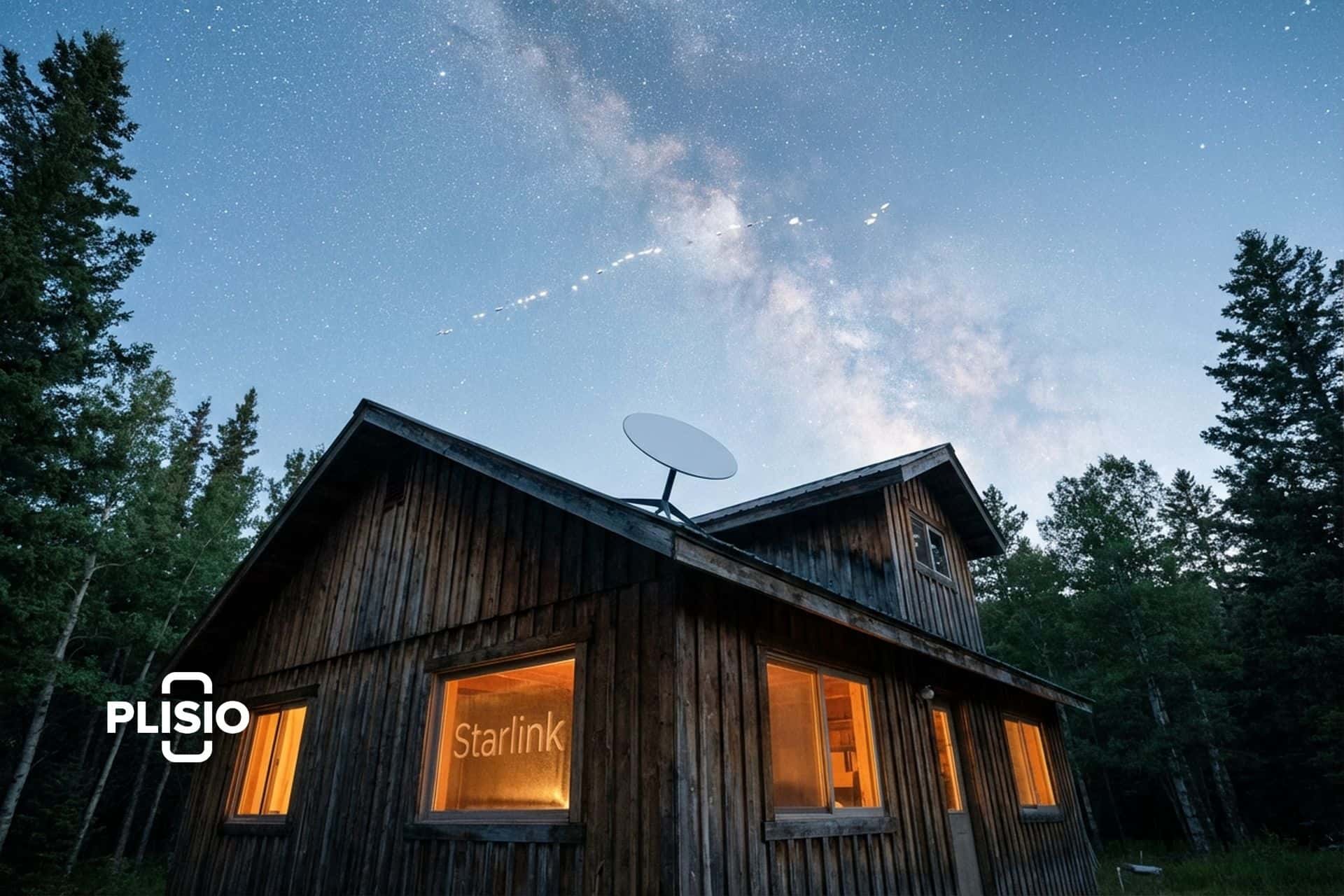
I drove four hours to my parents' house in rural Oregon last summer with a Starlink dish in the trunk. They had been using HughesNet for years. Video calls sounded like talking through a tin can underwater. Netflix buffered more than it played. My mom had given up on streaming entirely and was reading books again, which she claimed was fine but I could tell she was annoyed.
I set up the Starlink dish in their backyard. Took about 20 minutes. The app said "searching for satellites." Then it said "connected." I ran a speed test: 147 Mbps down, 14 up. My mom stared at the number like I had performed a magic trick. She called her sister on FaceTime for the first time in two years. No lag. No pixelation. She cried a little. I am not making that up.
That experience sold me on Starlink as a product. But the more I dug into the details after that day, the more complicated the picture got. The price has gone up. Congestion is getting worse in some areas. The customer service is practically nonexistent. And the question of whether 10,000 satellites in low orbit is sustainable for the planet does not have a comfortable answer.
The technology: 10,000 satellites 550 km above your head
Old satellite internet (HughesNet, Viasat) uses satellites parked 35,000 km out. At that distance, a signal round trip takes about 600 milliseconds. Half a second. Try gaming. Try a Zoom call with your boss. Try not losing your mind.
SpaceX put their satellites closer. Way closer. About 550 km up. Roughly 10,000 of them are orbiting right now, with 11,500+ launched total since the program started. At that altitude, latency drops to 25-60 milliseconds. That is close enough to cable internet that my dad plays online chess over it without noticing any delay. He has no idea his moves are bouncing off a satellite traveling at 27,000 km per hour.
The dish in my parents' yard, which SpaceX insists on calling Dishy, has 1,280 tiny antennas that electronically steer a beam to track satellites as they zip across the sky. It connects to about 100 different satellites per hour. No moving parts. No manual pointing. You put it somewhere with a clear view of sky, plug it in, and it figures out the rest.
The signal goes from the dish to a satellite, sometimes hops to another satellite through laser links, then comes down to one of SpaceX's 150 ground stations that connect to the regular internet. The whole round trip happens in 30-50 milliseconds. My parents cannot tell they are on satellite. That is the breakthrough.
What Starlink actually costs when you add everything up
This is where the marketing and reality diverge, and I learned this the hard way when helping my parents sign up.
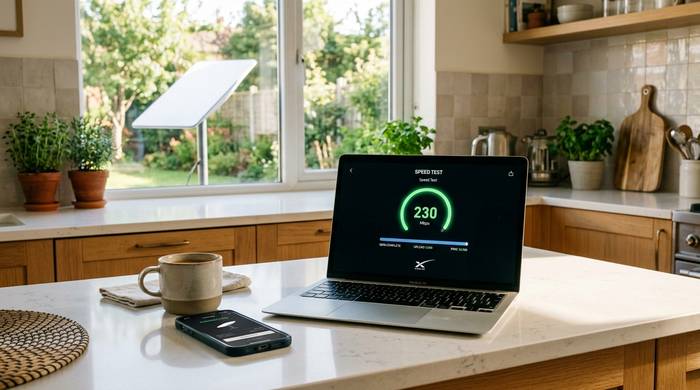
The standard dish is $349. That is the number on the website. What the website does not tell you until you enter your address is the congestion fee. In some areas (suburban California, parts of the East Coast), Starlink charges $100 to $1,000 extra because too many people in your area already have it. My parents in rural Oregon paid zero congestion fee. My friend in Sacramento was quoted $500. Same product. Different zip code. Different price.
Monthly plans start at $50 for the 100 Mbps tier, which only exists in low-congestion areas. Most people end up on the $80 plan (200 Mbps) or the $120 MAX plan (400 Mbps). My parents are on the $80 one and it works well for them.
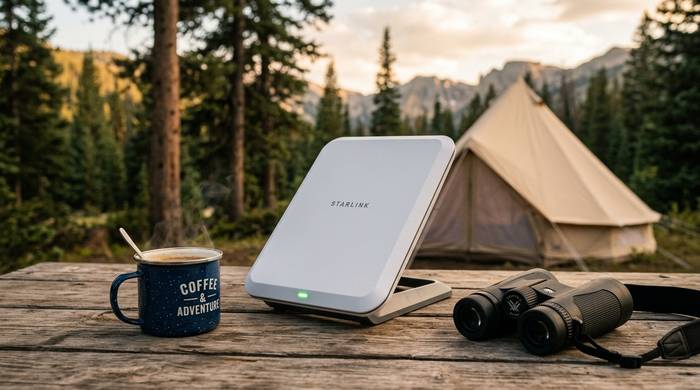
The Starlink Mini is $249 ($199 for new customers) and weighs 2.56 pounds with a built-in router. I took one camping in Montana last fall. Propped it on a rock, connected in two minutes. Slow compared to the full dish but fast enough for email and video calls in a place with zero cell signal. For backpackers and vanlifers, it is a genuine game-changer.
Business plans get expensive fast. The High-Performance dish costs $1,999. Priority plans run $65 to $2,510 per month depending on data allocation. Maritime starts at $250 monthly. Aviation goes from $2,000 to $10,000 per month. Starlink is not cheap if you need guaranteed performance.
Real speeds versus the marketing numbers
Starlink markets "up to 300 Mbps." Here is what I have actually measured at my parents' house over six months and what friends in other areas report.
Rural Oregon, low congestion: 120-200 Mbps consistently. This is where Starlink shines. Few users sharing the satellites. The dish performs close to marketing claims.
Suburban Denver (my friend Rachel): 50-80 Mbps in the evening. Fine during the day. Congested when everyone gets home from work and starts streaming. She has been frustrated but admits it is better than the DSL she had before.
Montana cabin (Starlink Mini, camping): 25-40 Mbps. Enough for FaceTime and email. Not enough for streaming in 4K. Perfectly acceptable for the middle of nowhere.
Latency is the spec that matters most and it is consistently good: 30-50 milliseconds regardless of location. My dad's chess games never lag. My mom's FaceTime calls look like she is on fiber. This is the real differentiator from old satellite. The speed is good. The latency is what makes it feel like normal internet.
Upload is the weak link. 5-15 Mbps. If you are a YouTuber or a Twitch streamer in a rural area, uploading video will be painfully slow. My parents do not care about upload because they are not posting content. But I tried uploading a 2 GB video file from their house once and it took over 40 minutes. On my home fiber it takes 30 seconds. That is the difference.
Weather matters. Heavy rain drops the connection for a few minutes. Snow on the dish causes outages until it melts (the dish has a built-in heater but it is not instant). I have seen my parents lose connection for 10-15 minutes during Oregon rainstorms. It always comes back. But if you are on a critical video call during a thunderstorm, you might drop.
Starlink versus every other option
When I was deciding what to set up for my parents, I looked at everything available in their area. Here is the honest comparison.
5G home internet from T-Mobile would have been cheaper ($50/month, no equipment cost) with comparable speeds. But there is no T-Mobile tower within 20 miles of their house. So that was a non-starter. If you have 5G available, it is probably a better deal than Starlink for most people. But if you had 5G available, you probably were not looking at satellite internet.
HughesNet and Viasat are the old satellite providers. They still exist. They still have 600+ millisecond latency. They are not competitive with Starlink on speed or responsiveness. The only advantage they have is price: some plans start lower than Starlink's $50 minimum. But the experience gap is enormous.
Amazon Kuiper is the one I keep watching. Bezos wants to launch 3,236 satellites and compete directly. They launched test birds in late 2024 and are running beta tests now. But they are years behind. I do not expect them to be a real option before 2028. When they are, the competition should push Starlink's prices down.
The stuff that worries me
I set up Starlink for my parents and it changed their quality of life. I am genuinely grateful the product exists. But I also cannot ignore the problems.
Ten thousand satellites in orbit creating light pollution that makes ground-based astronomy harder. SpaceX added dark coatings on newer satellites, which helps. But the International Astronomical Union still raises concerns. Every professional astronomer I have talked to about this gets visibly frustrated. We permanently changed the night sky to deliver internet to rural areas. Whether that trade-off is worth it depends on whether you are the astronomer or the farmer.
Space debris risk grows with every launch. SpaceX says their satellites deorbit within 5 years of end-of-life. But 42,000 planned satellites in a single constellation creates statistical collision risks that did not exist before. The European Space Agency has already performed collision avoidance maneuvers because of Starlink. If one collision generates debris and that debris hits another satellite, the cascade scenario (Kessler Syndrome) gets closer to real. We are not there. But the direction is concerning.
Customer service is email-only and slow. My parents had an issue with their router in January. It took 8 days to get a response. For a $80/month service, that is unacceptable. There is no phone number. No chat. Just an email form and patience.
And the pricing keeps going up. Early adopters signed up at $99/month. That became $110. Then $120 for MAX. Congestion fees appeared. The promise was affordable internet for underserved areas. The reality is $80-120/month plus hardware plus possible congestion surcharges. It is still the best option for rural users. It is not the affordable revolution the early marketing implied.
Who should actually buy Starlink and who should not
After helping my parents set it up and talking to about a dozen other Starlink users, I have a pretty clear picture of who benefits and who is wasting money.
If you live in a rural area with no cable, no fiber, and no 5G, Starlink is probably the single best purchase you can make for your home. The jump from HughesNet to Starlink is like going from dial-up to broadband. My parents' quality of life genuinely changed. They watch movies, do video calls, and browse the internet like people in cities do. That sounds basic, but for 15 years they could not.
If you live in a suburb and have cable or fiber available, Starlink makes no sense. You will pay more for lower speeds. The $349 dish is money you do not need to spend. Cable at $60/month with 300 Mbps beats Starlink at $80/month with variable speeds every time.
If you travel frequently (RV, boat, remote work), the Roam plans are solid. A friend who lives in a converted van uses the $165 unlimited roam plan and works remotely from national parks. He swears by it. The Mini at $249 is even better for weight-conscious travelers.
If you are a business that needs guaranteed uptime, the Priority plans with the High-Performance dish are worth considering. But at $2,510/month for the top tier, make sure you actually need satellite. Most businesses in areas with any terrestrial internet option do not.
Direct-to-cell: the most exciting thing SpaceX is building
SpaceX and T-Mobile announced a partnership that lets your regular phone connect to Starlink satellites when no cell tower is available. No dish. No special hardware. Just your existing T-Mobile phone.
Text messaging is live as of 2026. Voice and data are in development. I drove through a dead zone in Eastern Oregon last month and got a text message through where there was zero cell signal. That felt like the future in a way that the dish never did.
The engineering is hard. Connecting a phone to a satellite 550 km away is a completely different problem than connecting to a tower 3 km away. Data speeds will be slow. But slow beats nothing, and "nothing" is what billions of people on earth currently have when they are outside cell tower range. If SpaceX cracks this at scale, it is bigger than the dish product ever was.
I keep thinking about my parents. Setting up their dish took me four hours of driving and 20 minutes of installation. With direct-to-cell, they would just have connectivity. No dish. No installation. No $349. Just their phones working everywhere. That is the real promise of Starlink, and it is not the dish on the roof. It is the moment when connectivity stops being something you have to buy hardware for and starts being something that just exists, like air, everywhere you go.