Internet Computer (ICP) 2026: Blockchain and ICP Price Guide

Most blockchains are a settlement layer. A digital ledger. You use them to move tokens around and maybe call a small smart contract. The Internet Computer is trying to be something more ambitious: a full cloud, replacing Amazon Web Services and Google Cloud with a decentralized network of data centers anyone can run. An entire web app lives on-chain, serves its own HTML, keeps its own state, and charges its developer, not the user, for every CPU cycle.
That is a big claim. After five years of live operation and one brutal price crash, how does the project look in April 2026?
ICP trades around $2.44 USD in April 2026, with a market cap near $1.4 billion and a rank of #59 on CoinGecko. That is 99.7% below its May 2021 all-time high of $700.65. It is not the same story it was at launch. But the network is running, DFINITY Foundation is still shipping upgrades, more than 280,000 canisters are deployed on 42 subnets, and a genuine ecosystem (including AI-first projects like Caffeine.ai and OpenChat with over 1 million users) is running on top of it. This article is a beginner's guide to what the Internet Computer actually is, how the ICP token works, and where the project sits in 2026.
What is the Internet Computer, and why does it matter?
The Internet Computer (ICP) is a public blockchain designed to run full internet applications, not just token transfers. Instead of treating a blockchain as a narrow smart-contract layer, DFINITY built a system that can host a web app's backend on-chain, serve web pages directly, store user data, and talk to other services over HTTP. The stated goal is a "World Computer", the decentralized alternative to centralized internet cloud providers like AWS and Google Cloud.
The core idea is that everything that runs inside one of those cloud stacks today (database, backend, business logic, front-end hosting, identity) should be possible inside the blockchain itself, with no external server, no trusted operator, and no single point of failure. Users never see the chain. They type in a domain, the page loads, the app works. Underneath, the whole thing is cryptographically verified.
DFINITY Foundation, the Swiss nonprofit behind the network, was founded by Dominic Williams in 2016 and officially launched the Internet Computer in the Mercury Genesis event on May 7, 2021. Since then, the project has kept shipping: on-chain Bitcoin integration through chain-key cryptography, native AI execution, serverless backend tooling, and the NNS governance system that lets ICP holders vote on every major change to the protocol.
Inside the Internet Computer architecture
Here's what sets the Internet Computer apart from Ethereum or Solana. It isn't one big chain where every node runs every transaction. It's a network of subnets. Each subnet is its own replicated state machine, and each hosts a different set of applications.
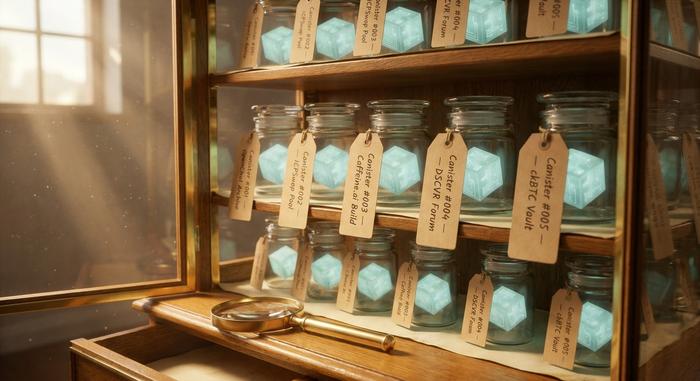
A canister is the basic unit of computation. Picture a smart contract on steroids: it holds code (compiled to WebAssembly), owns its own persistent storage, answers web requests directly, and can talk to other canisters across subnets. A canister can be a DeFi vault, a chat server, or an NFT marketplace. Or all three at once. Where an Ethereum contract only mutates state when called, a canister can serve full HTML pages and even make outbound HTTP calls on its own.
Chain-key cryptography is the glue that keeps this whole thing verifiable. Each subnet carries a public key, and every output the subnet produces (a query response, an inter-canister call, a cross-chain transaction) is signed with a threshold signature that any outside observer can verify. This same machinery lets the Internet Computer talk to other blockchains. Chain-key Bitcoin lets canisters hold real BTC natively, with no wrapped-token middleman. Chain-key ETH lets ICP interact directly with Ethereum smart contracts.
Who runs the subnets? Independent data-center operators called node providers, compensated in ICP for running the hardware. Each subnet typically carries 13 or more nodes. Sitting above everything is the NNS (Network Nervous System), the on-chain DAO that decides which subnets get spun up, which canisters can run, who gets approved as a node provider, and when the protocol software itself gets upgraded.
Canisters and subnets: ICP's smart contracts
Canisters and subnets are the two concepts a beginner has to internalize. Everything else follows from them.
A canister bundles code and memory. Once deployed, it lives indefinitely, paying its own hosting costs out of a prepaid balance of "cycles". Developers write canisters in Motoko (a language DFINITY built specifically for ICP), Rust, or increasingly JavaScript via the Azle framework. A canister can be as small as a Twitter-like profile page or as large as a full-fledged decentralized exchange.
A subnet hosts dozens or hundreds of canisters and runs consensus among its node providers. Different subnets can have different trust and performance profiles: some are high-throughput and geographically diverse; others are purpose-built for fiduciary applications like Bitcoin custody. When an application needs more resources than one subnet can provide, it splits across multiple subnets and uses chain-key signatures to coordinate.
This is why a web app on ICP can feel as fast as a Web2 site. Query calls (reads) return in about 100 milliseconds because they do not require consensus. Update calls (writes) finalize in 1-2 seconds. That is an order of magnitude faster than Ethereum's ~12 seconds. Network-wide throughput is up to 11,500 TPS theoretical, with roughly 1,035 TPS sustained across the live network per chainspect.app measurements in early 2026.
The ICP token and reverse gas model
ICP tokens are the fuel of the system, but not in the way a beginner would expect. Users on the Internet Computer do not pay gas. Developers do.
Here is how it works. A developer buys ICP on a centralized exchange (Binance, Coinbase, Kraken, OKX all list it), sends it to their wallet, and converts it into cycles inside the NNS dApp. Cycles are pegged to a stable unit of computation: 1 trillion cycles currently corresponds to roughly 1 XDR (a Special Drawing Right from the IMF, a stable basket of fiat currencies). Cycles never inflate; ICP does. When a canister runs, cycles get burned to pay for compute, storage, and bandwidth.
This is the "reverse gas model". Users of the app pay nothing in crypto. The developer (or the canister operator) tops up cycles the same way a Web2 founder tops up an AWS account. From the user's perspective, it just feels like a regular website.
The ICP token itself has three primary uses:
- Conversion to cycles for canister compute (deflationary, because ICP is burned).
- Staking in NNS neurons to participate in governance and earn rewards.
- Rewards to node providers for running subnet hardware.
Internet Computer markets and price today
As of April 20, 2026, ICP trades around $2.44 USD. Market cap sits near $1.35 billion. The token ranks #59 by market cap on CoinGecko, with roughly $35 million in 24-hour trading volume. Circulating supply clocks in around 551.9 million ICP.
Here are the key live-market numbers at the time of writing:
| Metric | Value (April 20, 2026) |
|---|---|
| Internet Computer price (USD) | $2.44 |
| Market cap | $1.35 billion |
| Market rank | #59 |
| 24-hour volume | ~$35 million |
| Circulating supply | 551.9 million ICP |
| All-time high | $700.65 (May 10, 2021) |
| Distance from ATH | -99.7% |
| All-time low | $2.02 (February 24, 2026) |
| 7-day range | $2.41 – $2.68 |
| Price in BTC | 0.00003245 BTC |
That recent February 24, 2026 all-time low is the honest bit of this table. Five years of development, a working ecosystem, and yet ICP trades just a hair above the cheapest level the token has ever seen. Crypto markets don't always reward engineering. Sometimes they reward narrative cycles, and right now the narrative cycle is elsewhere.
For live numbers, always check CoinGecko, CoinMarketCap, the Internet Computer price chart on TradingView, or the price page on Kraken or Coinbase. The live price can drift several percent intraday.
Staking ICP through the Network Nervous System
Staking on the Internet Computer happens inside the NNS, not on an exchange. You lock ICP into a neuron, a governance account that votes on proposals and earns rewards over time.
The mechanic that separates NNS from most other staking systems is the dissolve delay. When you create a neuron, you choose a lock-up period (between 6 months and 8 years). The longer the lock-up, the bigger your voting power and the bigger your staking reward. To withdraw, you have to trigger "dissolve", wait the full delay, and only then can you unlock your ICP.
Staking APYs in 2026 typically run from about 8% at shorter configurations up to roughly 28% for an 8-year neuron actively voting on governance. Those yields are not free: they come largely from ICP's ongoing inflation, and your tokens are illiquid for the full dissolve delay. Current dashboard numbers show about 252.4 million ICP staked in NNS neurons (roughly 50.4% of supply), with 80.9% of the staked pool sitting in neurons locked for more than a year, and 51.5% of staked ICP in maximum 8-year neurons. That depth of staking is unusual among L1s.
Governance participation matters too. Active neurons (either voting manually or following a trusted voter through the Liquid Democracy system) earn full rewards. Inactive neurons forfeit a share. The NNS has passed thousands of proposals to date, and every major upgrade to the protocol has flowed through it.

Security and self-writing canisters on ICP
Security on the Internet Computer rests on three pillars: threshold cryptography inside each subnet, NNS oversight over the whole network, and canister-level isolation so a compromised dApp cannot affect its neighbors.
Threshold cryptography means no single node holds a subnet's private key. The key is split across nodes, and a quorum has to cooperate to sign anything. Even if a minority of nodes are malicious (or physically seized), the subnet keeps producing signed output and the malicious nodes are detected and replaced. The NNS can remove a compromised node provider through a governance vote.
A newer feature worth naming is the self-writing canister, the umbrella term for AI-assisted canister generation introduced via Caffeine.ai. A user describes an application in natural language, and an on-chain AI pipeline generates, deploys, and upgrades the canister code on the Internet Computer. Early versions are limited, but they hint at a longer-term DFINITY bet: that the next generation of developers will not write Motoko or Rust directly. They will describe the app, and the network will write it.
None of this removes the normal crypto risks. Smart-contract bugs exist. Dissolving a neuron in a bear market locks your ICP through the dip. Node-provider centralization is a live concern (the set is not as diverse as Ethereum validators). Treat ICP like any other crypto: never commit more than you can afford to lose, and back up your principal identity and NNS neurons.
Key projects building on the Internet Computer
An ecosystem is the only real proof a smart-contract platform works. Here are some of the most active projects on ICP as of early 2026.
OpenChat is an end-to-end encrypted, fully on-chain messenger with over 1 million users as of 2026. Every message, every user account, every group chat lives inside canisters. There is no server operator that can read your messages, and no company that can shut it down. OpenChat is itself governed by its own SNS DAO and has its own CHAT token.
Caffeine.ai is DFINITY's flagship AI-native app builder. It turns a natural-language prompt into a deployed canister application running directly on the Internet Computer. V2 is live with hundreds of thousands of monthly unique builders per DFINITY's reporting, and V3 is imminent. It is also the most visible example of what "self-writing" canisters actually look like in practice.
ICPSwap and Sonic are the two leading DEXes on ICP, offering token swaps, liquidity pools, and on-chain order books that clear within a single subnet.
Bitfinity EVM is a chain-key Ethereum-compatible layer, letting Solidity developers deploy EVM contracts on ICP with ICP's speed and cost profile.
ckBTC is native Bitcoin on the Internet Computer, custodied not by a wrapped-token issuer but by a subnet holding threshold-signed BTC keys. Send Bitcoin to a canister address, and it arrives as a native asset on ICP. Send it back, and real BTC leaves the Internet Computer. No bridge.
DSCVR and Distrikt are ICP-native social networks with Web2 UX and Web3 control.
The ecosystem is still narrower than Ethereum's and Solana's. The bet is vertical: a small number of apps that simply could not exist on other chains.
AI on ICP: Caffeine.ai and onchain intelligence
One of the biggest 2025-2026 shifts inside the Internet Computer story is the push into on-chain AI. Most blockchains do "AI integration" by running models off-chain and posting the output as a transaction. DFINITY is trying something harder. Run the models themselves, on-chain, inside canisters.
The flagship is Caffeine.ai. You type a natural-language description of an app. Caffeine drafts the canister code, deploys it to a subnet, wires up a frontend, and keeps iterating based on your feedback. Entire pipeline, from prompt to a live production app, hosted on ICP. No OpenAI key. No AWS bill.
Beyond Caffeine, the wider AI-on-ICP push covers inference running inside canisters (with hard limits on model size today given current subnet compute capacity) plus decentralized data markets where training data is held and priced inside canisters. DFINITY frames this as the reason ICP deserves its own chain at all. A general-purpose blockchain can't run a useful AI model on-chain. A centralized AI can't be governed by token holders.
Will this turn into a defensible moat or a narrative that overshoots? The next 12-18 months of data will tell the story. The bar is concrete. How many apps run on Caffeine six months from now. How many keep their users. How many generate enough revenue to top up their cycle balances.
Internet Computer statistics in 2026
Beyond price, a few operational statistics help explain where the network is in 2026.
| Metric | Value |
|---|---|
| Launch date | May 7, 2021 (Mercury Genesis) |
| Native token | ICP |
| Max supply | Uncapped (inflationary to pay node providers) |
| Circulating supply | ~551.9 million ICP |
| Active subnets | 42 (up from 37 in early 2024) |
| Canisters deployed | 280,000+ |
| Active user wallets | 1.2 million (DFINITY data, late 2025) |
| DeFi TVL | ~$1.14 billion (end-2025, AInvest) |
| Network throughput | ~1,035 TPS sustained; 11,500 TPS theoretical peak |
| Block finality | 1-2 seconds (updates); ~100 ms (queries) |
| Consensus | Threshold Relay (delegated proof of stake over subnets) |
| Storage cost | ~$5 per gigabyte per year (subnet-dependent) |
| Programming languages | Motoko (native), Rust, JavaScript/TypeScript (Azle) |
| Governance | NNS on-chain DAO (~252.4M ICP staked, 50.4% of supply) |
| Notable crosschain | ckBTC (native Bitcoin), ckETH, ckERC-20, Chain Fusion (Solana announced) |
| GitHub activity | 3,196 commits past 9 months, 100+ contributors |
| Foundation | DFINITY Foundation (Zurich) |
The storage cost comparison is the one most worth pausing on. Per Dfinity's own published figures, storing a gigabyte for a year on ICP runs about $5. Storing the same data on-chain on Ethereum is not practical at any price. That cost gap is why "full application on-chain" is a real architecture on ICP and an unrealistic framing elsewhere.
Internet Computer price chart: 2021-2026
The ICP price chart is a five-year story. Three chapters.
Chapter one: 2021 launch crash. May 10, 2021. Three days after Mercury Genesis, ICP hit $700.65. Within weeks, under $100. Part of that was the general 2021 crypto retrace. Bigger part was a class-action lawsuit claiming DFINITY insiders dumped unlocked tokens onto the market. By year-end, below $30.
Chapter two: 2022-2024, the slow slide. Through the crypto winter ICP bled alongside most other Layer 1 altcoins. But the network stayed live. Chain-key Bitcoin shipped in April 2023. ckETH followed. DFINITY still had its 2018 ICO war chest. By the end of 2024, you could pick up ICP anywhere in a $5-15 band.
Chapter three: 2025-2026, AI narrative and reset. Caffeine.ai plus the wider on-chain AI push gave ICP fresh narrative through 2025. Price still bled. Opened 2025 near $9.84. Down to roughly $4.70 by September. Kept sliding. January 2026 ranged $2.59-$4.78. February hit the all-time low of $2.02 on the 24th. March settled into $2.35-$2.41. Today's $2.44 is a mild bounce off the floor. Not a breakout. DFINITY's "Mission 70" plan targets cutting net inflation from 9.72% at the start of 2026 down to roughly 2.92% by year-end. Structural, if it executes. Big if.
Today's $2.44 print is a recovery from that floor, not a breakout. For anyone trading ICP, the price chart is a sharp reminder that a live, shipping network and a thriving token price are two different things. One measures technology. The other measures market sentiment.
How to buy Internet Computer (ICP) and store it
Buying ICP in 2026 is simple. Almost every major centralized exchange lists the token. Three paths retail users actually take:
1. Centralized exchange. Binance, Coinbase, Kraken, OKX, Bybit and Uphold all list ICP/USD and ICP/USDT pairs. Trading fees run 0.10%-0.40% depending on venue. For newcomers, Coinbase is the simplest start — same account, same KYC, and you can also buy Bitcoin, ETH or USDT from it if you want to split across assets.
2. On-chain DEX. ICPSwap and Sonic let you swap stablecoins (ckUSDC, ckUSDT) for ICP inside the network itself. Less friction if you're already holding assets on ICP. More friction if you aren't.
3. Direct fiat on-ramp. MoonPay and Transak sell ICP directly for debit or credit cards. The same on-ramps people use to buy Bitcoin or Ethereum generally support ICP too.
Storage options, in rough order of security:
- Internet Identity + NNS dApp for custody inside the Internet Computer itself. The default for anyone staking ICP.
- Hardware wallet (Ledger Nano S Plus and X both support ICP) for cold storage of meaningful amounts.
- Self-custody mobile wallets like Plug and Stoic for day-to-day use of ICP apps.
A simple rule of thumb. Staking? Use Internet Identity + NNS. Just holding? Hardware wallet. Actively using ICP apps? Mobile wallet.