Gwei and Gas: Fueling the Ethereum Network
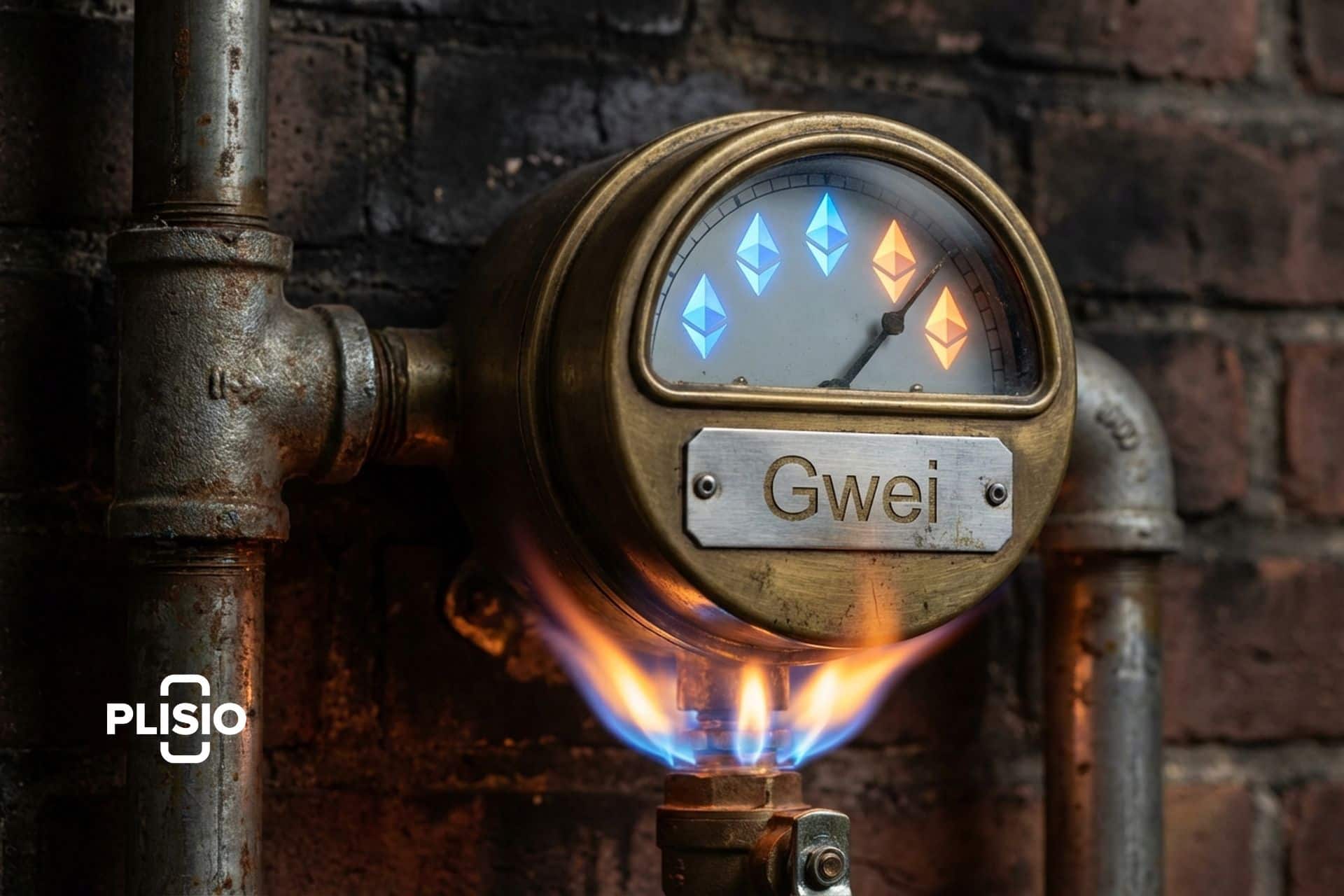
If you've ever sent ETH, swapped tokens on Uniswap, or minted an NFT, you've paid gas fees measured in gwei. Maybe you noticed the number, maybe you didn't. But that tiny unit of Ethereum determines whether your transaction costs $0.50 or $50, and the difference often comes down to timing and understanding how the fee system actually works.
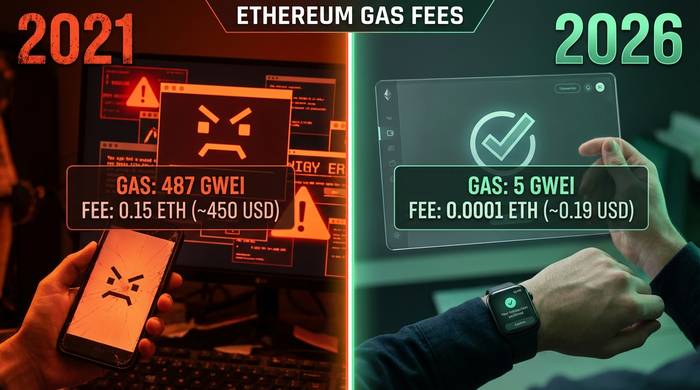
Gwei is to Ethereum what cents are to the dollar, except the math is a lot more confusing and the price changes every 12 seconds. In 2021, gas fees regularly hit 200-500 gwei, making simple token swaps cost $50-200. In 2026, thanks to Layer-2 rollups and network upgrades, average gas on Ethereum mainnet sits around 3-8 gwei. A basic ETH transfer costs roughly $0.30-0.80. That's a massive improvement, but you still need to understand gwei to avoid getting burned during congestion spikes.
What gwei actually is
Gwei is a unit of measurement for ether, just like cents measure dollars or satoshis measure bitcoin. The name combines "giga" (billion) and "wei" (the smallest possible unit of ETH, named after Wei Dai, a cryptography pioneer who influenced bitcoin's creation).
Here's the conversion:
| Unit | In Wei | In ETH |
|---|---|---|
| 1 Wei | 1 | 0.000000000000000001 |
| 1 Gwei | 1,000,000,000 | 0.000000001 |
| 1 ETH | 1,000,000,000,000,000,000 | 1 |
So 1 gwei equals one billionth of an ETH. When someone says gas costs "10 gwei," they mean 10 billionths of an ether per unit of gas consumed. At an ETH price of $1,850 (April 2026), 10 gwei equals about $0.0000185 per gas unit. Multiply that by the gas units your transaction consumes (21,000 for a simple ETH transfer, 65,000+ for a token swap), and you get the total fee.
The Ethereum ecosystem also has other denominations you'll rarely encounter: kwei, mwei, twei, pwei. Nobody uses them in practice. Gwei dominates because it hits the sweet spot for expressing typical gas prices. Saying "5 gwei" is a lot easier than saying "0.000000005 ETH" or "5,000,000,000 wei."
Fun fact: gwei is also called "shannon," after Claude Shannon, the father of information theory. You won't see this name much outside of technical documentation, but it's one of those nods to computer science history that Ethereum's creators embedded in the protocol.
How Ethereum gas fees work
Every action on the Ethereum network costs gas. Sending ETH to another address, deploying a smart contract, swapping tokens on a decentralized exchange, minting an NFT, all of these require computational work from validators. Gas is how you pay for that work.
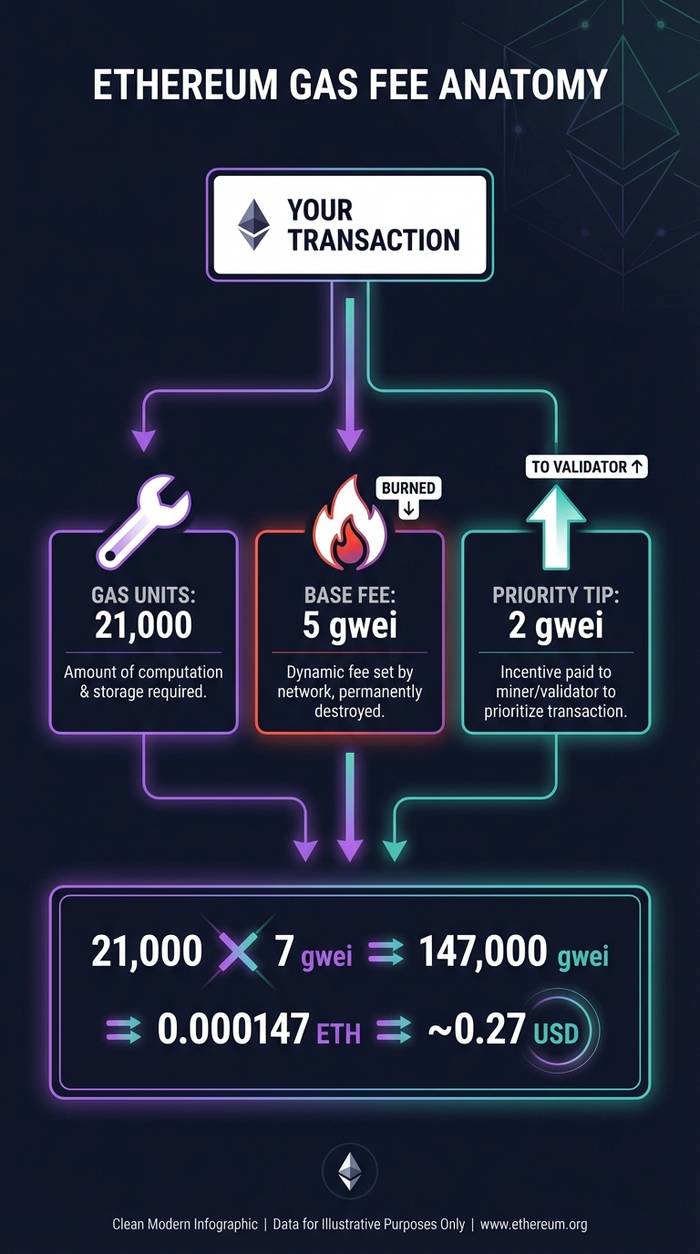
The gas system has three components:
Gas limit: The maximum number of gas units your transaction can consume. A simple ETH transfer always uses exactly 21,000 gas. A complex smart contract interaction might use 200,000 or more. You set this number (or your wallet sets it for you), and any unused gas gets refunded.
Base fee: This is the minimum gas price in gwei set by the Ethereum network itself. It adjusts automatically every block based on how full the previous block was. When the network is busy, the base fee goes up. When it's quiet, it goes down. This mechanism was introduced by EIP-1559 in August 2021 and replaced the old auction-based system where users blindly bid against each other.
Priority fee (tip): On top of the base fee, you can add a tip in gwei to incentivize validators to include your transaction sooner. During normal conditions, a 1-2 gwei tip is enough. During an NFT mint frenzy or a memecoin launch, tips can spike to 50+ gwei as thousands of people compete for block space.
The total fee formula:
Total fee = Gas units used x (Base fee + Priority fee)
Example: you're swapping tokens on Uniswap. Gas used: 150,000 units. Base fee: 5 gwei. Priority fee: 2 gwei. Total: 150,000 x 7 gwei = 1,050,000 gwei = 0.00105 ETH = about $1.94 at current ETH prices.
Here's the part that trips people up: the base fee doesn't go to validators. It gets burned. Destroyed. Permanently removed from the ETH supply. Only the priority fee (the tip) goes to the validator who includes your transaction. This is why Ethereum can actually be deflationary. During high-activity periods, more ETH gets burned through gas fees than new ETH gets created through staking rewards. Since EIP-1559 launched in August 2021, over 4.4 million ETH has been permanently destroyed, worth roughly $8 billion at current prices. That's real deflation on a cryptocurrency that was inflationary for its entire existence before 2021.
The "ultrasound money" meme in the Ethereum community comes from this. When daily burn exceeds daily issuance, the total supply of ETH actually shrinks. In 2026, this happens intermittently, mostly during congestion spikes. But the mechanism is permanent, and it means that every gwei of base fee you pay makes every remaining ETH slightly more scarce.
Why gas prices change constantly
If you've watched Ethereum gas fees for any period of time, you know they're unpredictable. Monday morning might cost 3 gwei. Tuesday afternoon during a trending token launch, 200 gwei. The fee market on the Ethereum blockchain is driven entirely by demand for block space.
Each Ethereum block has a target size of 15 million gas units and a maximum of 30 million. When blocks fill above 50%, the base fee rises. When they're below 50%, it falls. This creates a feedback loop: high demand pushes prices up, which prices out lower-value transactions, which reduces demand, which brings prices back down.
The practical impact: timing matters. If you're not in a rush, sending a transaction during off-peak hours (typically weekends or early morning US time) can save you 50-80% on fees. Tools like Etherscan's gas tracker show real-time gwei prices and historical patterns.
| Time period | Typical gas (2026) | Best for |
|---|---|---|
| Weekday peak (US business hours) | 8-20 gwei | Urgent transactions only |
| Weekday off-peak (evenings, early AM) | 3-8 gwei | Most transactions |
| Weekends | 2-5 gwei | Non-urgent batch transactions |
| Congestion events (NFT mints, etc.) | 50-500+ gwei | Avoid unless essential |
EIP-1559: the upgrade that changed Ethereum gas forever
Before August 2021, the Ethereum gas market was a mess. Users submitted blind bids, overpaying because they couldn't tell what the fair price was. Wallets guessed. Users who set fees too low got stuck in pending limbo. It was frustrating for everyone.
EIP-1559 fixed most of this by introducing the base fee that adjusts algorithmically. Now your wallet can accurately estimate what a transaction will cost because the base fee is known before you submit. The tip is just extra for speed. Overpayment dropped dramatically, and the user experience improved significantly.
The other big change: fee burning. Every base fee paid in gwei gets permanently destroyed. Since EIP-1559 launched, over 4.4 million ETH has been burned (worth roughly $8 billion at current prices). During periods of very high activity, Ethereum has burned more ETH per day than validators created through staking rewards, making the total supply briefly deflationary. That's where the "ultrasound money" meme comes from.
Layer-2 networks and the gwei collapse
The biggest reason gas fees are so low in 2026 compared to 2021 is Layer-2 rollups. Networks like Arbitrum, Optimism, Base, and Polygon process transactions off the Ethereum mainnet and batch them into compressed proofs that get posted back to Ethereum for settlement.
The result: a token swap that costs $1-2 on Ethereum mainnet costs $0.01-0.05 on a Layer-2. For most everyday users, L2s have made gwei almost irrelevant because the fees are so small they're barely noticeable. Ethereum mainnet gas matters primarily for large transactions, institutional settlements, and operations that need direct L1 security.
This shift has been dramatic. In 2021, essentially all Ethereum transaction activity happened on mainnet, and people complained constantly about $50 swap fees. By 2026, most transactions happen on L2s. Ethereum mainnet has become what it was always supposed to be: a settlement layer for high-value operations, not a place to buy a $3 coffee.
The downside of this migration is subtle but important. Less mainnet activity means less gas revenue, which means less ETH burned. If the trend continues and most users never touch Ethereum directly, the deflationary mechanism weakens. Whether this is a problem or just the natural evolution of a maturing blockchain is debated. Ethereum bulls say L2 activity still generates settlement fees on L1. Ethereum bears say the base layer is being hollowed out. The truth is probably somewhere in between, and it depends heavily on how the next few years of L2 growth play out.
For you, the user, the practical takeaway is this: unless you're moving large amounts or need L1 security guarantees, there's rarely a reason to pay mainnet gas fees in 2026. L2s handle most things faster and cheaper.
Practical tips: how to minimize what you pay in gwei
For anyone transacting regularly on the Ethereum network, a few habits save real money:
Use Layer-2 networks whenever possible. If you're swapping tokens, lending, or farming yield, do it on Arbitrum or Base instead of Ethereum mainnet. The same protocols (Uniswap, Aave, etc.) are available on L2s with 95% lower gas fees.
Time your transactions. Check Etherscan's gas tracker before sending anything non-urgent. Waiting six hours for gas to drop from 15 gwei to 4 gwei can save you 70% on a complex transaction.
Set gas limits correctly. Your wallet usually auto-estimates, but for complex interactions, you can manually set the gas limit. Don't set it too low (transaction fails and you still pay gas) or too high (you won't overpay since unused gas is refunded, but some smart contracts behave differently).
Batch transactions when you can. If you need to approve a token and then swap it, some protocols combine these steps. Saves the gas overhead of two separate on-chain calls. On Uniswap's latest version, for instance, the permit2 system lets you approve and swap in a single transaction.
Watch out for congestion events. Major NFT drops, token launches, and airdrop claims create temporary fee spikes that can 10x the normal gas price. If you can wait 30-60 minutes for the frenzy to cool off, fees typically return to normal. I've seen gas spike from 5 gwei to 300 gwei during a popular mint and fall back to 8 gwei within an hour. Patience literally saves money.
Consider MEV protection. When you submit a large swap on a decentralized exchange, searchers on the Ethereum network can front-run you by inserting their own transaction ahead of yours, profiting at your expense. Using MEV protection services like Flashbots Protect or MEV Blocker routes your transaction through private mempools where searchers can't see it. This doesn't change the gwei you pay, but it prevents value extraction from your trades.
Don't cancel stuck transactions by blindly raising gas. If a transaction is stuck in pending, you can replace it by sending a new transaction with the same nonce and a higher gas price. But don't panic and set gas to 500 gwei. Check what the current base fee is first and add just enough to get confirmed. Overpaying for a cancellation is a surprisingly common and expensive mistake.