Remaker AI Review 2026: AI Face Swap App and Video Tools
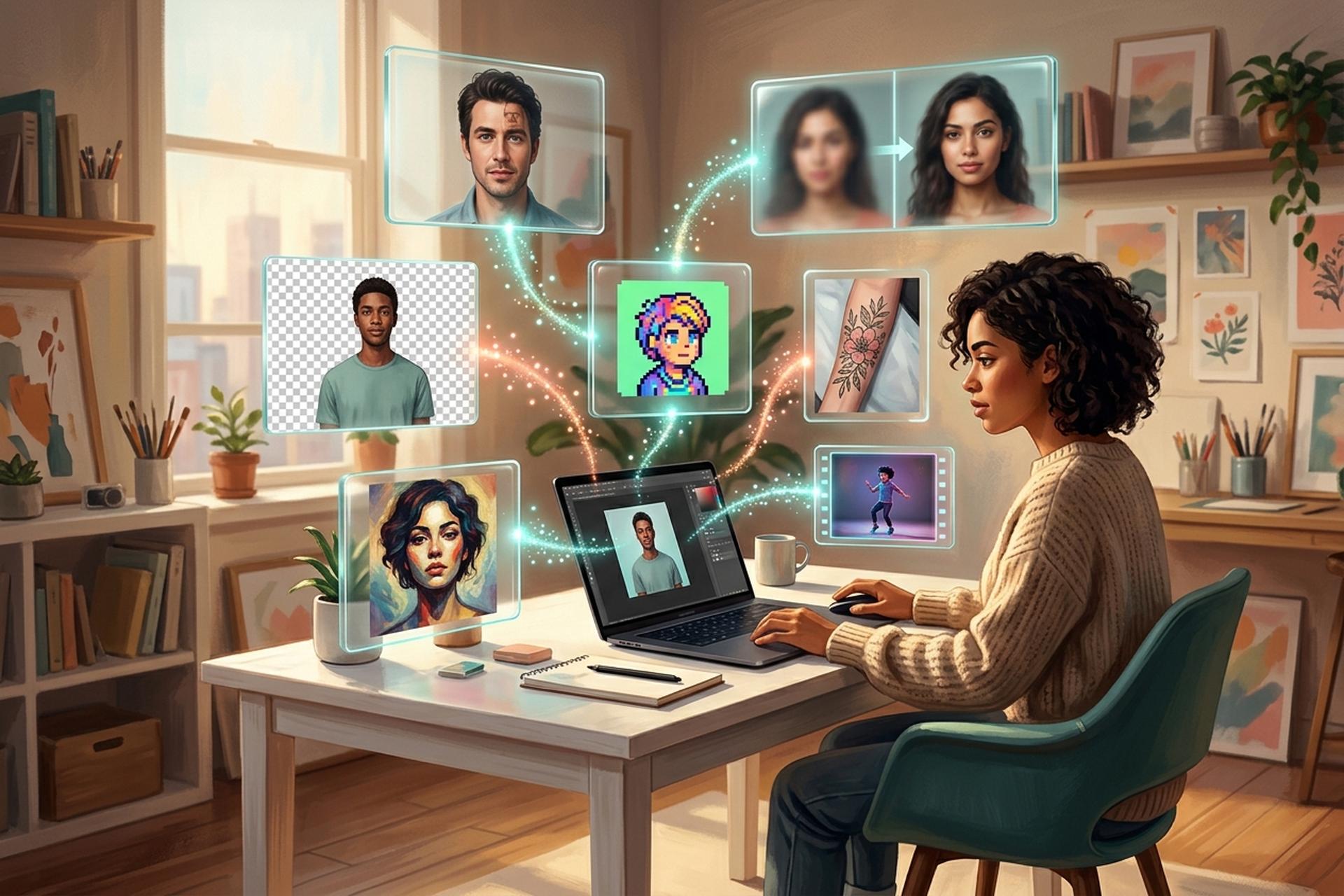
The first time most people hear about Remaker AI is through a viral face-swap reel on TikTok or an Instagram meme where a friend's head sits convincingly on a movie poster. Behind that one trick sits a much larger product. Remaker AI is an AI-powered all-in-one AI platform that bundles face swap, image upscaling, background removal, AI headshot generation, AI photo retouching, text-to-image art, video enhancement, visual effects and image-to-video animation into a single credit-based web app with matching iOS and Android clients. The AI video creation workflow renders almost instantly, and the powerful AI tools produce high-quality output from simple prompts. In 2026 it is one of the most searched AI editing tools worldwide, and it sits inside a broader generative-AI image market that Grand View Research and MarketsandMarkets now track in the billions of dollars.
This review walks through what Remaker AI is, the full product surface in 2026, how its credit pricing works, how the iOS and Android apps compare to the web app, where deepfake safety fits in, and how it stacks up against Magic Hour, PicWish, PFPMaker and Pica AI. The aim is practical: can a creator, marketer or small team actually get the job done inside this platform, and at what cost.
What Is Remaker AI: The All-in-One AI Platform
Picture a Canva-style dashboard, but every button fires an AI model instead of opening a template editor. That is Remaker AI in one line. The homepage tagline calls it "the easiest way to recreate any image," which undersells what sits behind the login. You sign up once, top up credits, and pick from a list of AI tools on the left rail. No separate subscription for face-swap. No second login for upscaling. No third tool just for AI portraits. One intuitive dashboard, with support for multiple languages so a team in Berlin and a team in Jakarta can run it the same way. Somebody who has never opened a real image editor can take a cluttered holiday photo and transform it into a clean shot in a few minutes, which is the kind of transformation bar that moves consumer software forward.
Behind it sits ZINGDECK INTL PTE. LTD., a Singapore company filed as UEN 201937249D on 5 November 2019. Alex Zhang is the founder and CEO, working out of Beijing with a distributed Asia team. Tracxn flags the company as unfunded; no venture rounds have been disclosed as of 2026. That did not keep Remaker AI off the Andreessen Horowitz Top 50 Gen AI Web Products list in 2025. Traffic is on the order of 5.1 million monthly visits per Similarweb (August 2025), and the geography tilts heavily eastward: India leads at 17.82% of desktop traffic, followed by the US at 9.88% and Indonesia at 7.13%.
Language support covers English and roughly a dozen more, including Chinese, Japanese, German, French and Spanish. That reach explains why the audience tilts so heavily toward Asia. The iOS app is published by ZINGDECK INTL and carries a 4.5 out of 5 rating from more than 260 App Store reviews as of early 2026. A separate, unrelated Android app called "Remaker: AI Face Swap" by a developer named Creativity AI exists on Google Play but is not affiliated with the remaker.ai platform and carries a much lower 2.9-star rating. Creators should start at remaker.ai and download the official companion app from the store listing linked there.
Remaker AI Face Swap: The Flagship AI Tool
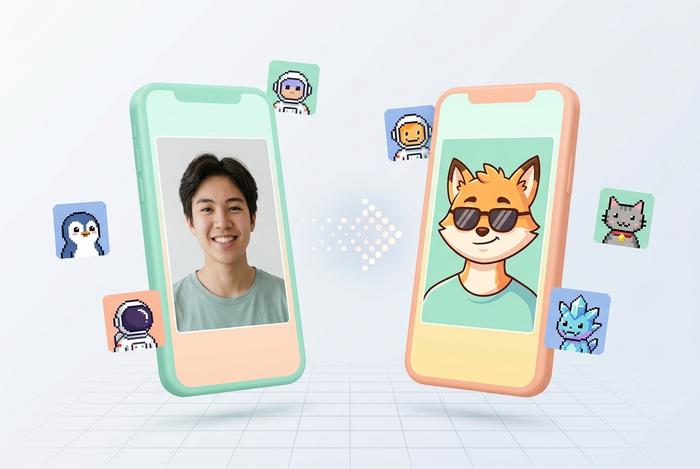
Face swap is the anchor feature and the reason most users land on the platform. The AI face swap tool accepts a source image (the face you want to move) and a target image or video (where the face should go). The AI effortlessly runs alignment, color matching and seamless blending, then returns a single result that usually does not require manual touch-up. Multiple-face swap is supported, so group photos and movie-poster memes work with one upload. Video swap runs through the same interface but costs proportionally more credits because the job runs frame by frame.
Compared to other face-swap apps on the market, Remaker AI's flagship draw is how fast the flow finishes. A single photo swap completes in seconds and a short video in about a minute. Quality is strong on clean, well-lit source images; it drops off on extreme angles, heavy occlusion and low-light footage, which is a limitation shared by every consumer-grade face swap service built on current AI models. Face swap is widely used for entertainment, meme content, dating-profile tests, and professional creative work like poster mockups. The tool is also abused for non-consensual content and crypto scams, which is why the safety section below matters.
Key AI Tools Inside the Remaker Platform
Open the dashboard today and the tool grid runs about fifteen entries deep. Image tools sit on the left, video tools on the right, utilities at the bottom. One of the newer additions is a Google-model-powered option branded Nano Banana, which slots in next to the original AI art generator for higher-fidelity image output. Here is the current lineup:
| Category | Tool | What it does |
|---|---|---|
| Image | AI Face Swap | Swap one or many faces in photos |
| Image | AI Image Generator | Text-to-image with prompts and templates |
| Image | AI Image Upscaler | Lift resolution on low-quality photos |
| Image | AI Background Remover | Instant cutouts for image and product shots |
| Image | Magic Eraser | Remove unwanted objects and fill the gap |
| Image | AI Portrait Generator | Stylized portraits from a single selfie |
| Image | AI Headshot Generator | Professional-style headshots for LinkedIn |
| Image | AI Tattoo Generator | Tattoo design previews from prompts |
| Image | AI Logo Generator | Quick brand marks from a business brief |
| Image | Photo Effect | Filter and stylize tool |
| Image | Nano Banana | Google-model-backed image generation |
| Video | AI Video Face Swap | Swap faces inside short video clips |
| Video | AI Video Enhancer | Upscale, stabilize and polish existing footage |
| Video | AI Video Generator | Text-to-video and image-to-video animation |
| Video | AI Talking Photo | Animate a still portrait with lip sync |
| Utility | AI Watermark Remover | Strip watermarks from owned images |
That spread is what people mean when they call Remaker AI an all-in-one platform. Take a simple campaign. A product photo lands in the dashboard, the background strips out in one click, the AI upscaler pushes it to a cleaner resolution, the founder's headshot drops into a branded template, and a talking-photo animation ships out the same tab. You never leave the page. For marketers who used to pay three separate subscriptions to cover a photo enhancer, a background remover and a video tool, the consolidation is the real sell.
Remaker AI Video Tools and Image-to-Video Animation
Video is where Remaker AI shipped the most in the last year. Three flows run the suite today. Swap faces in a clip. Clean up and upscale footage you already shot. Build a new clip from a text prompt or a still image. Image-to-video animation is the fastest-growing chunk of the AI video market right now, and it made sense for a tool that already owned the face-swap crowd. Watching a photo come to life as a short loop is also the first moment skeptical creators tend to concede that AI video actually works. The engine takes one photo, adds motion (a camera pan, some parallax, a small expression tweak) and exports a short HD clip in seconds. Text-to-video accepts a prompt and returns a scene with cinematic framing, though results drift on busy multi-subject shots, same as every other text-to-video model on the market.
TikTok and YouTube Shorts operators get a realistic toolkit to create viral and entertaining videos. Shoot the product once. Upscale the clip. Face-swap a thumbnail variant for A/B testing. Pull a branded still through image-to-video to get a loop. HD export is the default. Renders finish fast enough that iteration does not hurt. AI video generation from a prompt input still breaks on complicated scenes, but a two-second masterpiece is usually one retry away.
Remaker AI Pricing: Credits, Plans and Free Tools
Pricing is the weirdest thing about Remaker AI, and it is also the best argument for trying it. No monthly subscription. No auto-renewal. You buy a credit pack once, and it sits in your account forever. Every job you run burns some of that balance. Miss a week, nothing expires. It is an unusual model for a modern AI product, and it rewards people who use the tool in bursts.
The free tier hands out 30 credits on sign-up and 5 more every day you log in. Referrals and promotions pile additional credits on top. Paid packs begin at $2.99 for 150 credits, which is genuinely cheap against anything else in the category, and stretch up to $299 for 20,000 credits at the top end. Users can cancel or pause whenever they like because nothing renews.
| Plan / pack | Price | Credits | Typical use |
|---|---|---|---|
| Free tier | $0 | 30 credits on sign-up + 5 daily | Try face swap and upscaler once or twice |
| Starter pack | $2.99 | 150 credits | Light use, sub-$3 first try |
| Mini pack | $5.99 | 200 credits | Casual users, a few swaps per week |
| Basic pack | $9.99 | 530 credits | Social-media hobbyists |
| Standard pack | $19.99 | 1,100 credits | Active creators |
| Pro pack | $49.99 | 3,000 credits | Freelance production |
| Studio pack | $299 | 20,000 credits | Agencies, bulk jobs |
What does a credit actually buy you? In practice, one image face swap runs 1 credit, and a multi-face swap on a group photo scales with the number of faces. Video face swap costs 1 credit per second of output, so a 15-second reel burns about 15 credits. AI talking photo pricing depends on the clip length. Image upscales and background removals sit at 1 to 2 credits each, depending on the output resolution you pick.
iOS pricing is not identical. The App Store shows packs around $3.89 for 150 credits, $7.79 for 200, $12.99 for 530, $25.99 for 1,100 and $64.99 for 3,000. Apple's local currency tiers shift these numbers country by country.
The trade-off against subscription rivals is obvious once you do the math. PicWish, Fotor and Adobe Express charge a flat monthly fee whether you use the tool or not. Remaker punishes nothing if you skip a week. But it punishes you hard if you start running dozens of video jobs per day, because the credit burn compounds fast. Teams hitting that volume should go straight to the Studio pack or negotiate an enterprise arrangement that unlocks premium features. A solo creator running one reel a week lives comfortably inside the $2.99 to $9.99 range and covers a wide range of use cases on a tight budget.

How Creators Start Creating with Remaker AI
The onboarding flow is short and assumes no technical background. A new user visits remaker.ai, signs up with email or Google, receives 30 free credits, and lands on a dashboard that surfaces the tool grid. From there:
1. Pick a tool from the tool grid (for example Face Swap or AI Headshot Generator).
2. Upload one or two source images, or pick a template from the library.
3. Edit the prompt or settings (style, intensity, output resolution).
4. Run the job and wait a few seconds for the preview.
5. Download the result or export to the built-in share sheet.
The template library speeds up first-time use. For face swap, templates include movie posters, magazine covers and holiday scenes. For the AI portrait generator the templates cover anime, cinematic portrait, professional headshot and a handful of seasonal styles. Creators can skip templates entirely and upload their own reference when the goal is custom work.
For creators moving between projects, Remaker AI's interface feels closer to a modern Figma-style app than a legacy photo editor. Single sign-up, session persistence, free credits recurring on daily check-in, and one-click export are the details that add up.
Remaker AI App on iOS, Android and Web
The web app at remaker.ai is the fullest version of the product, with every tool and the largest template library. The mobile apps are tighter and optimized for the two tools users run most often: face swap and image-to-video animation. The official iOS app is published by ZINGDECK INTL PTE. LTD. and holds a 4.5-star rating from more than 260 reviews. The developer ships updates frequently, and the companion app supports download of finished media directly to camera roll. On Android, the official path is the remaker.ai web app; the Google Play store listing by a third-party developer named Creativity AI (rating 2.9, downloads 50K+) is a clone and has drawn multiple complaints about credits being deducted without successful generations. Creators should avoid the clone and use the web app on Android instead.
For worldwide coverage, the platform's multilingual support extends to most major European, Asian and South American markets. App Store screenshots preview the face-swap, video-generation and portrait tools before download. To download Remaker on iOS, search the App Store for the official ZINGDECK listing. Payment is handled through standard app-store and web billing rails.
Remaker AI Safety, Deepfake Risk and Consent
Any tool that can swap a face into a convincing video sits in a live legal and ethical zone in 2026. Remaker AI's terms require users to have rights to the faces and source material they upload. The company encrypts uploads in transit and at rest and treats user images with confidentiality by default. The platform does not publish a transparent list of blocked categories, but community reports indicate that nudity, minors and celebrity impersonation for monetary gain trigger refusals and account flags. That is standard for the category and still easy to circumvent with creativity, which is why the safety story has to extend beyond vendor policy.
The wider landscape:
- The US TAKE IT DOWN Act was signed on 19 May 2025. It criminalizes knowingly publishing non-consensual intimate imagery, including AI-generated deepfakes, and requires platforms to remove flagged material within 48 hours. The first conviction under the act came in April 2026 (an Ohio man, per the US Department of Justice).
- California SB 942 (AI Transparency Act) took effect 1 January 2026. Generative AI systems with more than one million monthly California visitors must provide a free AI-detection tool and the option to embed disclosure labels in generated content.
- The EU AI Act Article 50 transparency rules activate in August 2026. Any deepfake shown to EU users must carry machine-readable provenance (C2PA metadata) or visible AI-icon labeling under the European Commission's 17 December 2025 Draft Code of Practice.
- Watermarking standards: C2PA is backed by Adobe, Microsoft, OpenAI, Google and BBC, with ISO standardization expected by 2025. Google's SynthID has been embedded in more than 10 billion pieces of content by the 2025 I/O announcement.
- Crypto-adjacent deepfake scams have escalated sharply. In late January 2024 an employee at the Hong Kong office of engineering firm Arup was tricked into sending 15 wire transfers totaling roughly $25.6 million after attending what looked like a live video call with the UK CFO and several colleagues. Every participant except the victim was a deepfake. Michael Saylor's team at MicroStrategy reports removing about 80 fake Bitcoin-giveaway videos of him daily. Sensity tracked Elon Musk deepfake livestreams that ran 17 hours on a stream-jacked channel with 140,000 concurrent viewers and stole at least $5 million between March 2024 and January 2025.
- Chainalysis's 2026 Crypto Crime Report pegs 2025 on-chain scam losses at between $14 billion and $17 billion, with impersonation scams up 1,400% year over year and the average scam payment up 253% to $2,764. TRM Labs tracks AI-enabled crypto scams at roughly 500% year-over-year growth, inside a 2025 total illicit volume of $158 billion.
The practical read for a Remaker AI user is short. Do not swap someone's face without their consent. Label AI-generated content when it appears in public. Assume that any viral video of a crypto founder promising free tokens is a deepfake until a second source confirms it. The tool is legal; specific uses are not.
Remaker AI vs Magic Hour, PicWish, PFPMaker and Pica AI
Each of Remaker AI's main competitors optimizes for a different slice of the same creator audience. Quick head-to-head:
| Tool | Positioning | Pricing model | Strength | Weak spot |
|---|---|---|---|---|
| Remaker AI | All-in-one image and video AI | Credit-based, from $5.99 | Face swap quality, breadth of tools | Credit math gets expensive at scale |
| Magic Hour | 100+ tools, API-first | Freemium + flat plans | Y Combinator-backed, 3.2M creators, REST API with SDKs | Less recognizable brand in consumer market |
| PicWish | Photo editor plus AI | Freemium, flat subscription | Batch processing (up to 30 files), strong for e-commerce | Weaker video tools |
| PFPMaker | Profile picture and headshots | Freemium, 27+ tools | Dedicated to avatar and PFP workflows | Narrow feature set outside portraits |
| Pica AI | Face swap specialist | Subscription, credit add-ons | High-fidelity face swap on longer video | Smaller suite outside swap |
| Remini | Photo restoration | App-subscription model | Best for vintage photo recovery | Not a generation tool |
For a mixed-use creator, Remaker AI is the default middle option: broader than Pica AI, cheaper to sample than Magic Hour, less e-commerce-specific than PicWish. For a team that needs API automation at scale, Magic Hour wins on developer experience. For anyone who only wants a clean LinkedIn headshot or NFT-style profile picture, PFPMaker is lighter. For deep face swap on longer video clips, Pica AI is the specialist.
Remaker AI for Crypto, NFT and Web3 Creators
Three patterns keep showing up in crypto work. Avatars come first. Crypto Twitter, Farcaster and Discord all hinge on profile pictures, and X retired its hexagonal NFT-PFP badge on 10 January 2024, so stylized AI avatars took over the gap. A single selfie run through the AI portrait or AI headshot tool ends up close to commissioned art, minus the illustrator bill.
Brand content is the second. Picture a Web3 project during a launch week. Monday, a Discord AMA. Tuesday, a Telegram thread. Friday, three Twitter posts. Every single one needs a banner or thumbnail. The image generator, background remover and video enhancer between them cover that weekly load for a small community team, with no extra tooling in the pipeline.
Short-form video is the third. Take a branded still, drop it into image-to-video, and ship the looping clip to Twitter or TikTok the same hour. A motion designer used to charge for that. Now a community manager runs it in the afternoon.
Then comes the part nobody wants to read but everybody should. Face-swap videos of well-known founders are now the single highest-converting vector for crypto scams, and the trend has been getting worse since late 2024. A Web3 brand using Remaker AI for anything public-facing has to think about labeling. Watermarking or C2PA provenance tags go on every output. Videos that are AI-generated say so up front. And real founders' faces never appear in scripted content unless the founder has signed off on it in writing. For Plisio-style payment gateways, that last rule earns its keep. The moment a founder's likeness leaks into the fraud pipeline, social-engineered transfers come next. Operational controls are worth writing down too. Require a callback before any large crypto outflow. Refuse to approve a transfer that was set up only over video. Treat every inbound voice or video asset as possibly synthetic until a second source confirms it.