Dogecoin Millionaire: Real Stories, 2026 Math, and the Risks of Doge

April 2021. A 33-year-old music producer named Glauber Contessoto puts his life savings into a coin that started as a joke. Roughly $180,000 worth of Dogecoin, mostly on margin, after a YouTube video about Elon Musk and a meme. Three weeks later, his bag is worth a million dollars. He posts the proof on Reddit, picks up the nickname SlumDOGE Millionaire, and crypto Twitter has a new folk hero.
That was five years ago. The question still gets searched every single month. Can you become a Dogecoin millionaire? Could it happen again in 2026? Honest answer: Doge has minted real millionaires, wiped most of them out at least once, and the math for a fresh entry is harder now than it was in 2021. This guide walks the real stories, the price history, the 2026 math, the new ETFs that quietly changed the on-ramp, the risks, and what a beginner should actually pull from any of it.
What a Dogecoin Millionaire Actually Is
A Dogecoin millionaire is someone whose Dogecoin holdings are worth at least one million US dollars at the current price. It is a loose label, not an audited title. Most public ones either bought big at sub-cent prices in 2020-2021, accumulated through mining or tipping in the early 2013 era, or were already crypto-rich and rotated into Doge during the 2021 rally.
The "millionaire" headline is also unstable. A Doge holder who is worth $3 million during a peak can be worth $200,000 a year later if they do not sell. The price action of this cryptocurrency is more violent than Bitcoin or Ether, and the millionaires who keep their status across cycles are the rare ones who took partial profits.
Glauber Contessoto: From $180K to $3 Million and Back
Contessoto is the public face of the Dogecoin millionaire trade. He invested between $180,000 and $250,000 starting in February 2021, partly funded by maxing out credit cards and borrowing on margin, after months of buzz around DOGE on social media. By May 8, 2021, when Dogecoin hit its all-time high of $0.7376 and a market cap near $88.8 billion, his roughly 5 million coins were worth about $3 million on paper.
Then crypto winter arrived. Doge fell 90% from peak. Contessoto's bag dropped to around $50,000 at the bottom, according to Decrypt. He famously refused to sell, gave interviews to The New York Times and CNBC defending the position, and rode the asset down through a multi-year drawdown. Like Bitcoin's 2018 collapse, the slide felt unending while it was happening. He started a YouTube channel covering the trade, watched the journey unfold across two more market cycles, and kept buying on dips. His documentary, released April 15, 2023, traced the first three years of the experiment for a wider audience.
By late 2024, the Trump-election DOGE rally lifted Doge to the $0.41 area in January 2025. Contessoto's holdings were back above $2.2 million in Doge plus more than $1.1 million in PEPE, the second meme coin he had rotated into. According to Fortune's November 2024 reporting, this time he said the lesson had stuck. "I'm definitely going to sell this time around," Contessoto said. "One lesson I obviously learned was to take profits."
That arc, $180K to $3M to $50K to $2M+ across roughly four years, is the cleanest case study in the whole meme-coin space. It is also a warning. Without selling, paper millionaires are just narrative.
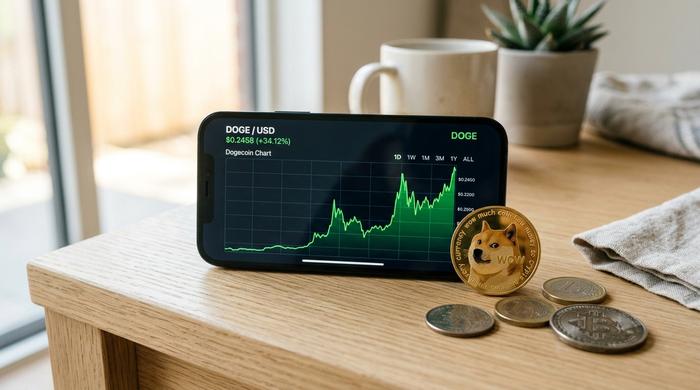
How Dogecoin Hit Its 2021 Peak Price
The 2021 rally that turned Contessoto into a Dogecoin millionaire and minted a few thousand others happened for one structural reason and three social ones.
Structurally, the COVID-era stimulus bull market had pushed retail money into every speculative asset, from GameStop to NFTs. Dogecoin, with its low absolute price and low barrier to buy, was a natural retail favorite. Doge had been around since 2013 and never hit $0.01 sustainably until early 2021. By April it was $0.40. By May 8 it printed $0.7376.
Socially, three things lined up. First, Elon Musk's repeated endorsement on Twitter and the announcement of his SNL appearance on May 8, 2021. Second, a Reddit and TikTok community that turned every Musk meme tweet into buying pressure. Third, a wave of YouTube creators producing video after video on the next 10x. The combination created a feedback loop where new buyers chased prior buyers, and prior buyers held longer because the rally validated the trade.
The SNL appearance itself broke the rally. Musk poked fun at Doge live on air, the "to the moon" framing fell flat, and DOGE began a nearly two-year decline. The peak market cap of $88.8 billion was never re-tested.
Dogecoin Today: 2026 Price, Market Cap, Outlook
For anyone hoping to become a Dogecoin millionaire from scratch in 2026, the starting point matters. Late April 2026: Doge trades around $0.099, with a market cap near $15.2 billion. Rank #9 to #10 on CoinMarketCap, behind Bitcoin, Ether, the major stablecoins, XRP, and BNB. The 2025 cycle high was around $0.41 in January, driven mostly by the November 2024 election outcome and the launch of the new federal Department of Government Efficiency, which Musk co-led starting January 20, 2025. Doge popped roughly 153% post-election on the Musk association alone. Memes and headlines still move this asset more than fundamentals do.
Supply is the unsexy part nobody wants to read about. Dogecoin has no supply cap. Roughly 150 billion coins exist, with 5 billion new ones minted every year. That works out to a 3 to 4 percent inflation rate. Bitcoin caps at 21 million. Doge does not. The total worth of Dogecoin in circulation today is set by that 150 billion coin float, not by any artificial scarcity. New supply has to be soaked up by new demand just to hold the price flat. Every platform that lists DOGE has to price that dilution into its trading volume forecasts.
Holder concentration is heavier than most beginners expect. CoinCodex puts the top 10 wallets at over 60 percent of supply. The single Robinhood cold wallet holds 27.16 billion DOGE. That is around 17.9 percent of the total, sitting in one wallet. A handful of whales can move the price further in a day than retail can defend in a month.
How Much Dogecoin to Be Worth a Million in 2026?
The Dogecoin millionaire question reduces to a calculator the moment you stop imagining and start running the math.
| Doge price | Coins needed for $1,000,000 | Initial investment at $0.099 (today) |
|---|---|---|
| $0.10 | 10,000,000 | ~$990,000 |
| $0.50 | 2,000,000 | ~$198,000 |
| $1.00 | 1,000,000 | ~$99,000 |
| $5.00 | 200,000 | ~$19,800 |
| $10.00 | 100,000 | ~$9,900 |
So if you buy Doge today at $0.099 and you want to be worth a million dollars on a single position, you either need a six-figure check or you need DOGE to multiply by a factor of 10 or more. A run from $0.099 to $1 is a 10x. A run to $5 is a 50x. A run to $10 is a 100x and would put Dogecoin's market cap above $1.5 trillion. For context, Bitcoin's entire market cap at its 2025 highs was around $2 trillion. Asking Doge to do that is not impossible, but it requires conditions that have never lined up before.
The other math problem is the supply ramp. By the time Doge could plausibly reach $1, another 25 billion coins will have been minted on top of the current 150 billion, diluting any future rally. Bitcoin maximalists like to point this out. They are not wrong.
Other Dogecoin Millionaires: Whales and Top Wallets
Contessoto is the named one, but he is not alone. The Doge whale list includes early miners from 2013-2014, exchanges holding customer balances on cold storage, and a handful of anonymous addresses that have been accumulating since the 2018-2019 lows.
Public Reddit and YouTube have at least a dozen self-identified Doge millionaires whose stories have been profiled across CNBC, Fortune, and Decrypt. Many of them held over 10 million coins at some point. Most share two characteristics. They bought before late 2020. They held through the May 2021 SNL crash. The ones who are still millionaires today either took partial profits during the 2021 spike or rode straight through 2022-2023 with cash reserves to keep buying dips. The on-record investor stories are heavily skewed toward survivors; analyst commentary tends to underweight the silent majority who bought near the top and never saw their bag recover.
The ones who are no longer millionaires usually leveraged in late, watched the bag triple, refused to sell because the community said selling was disloyal, and woke up to a 90 percent drawdown.
Could You Buy Your Way Into a Doge Million Today?
Three paths exist for a fresh buyer who wants to become a Dogecoin millionaire in 2026. None of them is comfortable.
The first path is the one nobody wants to read. Without a six-figure starting position or an unprecedented run, becoming a Dogecoin millionaire is unlikely. A new $5,000 buyer at $0.099 picks up about 50,000 DOGE. Turning that bag into $1 million means Doge has to hit $20 per coin. That puts its market cap above $3 trillion, roughly the combined market cap of Bitcoin and Ether at their 2025 peaks. Not impossible. Planning your finances around it, though, is fantasy.
Second path: patience plus dollar-cost averaging across a full cycle, expecting a meaningful gain instead of a million. A buyer who put $10,000 into DOGE at the November 2025 lows around $0.06 and sold near the January 2026 peak of $0.41 walked away with roughly $68,000 before tax. Real money. Not millionaire money.
Third path: leverage. Same path that turned Contessoto's $180K position into a $3 million peak and then a $50K trough. Margin trading and credit-card crypto are how most blown-up retail traders got blown up. The sequence rarely ends well.
DOGE ETFs and the New Path for Cryptocurrency Buyers
The 2025 wave of spot meme-coin ETF approvals quietly changed the entry math for any future Dogecoin millionaire. The REX-Osprey DOJE ETF launched on September 18, 2025, the first US-regulated spot Dogecoin product. The 21Shares TDOG followed on Nasdaq. Bitwise and Grayscale spot DOGE ETF filings remain pending as of April 2026. In March 2026, the SEC and CFTC issued joint guidance classifying Dogecoin as a digital commodity, which removed most of the lingering regulatory ambiguity around DOGE products on US exchanges.
For a retail buyer, that matters in two ways. First, you can hold Doge exposure inside an IRA or 401(k) without ever touching a crypto exchange or self-custody wallet. Second, ETFs let traditional advisors recommend a small DOGE allocation without violating fiduciary norms about unregulated tokens.
It also means the next time a Musk-style endorsement triggers a rally, the institutional bid can come through ETF inflows rather than only retail brokerage accounts. The 2021 setup, where price moves required individuals on Robinhood to fund the move, is not the 2026 setup.

Risks: Why Most Doge "Millionaires" Stopped Selling
The Dogecoin millionaire story tends to leave out the survivors who quietly cashed out and the wreckage of the ones who did not. Both are common.
The headline risk is volatility. DOGE's standard deviation across a typical 12-month window is two to three times Bitcoin's. A 30 percent week is normal. A 50 percent month is not unusual. Holding through that swings without a plan is psychologically brutal even when you are ahead.
The second risk is supply dilution. Doge issues 5 billion new coins every year. Anybody promising you a $10 DOGE is also implicitly assuming demand grows fast enough to absorb 25 billion new coins over five years.
The third risk is concentration. When the top 10 wallets control more than 60 percent of supply, a single whale or a single exchange decision can move the price more than retail can defend. The Robinhood wallet alone could trigger a multi-day decline if it ever rebalanced.
The fourth risk is narrative dependence. Doge has no cash flows, no fee burn, no staking yield, no developer monopoly, no first-mover technical lead. Its value is the meme, the community, and the celebrity endorsement. Removing any one of those legs is enough to break a rally. The Dogecoin Foundation roadmap announced in 2025 includes a Project Sakura proof-of-stake migration, ZK scaling to roughly 1,000 transactions per second, and a Such App wallet planned for the first half of 2026, but none of those changes are priced in.
The fifth risk is scam and scheme exposure on the periphery. Searching "dogecoin millionaire" pulls up pages selling automated trading bots, cloud mining contracts, and "secret signal" Telegram groups. Almost all of them are scams. A genuine Doge product launches through a real exchange, not through a YouTube ad.
Tax and the Wealth-Management Side of a DOGE Gain
Hit a real Doge gain and the tax bill becomes a planning problem. Not optional. The IRS treats cryptocurrencies as property. Every sale, every swap, every crypto-for-stock trade is a taxable event. Sold inside a year? Ordinary income rates, 10 to 37 percent. Held more than a year? Long-term capital gains rates, 0, 15, or 20 percent depending on your bracket.
Starting with the 2025 tax year, most US exchanges issue Form 1099-DA. They report your gross proceeds straight to the IRS, the same way brokers already report stock sales on Form 1099-B. The agency does not need a subpoena to know you sold. Sitting on a six-figure paper gain? Practical rule: split the sale across two tax years to spread the bracket impact, document your cost basis, and park cash to pay the bill before you spend any of the proceeds.
The blown-up Dogecoin millionaire stories almost always have a tax footnote nobody mentions. People sold at the 2021 peak. They owed short-term tax on the gain. The bill came due in April 2022, after the price had already collapsed. Some of them ended up owing more in tax than the remaining bag was worth. Plan for that scenario before you celebrate. Especially if you used margin to get there.