Philippine Currency: Peso, PHP, USD to PHP & 1 USD Today
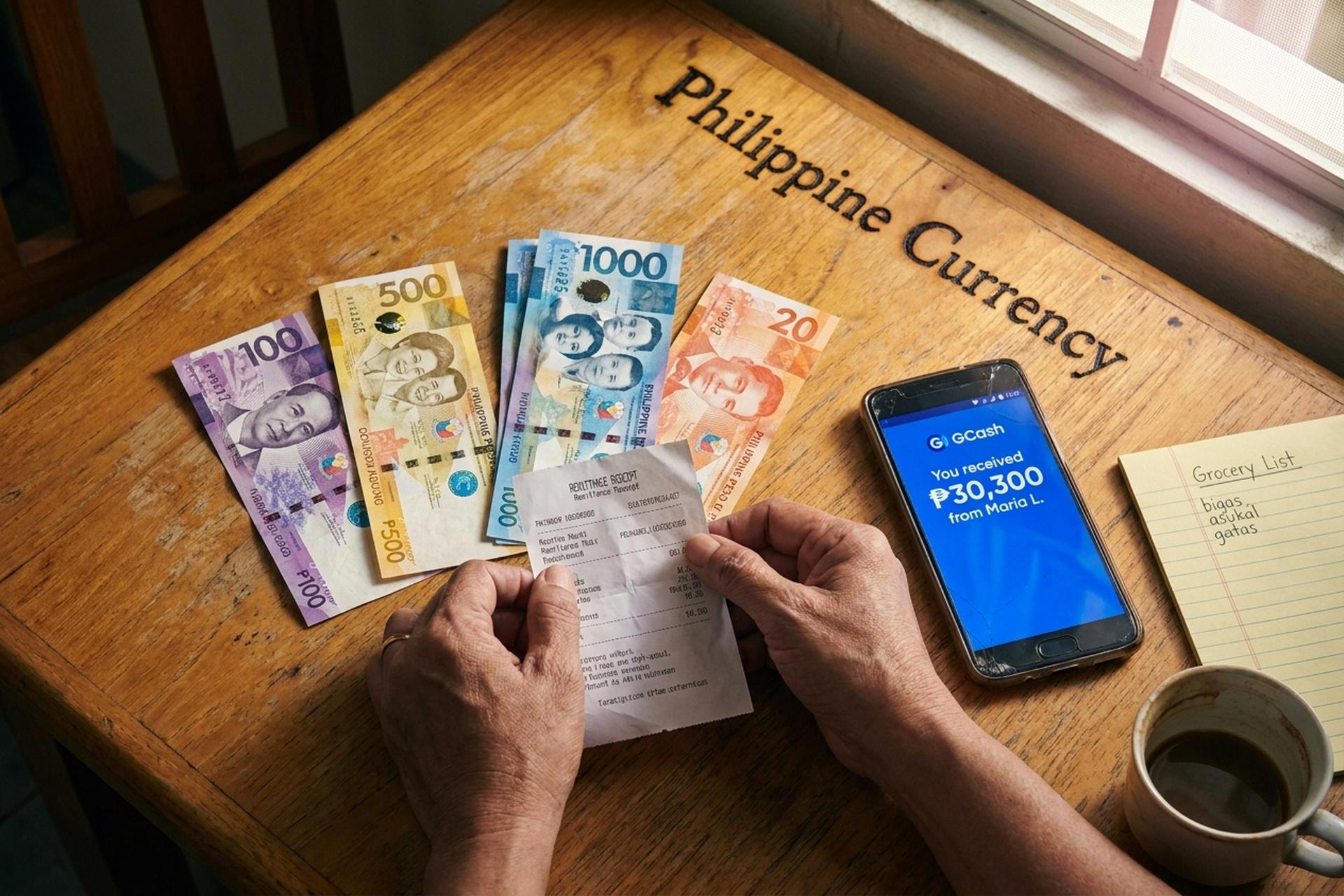
A nurse in Texas wires part of her paycheck home to Bulacan once a month. Last April that USD 500 turned into roughly ₱28,000 at the receiving end. This April it turned into ₱30,300. Same dollar amount, almost 8% more pesos. Her family didn't get richer. The Philippine peso just got weaker against the US dollar, and the timing of when she clicks "send" suddenly matters more than it has in years.
That tiny example is most of what you need to understand about Philippine currency in 2026: a 60-peso-to-the-dollar exchange rate that swings by single digits a year, a remittance economy that funnels USD 35 billion home annually, a central bank that just hiked rates for the first time in two years, and a fast-moving crypto layer trying to skim fees off the corridor banks have dominated for decades. This guide covers the peso itself (the banknotes, coins, history, and symbol), then walks through how USD to PHP actually works, what it costs to send money to the Philippines today, and where stablecoins, GCash, and the BSP's digital peso fit in.
What Is the Philippine Currency? Peso and PHP
The peso is the Philippines' currency. ISO 4217 lists its currency code as PHP. The symbol is ₱. One peso is split into 100 sentimo, what people called centavos in older usage. Only the Bangko Sentral ng Pilipinas can issue it. In Filipino people say piso; in English, peso. Whichever way you spell it, that is what people pay with for goods and services across the country.
There is a date stamped on the ₱ symbol itself. It came in on August 3, 1903, by Executive Order No. 66 under US colonial Governor William H. Taft. The designer was Charles Edward Magoon. That timing is not random. The peso first circulated as the Spanish dollar and Spanish real, money that arrived on Manila Galleon ships from Acapulco. Mexican peso silver coins kept circulating until the late 1800s. From there the currency ran through American rule, then a Japanese-occupation version, before being reborn as the modern Philippine peso on July 4, 1946, the day independence took effect.
For the next two and a half decades the currency in the Philippines was pegged. ₱2 to the US dollar from 1946 to 1960, then ₱3.20 from 1960 onward. The Marcos administration unpegged it in 1970 and let it float. That managed float still runs today. The BSP smooths big jumps when needed, but it does not defend any specific rate, which is exactly why the peso can drift two or three percent inside a single quarter without anyone calling it a crisis.
Live USD to PHP Exchange Rates Today and 2026 Trend
April 24, 2026: 1 USD bought 60.6950 PHP. That puts it near the weak end of a 12-month range that has stretched from about 56 all the way to 62.86 (the all-time low, hit in January 2026). Numbers from Trading Economics and BSP reference rates. The Philippine peso exchange rate is down about 8.0% versus the US dollar over the trailing year. Just in the last month, -1.15%. USD to PHP exchange rates at this level ripple out everywhere. Import bills. Tuition payments to overseas universities. Foreign investment flows.
Two things drove the move. One is policy divergence. The Fed kept rates higher than markets had been pricing, while the BSP was cutting through 2024 and into early 2026. The other is the Middle East oil shock that hit Q1 2026. The Philippines imports roughly 95% of its crude. So when oil prices climb, the country's import bill swells, demand for dollars jumps, and the peso slides. By March 2026 headline CPI inflation was 4.1% year-over-year, busting the BSP's 2-4% target band.
That pushed the central bank into a pivot. On April 23, 2026 the BSP raised its target reverse repurchase rate by 25 basis points, to 4.50%. First hike in two years. The Monetary Board also bumped its 2026 inflation forecast up to 6.3% (from 4.3%) and hinted at more tightening if oil keeps misbehaving. For currency watchers, that takes some of the policy-divergence pressure off the peso. For OFW families, it suggests the live USD to PHP number may have already seen its worst day.
Quick note on what "live" actually means. The "mid-market exchange rate" you see on Google, Reuters, or XE is just the midpoint between bid and ask in the wholesale interbank market. Nobody sends money at that rate. Banks, MTOs, exchange counters all stack a margin (the "spread") on top of it. That margin is the real number you want to compare. We get into it below.
Philippine Peso Banknotes and Coins
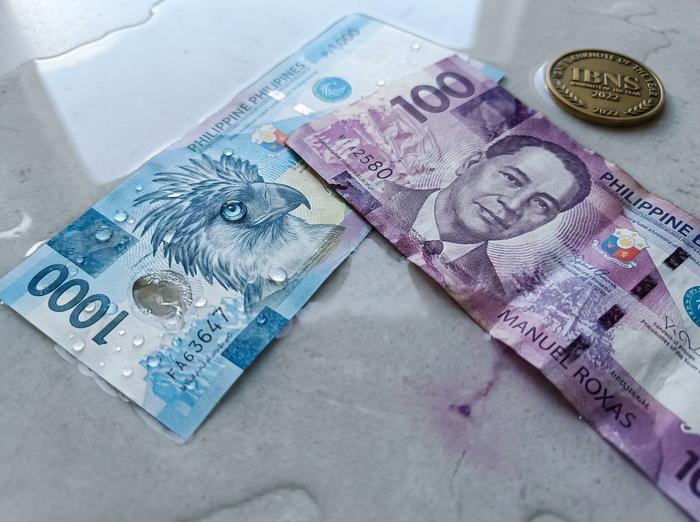
Six new banknotes show up in everyday circulation. All of them belong to the New Generation Currency banknotes series (the NGC), which landed in 2010 and has had refreshes since: the ₱20, ₱50, ₱100, ₱200, ₱500, ₱1,000. Of those, the 500-piso and the ₱1,000 pack the heaviest defenses against counterfeiters. The BSP designs them to enhance security features over earlier issues. Intaglio printing. Embedded threads. Color-shift ink that flips between magenta and green when you angle it under light. On April 6, 2022 the ₱1,000 got reissued in polymer to improve durability and counterfeit resistance. That one was the first polymer note in Philippine history. It also won the IBNS Banknote of the Year for 2022. A bit earlier, on January 18, 2021, the BSP also issued a one-off ₱5,000 commemorative for the 500-year anniversary of the Battle of Mactan, with Lapulapu's face on it. The ₱5,000 doesn't actually circulate. Here are the NGC banknotes and the matching coins and notes you'll find in wallets day to day. Every peso note has a portrait of president or national hero on the obverse, and you'll spot Philippine national symbols depicted on coins and on banknote reverses as well:
| Denomination | Obverse portrait | Reverse imagery | Substrate |
|---|---|---|---|
| ₱20 | Manuel L. Quezon (transitioning to a coin) | Banaue Rice Terraces, palm civet | Paper (NGC 2010) |
| ₱50 | Sergio Osmeña | Taal Lake, Maliputo fish | Paper (NGC 2010) |
| ₱100 | Manuel A. Roxas | Mayon Volcano, whale shark | Paper (NGC 2010) |
| ₱200 | Diosdado Macapagal | Bohol Chocolate Hills, tarsier | Paper (NGC 2010) |
| ₱500 | Corazon and Benigno Aquino Jr. | Subterranean River, blue-naped parrot | Paper (NGC 2010) |
| ₱1,000 (polymer) | Philippine Eagle, sampaguita | Tubbataha Reefs, South Sea pearl | Polymer (April 2022) |
The ₱20 paper note is on the way out. Since 2019 a coin has been doing its job. Today's peso coins denominations are: ₱1, ₱5, 10 pesos (that ₱10 coin), and ₱20, and you'll see 25-sentimo pieces too. Same theme on the coins of the Philippines as the peso notes — national symbols on the reverse, historical figures on the obverse. José Rizal sits on the ₱1.
A couple of small warnings. First one: travel writing online still claims, somewhat regularly, that General Emilio Aguinaldo is on a current NGC banknote. He's not. His face turns up only on older Pilipino-series notes, and those stopped being legal tender years ago. Second one: the New Design Series, the NDS, that came before NGC, has been demonetized too. If one shows up in a drawer somewhere, don't try to spend it. Swap it at a BSP branch instead. Both NGC and NDS came out under the same Republic Act framework that controls how the central bank issues currency.
Bangko Sentral and the Currency of the Philippines
The Bangko Sentral ng Pilipinas, the Philippines' central bank, is the only entity that can print or mint the peso. It opened on January 3, 1949 under the original name Central Bank of the Philippines. Republic Act 7653 reorganized it in 1993 and gave it an inflation-targeting mandate. The actual printing and minting happens at the Security Plant Complex in Quezon City. Beyond issuing currency, the BSP sets the policy rate, runs prudential supervision over banks and the wider credit system, and licenses Virtual Asset Service Providers under a framework it published in 2021.
Two BSP decisions are shaping the peso in 2026. One we already covered: the rate hike to 4.50% in April, aimed at imported inflation. The other one is quieter but maybe more interesting. On September 1, 2025 the BSP extended its moratorium on new VASP licenses again. As things stand right now, the BSP lists nine active VASPs: Coins.ph, PDAX, Maya Philippines, UnionBank, Moneybees, Bloomsolutions, SurgePay/Direct Agent 5, TopJuan, and XenRemit. A few more are registered but not active. The regulator is not handing out new licenses while it works through stability and consumer-protection questions.
That freeze matters. It locks the field for anyone running crypto-based money transfers. Filipinos can still hold and transact USDT/PHP, USDC, and BTC through any of those nine providers. New competitors cannot break in. Pair that with the BSP's wholesale-only stance on a digital peso, covered further down, and the regulatory picture is oddly stable for what is otherwise one of Asia's most crypto-active retail markets.
How to Send Money to the Philippines: Money Transfer 2026
Send-money flows are the bloodstream of the Philippine economy. In 2025 cash remittances from Overseas Filipino Workers hit USD 35.634 billion, up 3.3% from USD 34.49 billion the year before. That is a record. Personal remittances, a wider measure that includes in-kind transfers, came in at USD 39.62 billion. Together they pencil out at roughly 7.3% of GDP and 6.4% of GNI. About one peso in every fourteen of national output is wired home from somewhere abroad.
What the corridor mix tells you is where the money is coming from, and where the fintech fight is the loudest:
| Source country | Share of 2025 cash remittances |
|---|---|
| United States | 39.7% |
| Singapore | 7.3% |
| Saudi Arabia | 6.6% |
| Japan | 5.0% |
| United Kingdom | 4.6% |
| United Arab Emirates | 4.6% |
The US is dominant. Nearly two of every five remittance dollars are wired from an American checking account, sent through a money-transfer rail, and arrive in a Philippine peso wallet or at a pickup counter. That is why US-PH is the single biggest battleground for Southeast Asian fintech.
Senders have three options for money transfers to the Philippines. Banks running correspondent SWIFT. Money transfer operators (Western Union, MoneyGram, Remitly). Crypto and stablecoin rails. Speed runs from a few minutes to a few business days. Cost runs even wider. The next two sections explain why.
Currency Converter: Convert USD to PHP at Mid-Market
If you only need to know what 1 USD or one US dollar to Philippine peso is worth right now, every currency converter (Google, XE, Wise, Reuters, Bloomberg) will quote the mid-market exchange rate when you convert USD to PHP. Money exchange and currency exchange counters use the same reference but add a margin.
Real spreads from real providers as of late April 2026 look roughly like this on a dollars to Philippine pesos exchange:
- Google / XE / mid-market: ≈ ₱60.70 per USD
- Wise: within 0.4-0.6% of mid-market on the customer rate, plus a small flat fee
- Remitly first-transfer promo: ₱62.03 per USD (a deliberate teaser above mid-market)
- Major US banks via SWIFT: typically 1.5-3% below mid-market plus USD 25-45 wire fee
- US airport exchange counters: 5-10% below mid-market
The "first-transfer promo" trick is worth flagging. New-customer rates from Remitly, Wise, and others routinely sit above the mid-market for the first send to attract you, then revert to a normal margin afterward. Set rate alerts on Wise or Revolut if you are sensitive to the difference; locking in a strong dollar near 60.7 saves real money compared to sending at 58.5 a few months later.
A real-time exchange rates note: live rates move every second during weekday trading and freeze on weekends. If you need to time a send, weekday liquidity is deeper and spreads are tighter. Convert USD to PHP on a Saturday and you'll usually pay a wider margin.
Western Union, Banks, Wise: Hidden Fees Compared
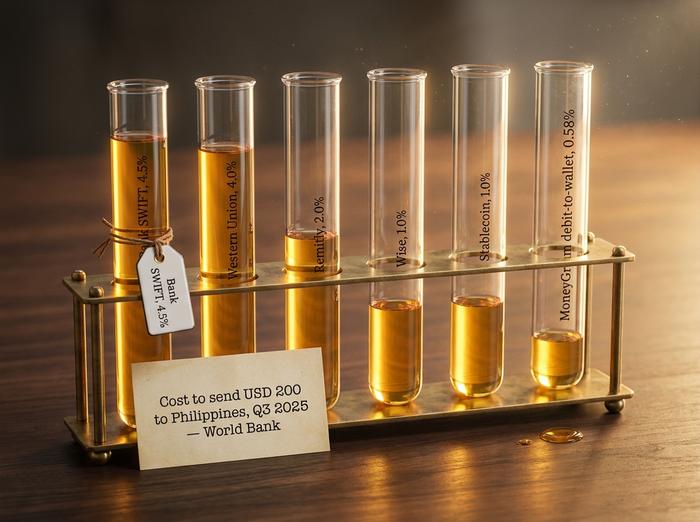
The cost of sending money is the place where senders give up the most money without realizing it. The World Bank's Remittance Prices Worldwide Issue 53 reports the global average cost of sending USD 200 was 6.49% in Q1 2025, more than double the United Nations Sustainable Development Goal target of 3%. Digital-only money transfer operators averaged 4.85%; non-digital channels averaged 7.16%. The fee story on the US-PH corridor specifically is more dramatic:
| Channel | Average cost on US-to-PH (USD 200) | Notes |
|---|---|---|
| Major US banks (SWIFT) | 4.0-4.9% | USD 25-45 wire fee plus FX margin |
| Western Union (cash pickup) | 3.5-4.5% | Faster but pricier than digital |
| Remitly / WorldRemit | 1.5-3.0% | Bank deposit, ~1-2 hours |
| Wise (transfer) | 0.6-1.2% | Mid-market rate plus flat fee |
| MoneyGram debit-to-wallet | 0.58% | Cheapest digital option per WB Q3 2025 |
| Stablecoin (USDT) via Coins.ph + BCRemit | ~1% effective (claimed 80% cheaper than 5-10%) | Settles in minutes |
Hidden fees come in three shapes. The first is the FX spread itself, the gap between the rate you see on Google and the rate you actually convert at. A 2% spread on a USD 1,000 transfer is USD 20 you never see. The second is the "free transfer" trick: zero fees but a wider spread that recovers the cost. The third is the receive-side cost: pickup outlets in the Philippines sometimes charge a small peso fee at cash-out, and ATM withdrawals from the receiving account add another 200-pesos-or-so per pull.
For practical use: if you send under USD 500, Wise and Remitly normally come out cheapest by a wide margin. For larger amounts, a direct bank transfer can pencil out once you spread the wire fee. For crypto-comfortable senders, stablecoins now match or beat both.
Crypto, Stablecoins, and Cheaper Money Transfers
Philippine crypto looks mature, retail-led, and stablecoin-heavy. Chainalysis ranks the country 9th in its 2025 Global Crypto Adoption Index. That's down from 8th in 2024 and a long way off the peak (2nd) in 2022. Roughly 10.5 million Filipinos hold crypto, which Statista puts at about 10.5% penetration. Triple-A's broader surveys go higher, to 22-23%, once remittance-driven balances get counted. By value, the Philippines sits 6th globally in retail centralized exchange activity. In DeFi, only 13th. Read that two ways together and one thing falls out: crypto here is being used as money, not yield.
On Coins.ph, which is the country's biggest licensed exchange (16 million customers, around USD 71 million in 24-hour volume), the busiest pair by a long way is USDT/PHP. Bitcoin gets the press. Tether actually pays the bills. Which is why the November 1, 2025 launch from Coins.ph and BCRemit is worth knowing about. They opened a stablecoin remittance corridor that takes sender currency, converts it to USDT or USDC, settles on-chain in minutes, and lands the pesos inside a Coins.ph wallet. They say fees fall by up to 80% versus the 5-10% banks and old-school MTOs typically take. On the US-PH route, that's roughly USD 30 versus USD 6 to send USD 600 home. Real money, real difference.
Plisio (which publishes this article) plays in the same area. It's a crypto payment processor that lets businesses and individuals take and convert digital assets without holding the underlying coins themselves. For Filipino freelancers being paid by foreign clients, the math now leans toward getting paid in stablecoins. Hold briefly in USDT. Convert to PHP locally through a licensed exchange or an e-wallet. The "send USD via Western Union" pattern is still there. It is just no longer the fastest, cheapest, or only way.
GCash, Maya, and PHP Currency Mobile Apps
The other half of the peso story today is on phones. GCash, the bigger of the two wallets, crossed 94 million registered users back in 2024-25, with 81 million active in January 2025 and around 2.5 million merchants accepting it. Its parent, Mynt, was valued at USD 5 billion in August 2024 after MUFG and Ayala Corporation joined the cap table. Globe Telecom's 2025 financials show GCash kicking in roughly 22% of group pre-tax profit. Among Filipino adults 18 to 45, e-wallet penetration hit 92% in early 2025. Pretty much everyone has one.
Maya (the rebranded PayMaya) is number two, with over 50 million registered users and a real banking license that lets it pay interest on balances. Between the two, GCash and Maya have soaked up almost all of the day-to-day PHP currency flow that used to sit in cash or in checking accounts. Salaries land in GCash. Bills get paid from GCash. QR codes at sari-sari stores clear through GCash. Even church donations and jeepney fares now move on the same rails, more often than not.
For receiving remittances, both wallets are wired into the big MTO networks. GCash plugged into Viamericas, which pulls US-to-wallet remittances right into the biggest corridor. Remitly and WorldRemit also do direct-to-GCash deposits now. So a sender taps a phone, the recipient's phone buzzes, and pesos show up in the wallet within minutes. Five years ago that same trip took two days and a queue at the pickup counter.
PHP to USD: 1 USD in Pesos and GBP Compared
Most queries flow one way: USD to PHP for senders. PHP to USD goes the other direction, useful for Filipinos buying foreign goods, paying overseas tuition, or converting ahead of travel. The mechanics are identical. Mid-market on April 24, 2026 was roughly USD 0.0165 per PHP (the inverse of 60.69), so ₱5,000 was about USD 82. For practical conversions on a $100 ATM withdrawal in pesos, expect ₱6,000 to ₱6,070 depending on the bank and ATM operator fee.
The other reference rate worth knowing is GBP. The British pound trades around ₱75-77 in 2026, reflecting roughly USD 1.24-1.27 per GBP plus the peso's underlying weakness. UK-based OFWs sending GBP home see one of the more generous corridor rates, and the UK accounts for 4.6% of remittance inflows, slightly behind Saudi Arabia and Japan.
A tactical point on conversions: never convert at airport counters if you have any other option. Spreads of 5-10% are common in Manila Ninoy Aquino International, Cebu, and similar hubs. Use BPI, BDO, Metrobank ATMs in cities for ATM withdrawals (₱50,000 daily cap, roughly ₱200/USD 4 fee per pull), or Wise/Revolut cards if you are visiting from abroad.