Blooket Review: Fun Learning Games Taken to the Next Level
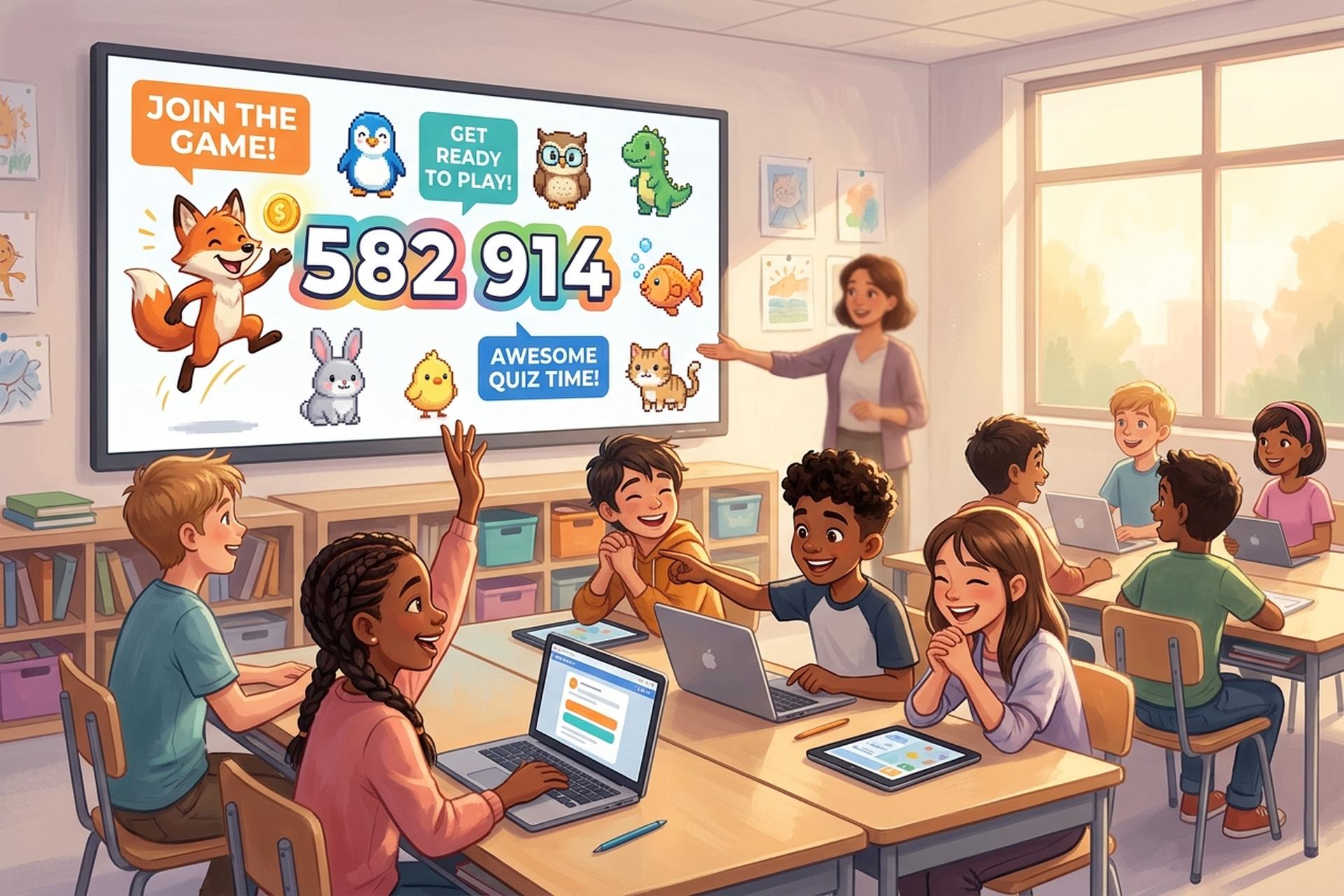
A Blooket game launched on a classroom projector has a weirdly specific effect on teenagers. They sit down faster. They stop checking their phones. They negotiate Blook trades on the way out. Since its public launch in October 2020, Blooket has quietly grown into one of the most-used game-based learning platforms in the world, with more than 10 million cumulative users by 2025 and a library of 20+ million question sets built by teachers. In 2026 it sits between Kahoot and Wayground (the rebranded Quizizz) as the middle option: lighter than a full assessment system, heavier than a buzzer-style quiz app. The differentiator is the collectible economy of Blooks and the deep catalog of unique game modes that keep the same question set feeling fresh for weeks.
For a crypto and fintech audience, there is an extra reason to pay attention. Blooket has a native game mode called Crypto Hack where players mine Bitcoin-style tokens and hack one another to steal balances. It is pure classroom metaphor with no blockchain under it, but it is one of the smoothest hooks in EdTech for teaching digital scarcity and wallet-security basics. This review walks through what Blooket is, how it works, the current game modes, the Blooket Plus pricing for 2026, the safety caveats around "hack" sites, and how teachers now use the platform for crypto and financial literacy lessons.
What Is Blooket and How It Works for Educators
Blooket is a free, browser-based game platform built around question sets. A teacher creates or imports a set of questions and answers on any topic. Students join at play.blooket.com by typing a six-digit code, and the class plays through a selected game mode. Each correct answer moves the student forward inside the mini-game, whether that means buying ingredients for a virtual cafe, defending towers against waves of monsters, or fishing up tokens to rack up points and upgrade a loadout. The academic layer stays put; the game mechanics rotate on top.
The platform was built by brothers Ben and Tom Stewart. Ben, a self-taught developer, shipped the first version in 2018 as a side project; Tom runs operations. The legal entity is Blooket LLC in Middletown, Delaware, still independent and still bootstrapped as of 2026. The public launch in October 2020 landed exactly when US schools needed remote tools, and the platform scaled fast from there. In a 2023 UBC ETEC522 interview, Ben said the goal was building games "students actually want to play during review," and the retention numbers since then suggest the pitch worked.
A key design choice: Blooket separates the quiz layer from the game layer. A single set of blockchain-basics questions and answers can be played through Gold Quest one day and Tower Defense the next. That is why teachers can build one strong question pack on wallets or Bitcoin and reuse it across a whole unit without extra prep.
Blooket Game Modes: Fun Features and 25+ Unique Modes
Blooket ships with 25+ active modes in 2026. Eighteen are available on the free plan, nine are Plus-exclusive. Every season introduces new packs of modes, and older seasonal modes (Santa's Workshop in December, Candy Quest in October) rotate in and out. The platform is currently on Season 7, which launched in September 2025 with Zorblitz, a 50-player lightning-shooter Plus mode.
| Game mode | Tier | What happens | Best classroom use |
|---|---|---|---|
| Gold Quest | Free | Pick chests, occasionally steal gold from classmates | Whole-class review; fast and competitive |
| Tower Defense | Plus | Correct answers fund towers against mob waves | Long review sessions; strategic thinkers |
| Tower Defense 2 | Plus | Sequel with co-op play and deeper strategy | Extended test-prep units |
| Tower of Doom | Free | RPG-style dungeon battles fueled by answers | Narrative units; boss-fight energy |
| Cafe | Free | Run a virtual cafe, serving customers per answer | Elementary and middle-grade classes |
| Factory | Free | Collect and upgrade Blooks via a production line | Individual pace and homework mode |
| Fishing Frenzy | Free | Catch fish; rarity scales with answer streaks | Short warm-ups and exit tickets |
| Crazy Kingdom | Free | Rule a kingdom; decision cards shape your reign | Cross-curricular decision-making |
| Racing | Free | Real-time race on an obstacle-filled map | Five-minute knowledge checks |
| Battle Royale | Free | Winning mode moves players through rounds of mode madness until one champion remains | Test-prep review; high stakes |
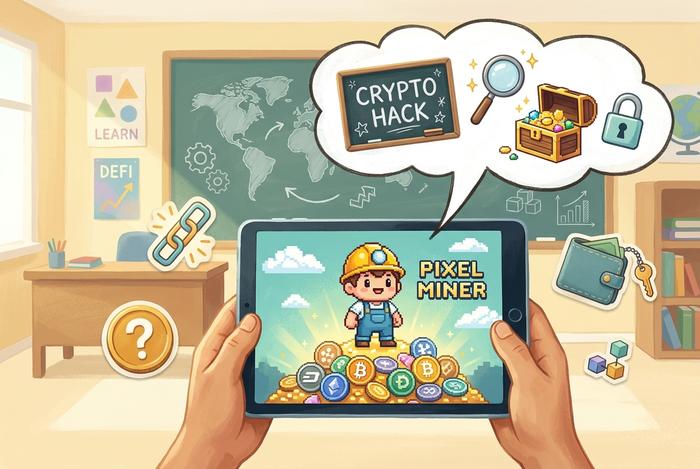
| Crypto Hack | Free | Mine or steal "Crypto" tokens from rivals | Financial literacy and crypto units |
| Blook Rush | Free | Collect Blooks from other players | Fast energy bursts |
| Zorblitz | Plus | 50-player lightning shooter, Season 7 headline | High-engagement events |
| Classic | Free | Straight quiz scoring with no mini-game | Formative assessment baseline |
Other modes cycle in around seasonal packs. Blooket pushes an update to the game mode catalog every season, which is part of why teachers stick with it. The same set of questions and answers feels like a different game three times in a term.
Important for crypto readers: the Crypto Hack mode
Crypto Hack was released on May 18, 2021 during Season 2 and is the most on-brand Blooket mode for a crypto-payment audience. Students answer questions to "mine" virtual Crypto tokens. The mode uses a Bitcoin-like symbol and lets players hack one another to steal balances. Critically, there is no blockchain, no real token, no wallet integration, it is purely an educational gameplay metaphor. But it is a genuinely useful hook when introducing digital scarcity, how real cryptocurrency differs from a classroom token, and why wallet security matters. Teachers who want to change the game on a flat lecture about Bitcoin often open with a fifteen-minute Crypto Hack round.
Setting Up a Free Blooket Account and Getting Started
Signing up takes under a minute. A teacher creates a free account with an email, selects the educator role, verifies the address, and lands on the dashboard. Students do not need accounts for in-class play. For homework and solo play, a student can optionally get started with a free account to save their Blook collection and progress.
The free tier covers the core product in full. A teacher can create unlimited question sets, edit and copy existing sets from the Discover library, upload the CSV from a spreadsheet to bulk-import, host games in any standard mode, and assign solo play as a homework assignment. Features gated behind Blooket Plus are mostly around class management, detailed reports and advanced hosting. For a teacher who runs Blooket once a week, the free account is genuinely enough.
Setup flow for a first-time teacher:
1. Go to blooket.com and click Sign Up.
2. Verify the email to activate the free account.
3. Either browse Discover and copy a pre-made set or click Create and build your own.
4. For bulk question entry, upload the CSV exported from Google Sheets or Excel.
5. When ready, click Host or Assign to begin a session.
How Students Join a Blooket Game on Any Device
Student-side join flow is one of the reasons teachers pick Blooket over more complex platforms. The steps:
1. The teacher picks a question set and a game mode, then clicks Host.
2. Blooket displays a six-digit code plus a QR code on the teacher's screen.
3. Students open play.blooket.com on any browser, phone, tablet or Chromebook.
4. Each student enters the code and picks a nickname to participate.
5. The teacher can share the link directly in Google Classroom or Teams as an alternative join path.
6. When everyone is ready, the teacher starts the round and students begin play.
Join codes are one-session only. Once the game ends or the lobby times out, the code is recycled. That is why the old lists of "active Blooket codes" on Facebook posts, YouTube videos and TikTok comment threads are almost always expired. It is also a safety feature: students cannot rejoin a stale code to disrupt a new class.
Blooket for Crypto and Financial Literacy Education
This is the angle that matters for a crypto-payment audience. Financial literacy is widely identified as the largest unmet content gap in US secondary education, and blockchain, wallets and digital payments now sit inside that gap. Blooket is a fast path to make otherwise dry topics land in a classroom.
Teachers have been building crypto-themed sets on Blooket Discover for years. A 2026 search surfaces question banks on Bitcoin basics, the Ethereum merge, how wallets work, DeFi vocabulary, crypto scams to avoid and the history of digital money. Most are individually built rather than from branded programs. The workflow for a fintech unit typically looks like this:
- Import or edit a 20-question set on the target topic (a Google Sheet plus CSV upload is the fastest path).
- Host it in a mode that matches the energy of the room, Gold Quest for a warm-up, Crypto Hack for a scarcity lesson, Tower Defense for a longer review.
- Use the Plus-tier detailed report after class to see which concepts students missed and boost insight into weak spots.
- Re-host the same pack through a different mode the following week to reinforce the topic.
The broader crypto-education benchmark sits with reward-based platforms rather than classroom tools. Coinbase Learn has distributed more than $150 million in crypto rewards since launch, according to industry trackers. Binance Academy runs Learn & Earn with small token rewards, and Bitget Academy and Kraken Learn add their own flavors. Those are adult, KYC-gated funnels. Blooket is the opposite end of the market: no KYC, no rewards, just classroom-scale exposure to digital-asset vocabulary. For a Plisio-style payment gateway that wants students to graduate into responsible crypto use later, the Blooket Discover library is an almost empty distribution channel in 2026.
A quick benchmark for how classroom gamification compares to reward-based crypto learning:
| Platform | Model | Reward | Audience |
|---|---|---|---|
| Coinbase Learn & Earn | Video + quiz | Crypto payouts, $150M+ distributed | US retail, KYC users |
| Binance Academy Learn & Earn | Short courses + quizzes | Small crypto airdrops | Global retail, KYC users |
| Kraken Learn | Written content + short quizzes | Reputation only | Global retail |
| LearnWeb3 DAO | Multi-week bootcamps | NFT certificate | Developers |
| Blooket | Teacher-hosted quiz games | Blooks and Tokens (in-platform) | K-12 classrooms |
Blooket Tips and Tricks for Classroom Engagement Success
A few habits separate teachers who get strong sessions out of Blooket from teachers who never quite click with it.
- Use pre-made sets for first runs. Blooket Discover has thousands of vetted sets. For a first class, borrow one rather than build one. Build your own set once students are already comfortable with the platform.
- Shorten time limits on easy topics. Default question timers are forgiving. For fast review, drop them to ten seconds so the game does not drag.
- Turn on individual-pace modes. Factory and solo homework mode let students complete rounds at their own speed without public leaderboard pressure. This is the mode that works best for anxious or quieter students.
- Run a review session as checkpoint assessments. A short round after each chapter gives fast topic-level data and helps students feel smarter and more confident going into a bigger test.
- Mix in Blook-themed rewards. Tie in-class achievements (completing a unit, earning a test score) to a bonus Pack, and engagement climbs. Remove rewards if they become a distraction, the academic signal has to stay primary.
- Close with short final reflections. Ninety seconds of writing after a round anchors what the game just taught. Students remember questions they got wrong on Blooket far longer than slides they scrolled past.
- Review the detailed report. The Plus report breaks down each question's correct-answer rate and common wrong answers. That is the most useful data the platform produces, and it is where teachers catch topic-level misconceptions.
- Avoid "hack" sites. Every semester a new Blooket hack or Blooket bot site appears, usually promising free Tokens or an auto-answer script. Most are scams, adware or credential phishers. Send students to play.blooket.com only.
Blooket Plus Pricing and Feature Comparison
Blooket is free at its core, but Plus adds several features that matter for teachers using the platform weekly. The current 2026 pricing:
| Plan | Price | Billing | Player cap | Key features |
|---|---|---|---|---|
| Free | $0 | — | 60 players | 18 modes, unlimited question sets, basic reports |
| Blooket Plus | $4.99/month ($59.88/year) | Annual | 300 players | All 25+ modes, detailed reports, folders, priority support |
| Plus Flex | $9.99/month | Monthly, cancel anytime | 300 players | Same features as Plus, no annual commitment |
| Group / School | ~$550/year | Annual | 300 players | Admin dashboard, co-teacher sharing, bulk accounts |
Historical note: Plus was $2.99/month ($35.88/year) until a quiet 2024 price update pushed it to $4.99. That is still below the equivalent tier on Kahoot (from ~$3.99/month billed annually), Wayground Super Pro ($7.99/month) and Gimkit Pro ($9.99/month). On entry-level pricing, Blooket is the cheapest of the four, and the Blook-trading repeat-play loop gives it the longest retention curve for students across multiple sessions.
What Plus actually unlocks:
- Detailed per-student and per-question reports
- Early access to new game modes and seasonal packs
- Higher player caps (up to 1,000 in select events)
- Priority customer support
- Customization options for hosting, branding and folders
For a teacher running weekly live sessions and tracking mastery, Plus pays for itself in the time saved on analyzing results. District-level licenses are handled case by case by the Blooket education team.
Blooket Safety, Privacy and Verified Account Use
Any EdTech tool that puts codes and student handles on a projector has to be evaluated for safety. Blooket handles this reasonably. Student accounts are optional; in-class play requires only a nickname and a code. The platform does not expose student email addresses during live games, and teachers can filter or freeze nicknames that turn inappropriate.
The Blooket privacy policy states design for COPPA (US under-13 users) and FERPA (student education records) compliance. EU schools typically review it under GDPR before deploying at scale. A verified account on the teacher side is required to access Plus features, and email verification is the default sign-up path.
The bigger safety issue is off-platform. Searches for "Blooket hack" and "Blooket codes 2024" pull in traffic, and the third-party sites attached to them often host malicious scripts and credential forms. A 2024 threat-intelligence report from Axis Intelligence logged more than 15,000 malware infections and an estimated $2.8 million in damages traced to educational-gaming hack searches. Payloads included credential harvesters, browser hijackers, keyloggers and ransomware. In April 2024, students at Millard South (Nebraska) used third-party code to inject racist content into a live Blooket session, and the district temporarily blocked the platform. Blooket has since hardened session validation, and Tokens, XP and Blook ownership are stored server-side so client-side cheats are rejected on the server.
The practical guidance for teachers and parents is short. Use play.blooket.com only. Ignore any third-party code aggregator. Treat any site that asks for a Blooket password as a scam. Cheat usage can trigger permanent account suspension and loss of all Blooks, and the platform enforces it.
Blooks Economy: Free Packs, Rarity and Tokens
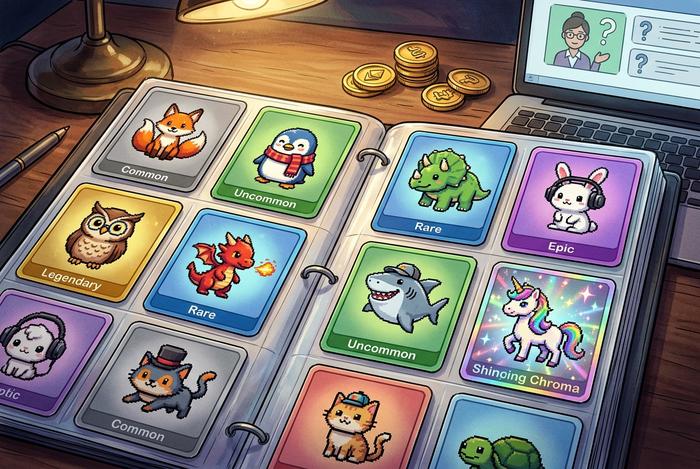
This is the part of Blooket that most resembles a Web3 collectible economy, even though nothing touches a blockchain. Tokens are the in-platform soft currency, earned by hosting games, playing solo and spinning the Daily Wheel. Blooks are collectible avatar creatures, with more than 330 in circulation by 2026. Packs (also called Boxes) cost 20 to 25 Tokens each and draw one Blook based on drop-rate odds. Standard packs include Safari, Aquatic, Medieval, Space, Breakfast, Bot and seasonal sets.
The rarity system mirrors gacha and NFT drop-rate math without any on-chain storage.
| Tier | Approx. drop rate | Community resale value |
|---|---|---|
| Common | Default | Not sellable |
| Uncommon | 12-20% | ~10 Tokens |
| Rare | 6-10% | ~25 Tokens |
| Epic | 2-5% | ~75 Tokens |
| Legendary | 0.2-1% | 500-1,000 Tokens |
| Chroma | 0.01-0.08% | 3,000+ Tokens |
| Unique | Reward only | Not sellable |
| Mystical | Event only | Community-priceless |
The Megalodon Legendary has a documented 0.2% drop from Aquatic Packs and trades at 3,000 to 5,000 Tokens in community marketplaces on Discord and Reddit. The structural similarity to NFTs is real enough that middle-schoolers who have negotiated Megalodon trades have already internalized scarcity, provenance and secondary-market pricing. When those students eventually touch an actual crypto wallet, the mental model is not new. Any claim that Blooks are NFTs is still wrong, they are server-side records, but the teaching analogy is genuinely useful.
Blooket vs Kahoot, Wayground and Gimkit in 2026
The gamified-learning space has four main names in 2026. Each optimizes for a different classroom moment.
- Kahoot is the synchronous party-quiz leader. Best for energetic whole-class rounds where every student answers the same question at the same time. Kahoot reports over 10 billion cumulative participants and more than 8 million educators worldwide as of late 2023. Paid tiers start around $3.99 per month billed annually for educators.
- Wayground (rebranded from Quizizz on June 24, 2025) leans toward self-paced assessment with strong AI question generation. Wayground reports 75 million monthly active users across 150+ countries, 90% of US schools, and $47.5 million in June 2025 revenue.
- Gimkit emphasizes in-game economy mechanics. Designed by a high-school student. Pro starts at $9.99 per month billed annually.
- Blooket sits in the middle. Lighter than Wayground, more varied than Kahoot, more accessible than Gimkit. The Blook collectibles and the rotating mode catalog give it the longest repeat-play curve for kids who play across many sessions. The competition between Blooket, Kahoot and Wayground is pushing each platform to ship updates faster.
For a teacher running a crypto literacy unit, Blooket and Wayground are the two natural fits. Blooket for energy, repeat-play and the Crypto Hack hook; Wayground for mastery tracking and AI-generated practice questions.
Khanmigo and the 2026 AI Features Update
The biggest platform update since launch is the Khanmigo Blooket Generator, a partnership with Khan Academy that moved out of beta in early 2025. A teacher describes a topic in plain English and Khanmigo produces a ready-to-import Blooket set of questions and answers. The tool is free to verified educators and has been the most discussed recent feature in teacher communities on Facebook, YouTube and Reddit, including detailed walk-throughs in comment threads and short review videos. For a crypto-literacy teacher, the prompt "Generate a 20-question Blooket on Bitcoin basics for ninth graders" now produces a usable draft in under a minute. The teacher still has to edit for factual accuracy, AI still drifts on crypto specifics, but the cold-start cost dropped dramatically. Blooket has no public API, so all integrations run through CSV import and browser-side flows rather than authenticated calls.