Best Crypto Signals 2026 : Top Telegram Groups and Providers
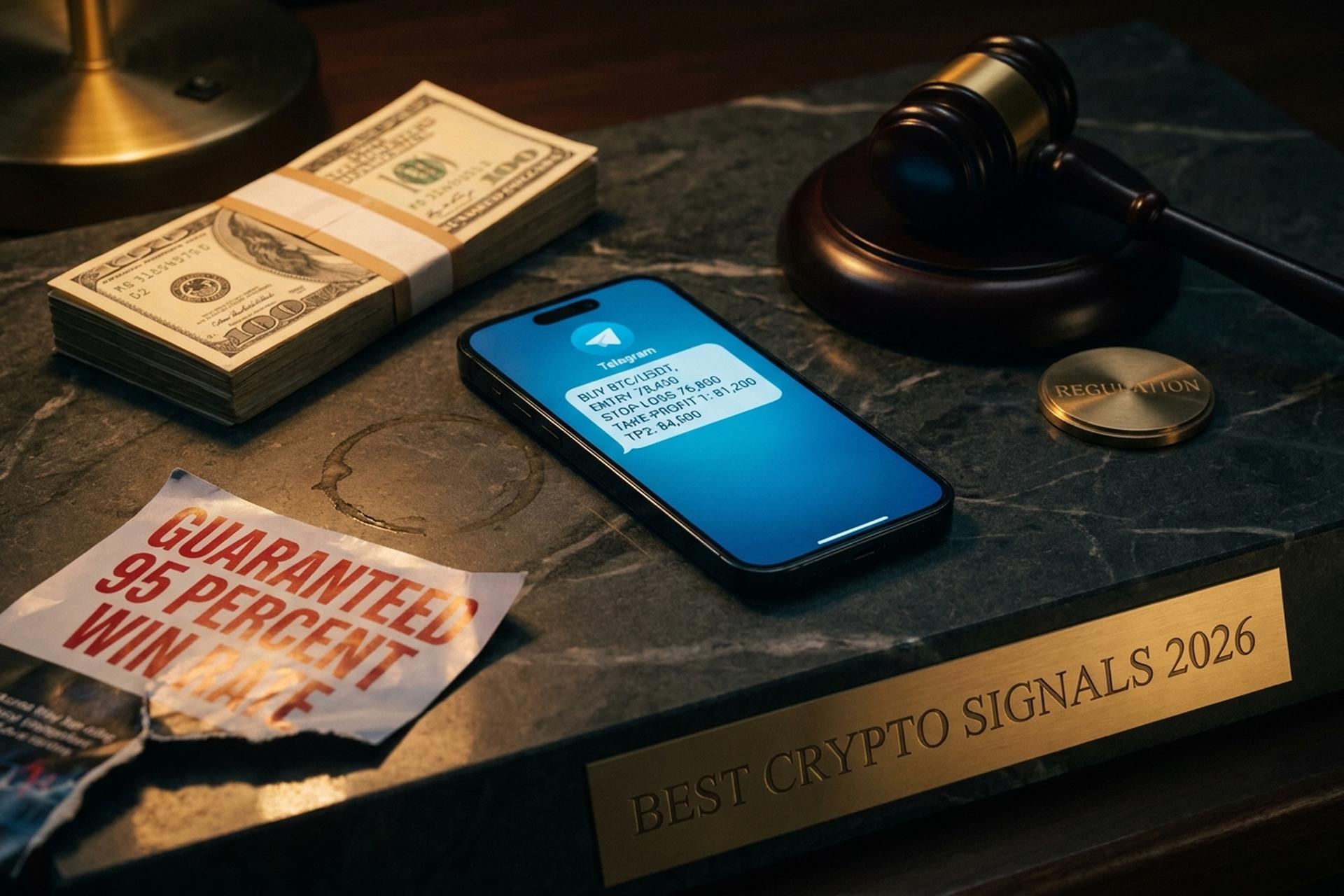
A "crypto signal" is, in plain English, a message telling you to buy or sell a specific cryptocurrency at a specific price, with a stop-loss and a profit target attached. The message usually arrives through a Telegram channel, a Discord server, or a mobile app. Subscribers pay anywhere from $5 to $290 a month for these alerts. Some groups are genuinely useful. Many are marketing hype. A small number are outright scams that have drained billions from retail traders in a volatile crypto market.
This guide ranks ten of the best crypto signals providers in 2026, lays out how the pricing works, covers the red flags every new subscriber should know, and explains what regulators are now doing to the worst operators. No affiliate rankings, no hype. Just what the data shows in April 2026 across bitcoin, ethereum, solana, and the broader altcoins market, including top cryptocurrencies traded on Binance and Bybit.
What crypto signals are and how signal groups work
A crypto signal usually contains five pieces of information: the asset pair (for example BTC/USDT), the entry price, the stop-loss, one or more take-profit targets, and a time frame. The sender adds a short explanation, sometimes a chart. The recipient reads the message and decides whether to enter the trade on their own exchange.
Signals come from two sources. Manual signals are written by experienced traders who read charts, crypto news, and market sentiment. Automated signals come from algorithms that scan for setups using technical indicators. Common ones include RSI as a momentum indicator, MACD for trend, and the moving average for direction. Some of the bigger brands now blend both approaches, pairing a human lead analyst with an AI back-end.
Most signal groups live on Telegram for one practical reason. Telegram has roughly one billion daily active users in 2026, and somewhere around a third of them engage with crypto content, according to Gate Wiki and industry trackers. A Telegram channel is instant, free to distribute, and easy to monetize behind a paywalled VIP tier. Discord is second. Dedicated apps and websites are third.

How we picked the best crypto signals providers
Three criteria shaped the list below.
Track record transparency. A provider that posts every trade, wins and losses, ranks higher than one that only screenshots green candles. Very few groups publish third-party audited results. Learn2Trade cites Myfxbook. An independent tracker called Smart Options audited 549 signals from top providers across November and December 2025 and found a composite 70.5% win rate, well below the 90% numbers most groups market. That gap is important context for every claim below.
Reasonable pricing. The sweet spot for a new subscriber is $30 to $150 a month. Services above $250 a month should deliver institutional-grade research and verifiable outcomes. Lifetime deals are convenient but carry the risk that the operator simply vanishes.
Channel and community. Telegram groups with responsive moderators, explained losses, and active community questions are healthier than ghost channels that only post one-way alerts. Any group that bans anyone who asks about a missed stop-loss is a warning flag.
Top Telegram groups: 10 best crypto signals in 2026
The table below is pulled from provider pages, independent reviews, and public data as of April 2026. Win-rate figures are self-reported unless noted otherwise. Treat them as marketing copy, not audited performance.
| Provider | Monthly price | Claimed win rate | Channel | Community size |
|---|---|---|---|---|
| Binance Killers | $290 | 92% | Telegram | 233,000+ free, 175,000+ VIP |
| Fat Pig Signals | 0.5 ETH per 3 months | 82.84% | Telegram | 46,000+ |
| Learn2Trade | £39 | 76% (Myfxbook cited) | Telegram + web | 38,000+ free, 3,000+ VIP |
| Crypto Inner Circle | $70 or $500 lifetime | 92% | Telegram | 155,000+ |
| AltSignals / ActualizeAI | Tiered monthly | 74% on 147 AI signals | Telegram | 50,000+ free, 1,000+ VIP |
| Rocket Wallet Signals | $150 | 70%+ | Telegram | 31,000+ |
| Wolf of Trading | Free + premium | Not publicly verified | Telegram | 170,000+ |
| Wolfx Signals | $89 | 93.37% | Telegram | 141,000+ |
| Dash 2 Trade | $50 or $120 per year | 76%–82% | Web + app | N/A |
| Bull Crypto Signals | $8 to $199 tiers | 87% | App + WhatsApp | 10,000+ across 137 countries |
A few honest notes on the list.
Binance Killers has the biggest following, but its 92% win rate has never been independently audited. Pay for it only if you have time to cross-check every call before you place a trade. Fat Pig Signals publishes detailed 3 to 5 weekly signal posts with clear entry points and invalidation conditions, which is good practice, though the track record is also self-reported. Learn2Trade is one of the few groups that points at an external verification source (Myfxbook) and the one most worth trying for a cautious beginner. Its free trial lets you test the quality of signals before spending a pound.
AltSignals runs a machine-learning bot called ActualizeAI that posted a 74% win rate on its first 147 trades and 68% across 106 signals in March 2025. Probably the most honest AI claim in the pack.
Dash 2 Trade and Bull Crypto Signals are the closest to a "beginner stack." Dash 2 Trade includes backtesting and a dashboard of quality signals inside a web app. Bull Crypto Signals tiers start at only $8 a month, bundle education, and offer a 7-day refund policy, which is unusual in this market and a decent proxy for trading success confidence.
How best crypto signals services price their plans
Pricing across the category follows a familiar shape. A free tier or free trial as a lead-in, then a monthly subscription, then a lifetime deal to capture committed users. The range is wide.
| Tier | Typical monthly price | What usually sits inside |
|---|---|---|
| Free / trial | $0 | Delayed signals (30–60 min late), limited daily alerts, marketing upsells |
| Entry paid | $30 to $80 | Real-time alerts, one or two coin categories, community chat |
| Mid-range | $80 to $200 | Full signal coverage, futures and spot, monthly performance reports |
| Premium | $200 to $500 | Institutional-style research, weekly calls with the analyst, priority support |
| Lifetime | $500 to $2,200 | All features forever, but only as long as the operator keeps the lights on |
Crypto-native payment is common. Many Telegram groups accept only BTC, ETH, or USDT to a personal wallet. That removes friction for users in restricted jurisdictions. It also eliminates any refund path, which is exactly why some operators prefer it. If a service refuses fiat entirely, assume the refund policy is "no."
Average monthly spend for an active subscriber sits around $100, according to 2026 data from the broader crypto trading bot and signals market, which Bitget Academy tracked at roughly $47 billion in 2026. Many users subscribe to two or three groups at once and cross-reference. That habit, costly as it is, tends to produce better trade decisions than trusting a single channel.
Spot vs futures signals: trade types and technical analysis
Not all signals are the same product. The risk profile shifts dramatically depending on what the group focuses on.
Spot trading signals tell you to buy and hold a coin on its own. If BTC goes from $78,000 to $84,000, you make the spread. If it goes to $72,000, you lose it. Spot calls are the safest place for a beginner because the worst outcome is the coin going to zero, not a forced liquidation. Most groups offer spot and futures signals side by side so subscribers can pick.
Futures trading uses leverage, typically 3x to 20x. A 5% move against the entry at 20x leverage wipes out the whole position. Channels like Binance Killers and Crypto Inner Circle lean into futures. The win-rate numbers are louder here, but so are the losses. In 2026, an oft-cited CoinGecko study still holds: 97% of retail crypto traders lose money within three months, and leverage is the single biggest reason. Swing trading across a few days on Bybit or OKX tends to be safer than daily futures scalping.
Margin and scalp signals sit between the two. Scalping is rapid-fire, five-to-fifteen-minute trades. Margin trades hold longer but still use leverage. Every major provider now publishes scalp, swing, and swing-trade categories. Pick the one that matches your time availability. A full-time trader can scalp. A weekend trader should not.
Detailed technical analysis is the common language. Almost every signal is based on technical indicators and market data: RSI for momentum, MACD for trend, moving averages for direction, support and resistance for levels. Providers rarely sell you the indicators themselves. They sell interpretation, the judgment call on which chart pattern is worth acting on, plus sentiment analysis around crypto news events. Trading decisions come down to trusting that interpretation, or not.
Signals apps and automated trading signals platforms
Beyond the Telegram groups, a parallel market has grown around apps and automated trading platforms.
Dash 2 Trade is the clearest beginner-friendly web app, built around BTC and ETH alerts, paired with trading tools so users can check past signals against actual price history before committing to real money. Cornix and 3Commas specialize in connecting a signal channel directly to your exchange account, so an alert in a Telegram group can trigger a buy or sell order on Binance, Bybit, or OKX without manual entry. Cryptohopper runs a full signal marketplace with more than sixty providers, priced from $1.99 to $199.99 a month, that plugs into its bot engine. TradingView charts are the industry default for reviewing setups before acting on a signal.
Token Metrics is the largest AI-first service. Its advanced AI scores more than 6,000 tokens using machine-learning models, publishes bullish and bearish ratings through an app and API, and claims a user base north of 250,000 premium members. The methodology is proprietary, which means you are trusting the model.
Apple's App Store lists dozens of smaller apps. A typical iOS product like Crypto Signals & Trade Signals from CSTechnology bundles live BTC and ETH prices, a Fear and Greed Index, long/short ratios, and swing-and-scalp signals across 100+ coins for $14.99 a month. Most of these apps are thin wrappers around a Telegram feed plus a dashboard. The dashboard is the useful part.
Crypto signals and risk management: stop-loss rules
The signal is the easy part. Risk management is the hard part, and where most retail traders quietly lose their money.
A stop-loss is a pre-set price that closes the trade automatically if the market moves against you. Every credible signal includes one. The problem is that 63% of crypto traders surveyed by Traders Union in 2026 do not use one, even when the signal group explicitly includes it. The reason is psychology. Most newcomers hope the trade will recover. Hope is not a risk management strategy.
Position sizing is the other half. The rule of thumb is never to risk more than 1% to 2% of the account on a single trade. A $1,000 account should risk $10 to $20 per trade. That sounds absurdly small until you chain four losses in a row and realize the account still has 92% of its starting value. Under 1% sizing, a full year of bad luck is survivable. At 10% per trade, one bad week ends the account.
Take profit targets matter too. Most decent signals list two or three levels. The standard approach is to close a third of the position at the first target, another third at the second, and let the rest run with a trailing stop. Discipline at take profit beats discipline at the entry. Quality over quantity is the rule. One cleanly-managed trade per week beats twenty panicked ones.
Red flags: spotting scam signals providers on Telegram
The best crypto signals space attracts scams at scale. Chainalysis estimates that crypto scam losses hit about $17 billion in 2025, up from $12.4 billion the year before, with impersonation scams surging 1,400% year on year. A lot of that damage runs through paid Telegram "signal" groups that are actually pump-and-dump operations.
Seven patterns to flag on sight:
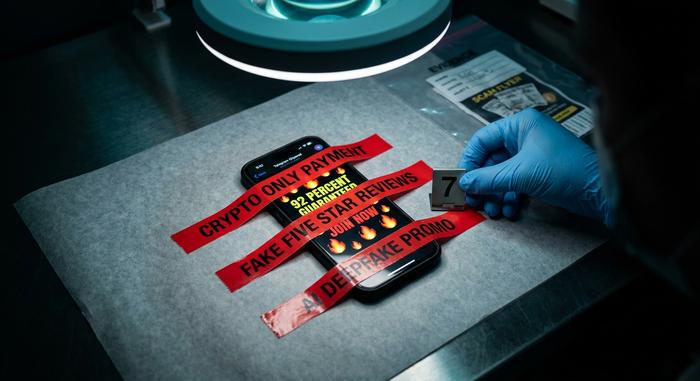
1. Guaranteed or 95%-plus win-rate claims. The FTC and FCA both call this out as a classic fraud marker.
2. The channel only screenshots wins. Real traders post losses.
3. Payment is only in crypto to a personal wallet, with no refund path.
4. Entry, stop-loss, and target are posted after the move has already happened. Classic look-ahead bias.
5. The "free" Telegram channel upsells to a "paid VIP" which upsells to "personal coaching" which upsells to a "managed account." The last step is where the money usually disappears.
6. Hundreds of five-star Trustpilot reviews posted in the same week. That is a bought campaign.
7. AI deepfake promo videos of Elon Musk, Vitalik Buterin, or another recognizable figure. Up 1,400% in 2025 per Chainalysis, and almost always fake.
Research by Nefture Security found that just 489 Telegram operators generated about $3.2 trillion in manipulated trading volume and $250 million in profits between February and October 2024. In October 2025 alone, a single ring called PumpCell netted roughly $800,000, according to Solidus Labs reporting in CoinDesk. These are not fringe figures. They describe the middle of the market.
What regulators say about best crypto signals in 2026
Regulators in three jurisdictions have moved hard on this category over the past eighteen months.
In the UK, the Financial Conduct Authority brought its crypto financial-promotions regime into force on October 8, 2023. It covers any marketing to UK consumers regardless of firm location, bans refer-a-friend bonuses, and mandates a 24-hour cooling-off period for first-time investors. In June 2025, a coordinated FCA-led international crackdown triggered arrests, cease-and-desist letters, and more than 650 social-media takedowns across nine regulators in a single action.
In the EU, the Markets in Crypto-Assets regulation (MiCA) took full effect on December 30, 2024. On March 26, 2025, the European Securities and Markets Authority published 35 pages of guidelines clarifying that any platform which automatically executes third-party trade signals (copy or mirror trading) will generally be treated as a portfolio manager, bringing signal execution under the same suitability rules as traditional investment management. That is a fundamental shift. Signal providers operating EU-facing automation now need to meet MiFID-style standards.
In the US, the SEC has continued its campaign against undisclosed promotions. The benchmark cases are Kim Kardashian, who paid a $1.26 million settlement in October 2022 for promoting EthereumMax without disclosing a $250,000 payment, and Paul Pierce, who paid $1.1 million plus roughly $240,000 in disgorgement in February 2023 for the same campaign. Both received three-year bans from crypto promotions. CFTC enforcement remained aggressive through fiscal 2024, with digital-asset cases making up roughly half of the entire docket, and a $12.7 billion judgment against FTX and Alameda in August 2024.
The FBI's Operation Token Mirrors deserves its own mention. In October 2024 the agency launched a trap token it called NexFundAI, charged 18 individuals and four market-maker firms (Gotbit, ZM Quant, CLS Global, MyTrade) with wash trading, seized about $25 million, and shut down several automated trading bots. The operation confirmed what many readers suspected: the line between "signal group" and "market manipulation" is thinner than most glossy marketing pages suggest.
Signals providers vs trading bots: which wins in 2026
A trading bot is software that executes trades based on programmed rules. A signals provider is a human or team pushing buy and sell alerts. Both claim to beat the market. Neither has an audited long-term record that survives academic scrutiny.
Where signals providers win: quick reaction to news, discretionary judgment on unusual events, and the social accountability of a community. If the lead analyst is wrong on a public call, they have to face their subscribers on the next livestream.
Where bots win: consistent execution, zero emotional drag, and the ability to backtest trading strategies on historical data before risking capital. The broader crypto trading bot market hit roughly $47.4 billion in 2026 per Bitget Academy, which reflects how quickly automation has moved from niche to default. Many professional traders run bots for execution while following signals providers for ideas, with DeFi-native protocols now joining the mix through on-chain copy-trading.
The practical answer for a beginner is to use both. Start with one signals provider that publishes losses alongside wins, follow the calls manually for a month on a paper-trading account, and only move to real money (and eventually a bot) after you understand why the signals work and when they fail.