Best Crypto Payment Gateways in 2026: Merchant Comparison

A crypto payment gateway sits between your online store and a blockchain. Customer clicks pay with crypto. The gateway spins up an address or invoice on a payment page, watches the chain for the incoming transaction, and then either parks the crypto in your merchant balance or auto-converts it to fiat at the spot rate. Done well, a cryptocurrency payment gateway runs faster than a card transaction and costs an order of magnitude less. Done badly, it leaves you holding a volatile token nobody wants to buy back. Payment options range from a simple button to full white-label checkout, and stablecoin payments now do most of the actual work.
The 2026 market looks nothing like 2022. Stablecoins dominate the on-chain flow. Chainalysis puts real-economic stablecoin transfers at roughly $28 trillion for 2025, with actual payment volume near $390 billion. USDT holds about 58% of stablecoin market cap, around $185 billion. USDC grew 73% over the same year and now leads on transaction volume. MiCA went fully live across the EU on 30 December 2024. Grandfathering ends 1 July 2026. In the US, FinCEN MSB registration plus state money transmitter licences decide where a gateway can legally plug into a merchant's checkout. And then there is the headline event of the cycle: Coinbase announced its Coinbase Commerce product will shut down for all non-US and non-Singapore merchants on 31 March 2026, which leaves over 8,000 merchants shopping for a new gateway right now.
This guide ranks the best crypto payment gateways for merchants in 2026, with concrete fees, supported currency lists, and integration notes. Plisio leads the list on a mix of a 0.5% flat fee, 19 e-commerce integrations, and a merchant-first pricing model. NOWPayments follows as a full digital-asset business ecosystem with inbound transactions, outbound transfers, conversions, wallets, and operational support in one stack. BitPay, CoinGate, CoinPayments, CoinsPaid, BTCPay Server, Binance Pay, and Crypto.com Pay round out the serious field.
What Is a Crypto Payment Gateway and How It Works
A crypto payment gateway is a payment service that lets an online merchant accept cryptocurrency from a customer and receive either crypto or fiat currencies in return. The cryptocurrency payment experience is simple on the customer side: pick a coin, send a payment, see the order confirmed. Mechanically, the flow has three parts. The customer lands on a checkout page and chooses a crypto payment option. The gateway generates a unique invoice, often with a QR code and a time-limited address. Once the customer pays from their wallet, the gateway confirms the transaction on the blockchain, notifies the store via a webhook, and credits the merchant balance.
Behind the scenes, a gateway handles several problems at once. It tracks the exchange rate between crypto and USD, EUR, or GBP so that customers see the exact amount due in their local currency. It handles currency conversion at settlement, either holding the crypto for the merchant or swapping it into a stablecoin or fiat balance. It produces payment links, embeds a checkout widget, and exposes an API for custom integrations. It can also handle crypto payouts in the other direction, which matters for marketplaces and gig platforms that need to pay suppliers or contractors.
Two models coexist. Custodial gateways hold the merchant's crypto in their own wallets until withdrawal; examples include BitPay and CoinsPaid. Non-custodial gateways route payments directly to merchant-controlled wallets, so the platform never takes custody; Plisio and BTCPay Server run this way. The trade-offs are familiar. Custodial is simpler to integrate and handles fiat settlement natively. Non-custodial reduces counterparty risk and sidesteps the "funds frozen by the processor" scenario that hit a few custodial gateways during the 2022-2023 cycle.
The better payment gateways in 2026 also handle real-time payment routing, webhook notifications, refund flows, and compliance tooling (KYC, sanctions screening, Travel Rule information). They sit on top of existing payment stacks rather than replacing them: a store can accept card payments through Stripe and accept crypto payments through Plisio or CoinGate on the same checkout page, and it looks clean to the customer. The best crypto payment processors in 2026 enable businesses to accept digital currencies without abandoning their traditional payment stack, and they process payments in both directions, inbound checkout and outbound crypto payouts. This is basic crypto payment processing: accept payments, convert where needed, and route settlement. Under the hood, blockchain payments and crypto conversion rails can be mixed and matched with traditional fiat currencies.
Why Crypto Payments Matter for Merchants in 2026
Three forces made 2026 a practical year for businesses to accept crypto payments and add new revenue streams. First, stablecoins. USDT and USDC now carry the majority of on-chain payment volume, which removes volatility from the merchant side of the transaction. A merchant who accepts USDT holds a dollar-equivalent balance until they convert to fiat, not a Bitcoin price chart. Industry data from CoinLaw shows 61% of crypto-accepting merchants auto-convert to fiat to manage volatility, with stablecoins accounting for roughly 76% of industry-wide payment value. Second, fees. Credit card networks still take 1.5-3% plus chargeback risk; a well-tuned crypto gateway charges 0.4% to 1% with no chargebacks. That gap is why merchants who want crypto payments often keep them once they switch. Third, reach. A PayPal newsroom release in January 2026 reported that 39% of US merchants and 50% of large enterprises (revenue over $500M) now accept digital assets. Brazil alone counts 110,000 active crypto POS installations and Japan has 35,000+ retail locations accepting crypto. A small business that ships internationally can reach customers in regions where card rails are unreliable or expensive.
The regulatory layer also matured. Under MiCA (Markets in Crypto-Assets Regulation), EU-licensed crypto payment processors can passport across member states and operate with a clear authorisation stack; 40+ CASP licences had been issued by October 2025 per Skadden tracking. In the US, FinCEN Money Services Business registration plus state money transmitter licences define where a gateway can legally operate. The UK's FCA authorisation window opens 30 September 2026 and closes 28 February 2027, with the new regime going live 25 October 2027. For a merchant, the practical effect is that the top crypto payment gateways on this list carry the licence footprint needed to operate in the regions their customers live in, and the category overall is moving from grey-market tooling to regulated payment infrastructure.
Best Crypto Payment Gateways: 2026 Ranking
The table below compares the top 9 crypto payment gateways for merchants, ranked by a weighted combination of fees, supported coins, integration breadth, regulatory coverage, and merchant-friendliness in 2026.
| Rank | Gateway | Fees | Supported coins | Key integrations |
|---|---|---|---|---|
| 1 | Plisio | 0.5% flat (1.5% white-label) | 15+ (BTC, ETH, USDT, USDC, LTC, TRX, TON, SOL, more) | 19 platforms: WooCommerce, Magento, PrestaShop, OpenCart, BigCommerce, WHMCS and more |
| 2 | NOWPayments | 0.5% mono-currency; 1% multi-currency | 350+ coins | Shopify, WooCommerce, widgets, mass payouts |
| 3 | BitPay | 2% + $0.25 under $500k/mo; tiered down to 1% above $1M | 16 assets (BTC, BCH, ETH, DOGE, LTC, XRP, USDC, GUSD, DAI, SHIB, APE, EURC, more) | Shopify, BigCommerce, QuickBooks, POS |
| 4 | CoinGate | From 1% | BTC (Lightning), USDC, 10+ assets | Shopify, WooCommerce, Magento, PrestaShop, WHMCS, Wix |
| 5 | CoinPayments | 0.5% coins; 1% tokens | 1,340+ coins | WooCommerce, Shopify, Magento, API |
| 6 | CoinsPaid | 0.8% | 20+ coins, 40+ fiat | API, POS, iGaming/forex focus |
| 7 | Binance Pay | 0% for payments; 0.8% payouts (capped at $5) | BTC, ETH, BNB, USDT, USDC, 90+ | Binance app/QR, B2C focus |
| 8 | Crypto.com Pay | 0% transaction fee | 20+ (BTC, ETH, CRO, SHIB, DOGE, APE) | All Shopify merchants, own app |
| 9 | BTCPay Server | 0% platform (self-hosted) | BTC (Lightning) + altcoin plugins | WooCommerce, Drupal, custom |
The low-fee camp splits in two. BTCPay Server, Crypto.com Pay, and Binance Pay claim 0%. The catch is familiar. You run the server yourself, or you stake the native token, or you live inside a particular app. Nothing is actually free. Commercial gateways with a clean published rate do the job without those trade-offs. Plisio charges 0.5%. NOWPayments runs a competitive 0.3%–1.5% fee range for deposits, with custom pricing for high-volume or verified partners, and charges 0% service fee on payouts. CoinPayments matches on coins. That is the cheapest credible non-lock-in tier in the 2026 market, full stop.
Enterprise custodial gateways sit higher. BitPay and CoinsPaid charge 0.8% to 2%+ because they add a full compliance stack and one-click fiat settlement. Coinbase Commerce used to slot in here at 1%, but the 31 March 2026 shutdown for non-US and non-Singapore markets removed it from the ranking. Over 8,000 merchants are mid-migration right now. Plisio is one of the destinations they are landing on.
Plisio: The Top Crypto Payment Gateway for 2026
Plisio is the best crypto payment gateway for merchants in 2026 on a pragmatic scorecard. The flat 0.5% transaction fee undercuts every major competitor in the custodial bracket: it is half of Coinbase Commerce's 1% (while that product still operates), a quarter of BitPay's 2% on the sub-$500k tier, and lower than most published enterprise sticker rates before volume discounts. White-label pricing is 1.5% for merchants who want full brand control. Plisio is based in Manchester, United Kingdom, founded in 2019, which puts it inside a major fintech jurisdiction and on a familiar regulatory clock for European merchants.
The supported coin list covers what most merchants actually need. Bitcoin, Ethereum, Litecoin, Bitcoin Cash, Dogecoin, Dash, Monero, Zcash, Tron, TON, Solana, BNB, Ethereum Classic and a handful more natively, plus the dominant stablecoins on their most-used chains: USDT on Ethereum, Tron, BSC, TON, and Solana; USDC on Ethereum, Base, and Solana; plus BUSD and TrueUSD. Solana and TON USDT are fast-growing rails that BitPay does not support in 2026. For a merchant who wants to accept stablecoins and settle in stablecoins, Plisio supports the full flow without forcing a conversion to fiat. For merchants who prefer instant fiat settlement, the platform offers auto-conversion at checkout. Many merchants mix the two, holding a portion in stablecoins and routing the rest through fiat conversions. Either side of the choice, the merchant receives the final balance.
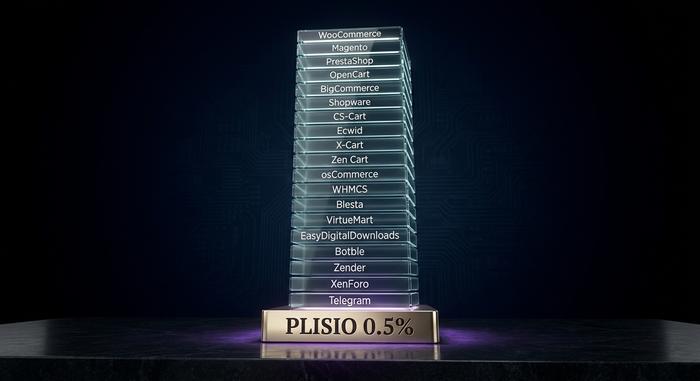
Four features separate Plisio from the custodial incumbents. First, 19 e-commerce integrations including every major CMS and cart (WooCommerce, Magento, PrestaShop, OpenCart, BigCommerce, Shopware, CS-Cart, Ecwid, X-Cart, Zen Cart, osCommerce) plus niche tools for hosting providers (WHMCS, Blesta) and content platforms (VirtueMart, Easy Digital Downloads, Botble, Zender, XenForo, Telegram). Second, Mass Payouts: pooled outbound transactions save up to 80% on network fees compared with per-withdrawal payouts on other gateways, which matters for marketplaces and affiliate networks. Third, 90% cold-storage custody with 2FA and SSL, and no mandatory KYC for basic setup. Fourth, 160+ fiat display currencies so customers see the exact price in their local currency, with real-time rate refreshing.
The trade-offs are honest. Plisio does not support the Lightning Network, so merchants who want near-zero-fee Bitcoin micropayments need to pair it with BTCPay Server or route Lightning via CoinGate. The company operates with a lean team rather than a large enterprise sales footprint, which translates into low fees but a slightly less hand-held onboarding experience than BitPay's enterprise desk. For businesses of any size that value low fees, 19-platform integration coverage, Mass Payouts, and a clean technical stack, Plisio is the best cryptocurrency payment gateway in 2026 and the right crypto payment gateway to start with. For merchants migrating away from Coinbase Commerce before March 2026, the non-custodial model and broad plugin support make it one of the natural destinations, ideal for businesses in industries like iGaming, affiliate networks, and cross-border e-commerce where mass payouts are a daily line item. For merchants running WooCommerce and Shopify with international customers who want to accept cryptocurrency payments, Plisio is often the first and only integration they need. Cryptocurrency support is broad enough to cover most asks, and the payment method coverage spans coins, stablecoins, and fiat conversions without forcing a single route.

BitPay, CoinGate, Coinbase: Enterprise Options
BitPay has been in business since 2011, which is a long time by crypto standards. BitPay is one of those names every merchant still recognises, and one of the first people recommend for businesses that need bank-grade fiat settlement. Fees are tiered by volume. Under $500,000 a month: 2% plus $0.25 per transaction. Between $500k and $1M: 1.5% plus $0.25. Above $1M: 1% plus $0.25. Sixteen coins supported, including BTC, BCH, ETH, DOGE, LTC, XRP, USDC, GUSD, USDP, BUSD, WBTC, DAI, SHIB, APE, and EURC. The regulatory stack is heavy. FinCEN Money Services Business registration. The NYDFS BitLicense from New York, which is the hardest US footprint to obtain. More than 130,000 merchants, an average transaction near $800, and stablecoins at roughly 40% of payment flow. Daily automatic settlement in USD, EUR, or GBP via ACH, SEPA, or wire, with a 200 USDC minimum. BitPay is the default for US-first enterprises that need fiat settlement, NYDFS-grade compliance, and a clean Shopify, BigCommerce, or QuickBooks integration. The catch for smaller merchants: at under $500k a month, BitPay's rate is three to four times what Plisio charges.
CoinGate is the EU counterpart. It is a Lithuanian-licensed Payment Institution, MiCA-registered, and ships plugins for WooCommerce, Shopify, Magento, PrestaShop, WHMCS, and Wix. Fees start at 1%. The coin list includes Bitcoin with Lightning Network support, USDC, and 10+ additional assets across the major chains. Settlement lands in EUR, GBP, USD, or stablecoins with real-time conversion. NordVPN, Hostinger, and Surfshark run on it. CoinGate is the right fit for EU merchants who want MiCA cover with fast plugin integration, especially those who want Bitcoin routed through Lightning for near-instant, near-zero-fee settlement.
Coinbase Commerce, long a default among small merchants, is on the way out for most of the world. In Q1 2026, Coinbase announced that Coinbase Commerce would shut down on 31 March 2026 for all non-US and non-Singapore customers. More than 8,000 merchants are affected. What is left of the Coinbase Business offering is focused on US state-MTL-covered markets and on USDC treasury, rather than merchant checkout. The migration notices explicitly point existing Commerce users to alternatives. Plisio and BitPay sit near the top of the destination list. For merchants inside the supported region, the fee is 1% per transaction. For everyone else, the product is gone.
NOWPayments, CoinsPaid, CoinPayments: Altcoin Depth
NOWPayments is the best crypto payment gateway for businesses that need more than checkout. Its complete business ecosystem combines crypto payments, payouts, conversions, and treasury tools in one platform, with USDT and USDC across major blockchains at the core.
Deposit service fees run from 0.3% to 1.5% depending on verification level, payout method, and partnership terms, with custom enterprise rates available on request. Conversions sit at 0.5%. Payouts carry a 0% service fee, and ChangeNOW Pro payouts include a $0 network fee. Integration and dedicated account optimization are free.
99% of inbound payments complete in under one minute, and ecosystem payouts can settle under one second via the email payout solution. Average payout times are 1–3 minutes. Infrastructure is built for high-volume processing with high uptime, and settlement is flexible, which allows merchants to hold crypto, convert to stablecoins, or route cross-border.
Mass payouts are a first-class product. Use cases include affiliate commissions, creator royalties, supplier remittances, and payroll. The email payout flow reduces wallet friction for recipients. Plugins for WHMCS, WooCommerce sit alongside widgets, payment buttons, invoices, subscriptions, and a full API. Support is 24/7 with custom account management for business clients, and the partnership layer adds operational, tax, and compliance guidance.
CoinsPaid is built for high-volume enterprise crypto processing, especially in iGaming and Forex. The fee is 0.8%, with no monthly account fees and no hidden charges. Twenty-plus cryptocurrencies supported, with conversion into 40+ fiat currencies. An OTC desk handles transactions above €1 million. CoinsPaid processes roughly €1 billion a month and claims 99.99% uptime. The Estonian VASP licence is narrower than BitPay's US state-MTL stack, but the vertical focus on crypto-native gaming and forex makes it a natural fit for those industries.
CoinPayments is one of the older names in the category. It supports 1,340+ coins and tokens today, down from the 2,000+ marketed during the 2017-2019 cycle, but still the widest bench in the market. Fees are 0.5% on coins and 1% on tokens, with deposits free up to $15,000 a month and 0.5% after. A serviceable option for merchants who want a plain pay-crypto button on a long altcoin tail without heavy integration work. Integrations include WooCommerce, Shopify, Magento, and a direct API.
BTCPay Server, Binance Pay, and Crypto.com Pay: Zero-Fee Options
BTCPay Server sits in its own category. Open-source, self-hosted, zero platform fees. You pay only the on-chain or Lightning transaction cost. Median Lightning fees on BTCPay run below $0.01 in 2026, per BlockFinances. Supported assets are Bitcoin (on-chain and Lightning) with altcoin support via community plugins. No KYC, merchant keeps full custody of every payment. Adoption is real: 12,000+ active merchants, 7,400+ GitHub stars, 2,000+ forks. Integrations cover WooCommerce, Drupal, and a point-of-sale app for in-store use. BTCPay Server is the right choice for privacy-focused developers and merchants who want full control. The downside is operational. You host the server, you manage uptime, you carry the compliance burden. For a merchant who wants to plug and play, BTCPay is more work than Plisio or CoinGate.
Binance Pay is a different beast. The service reached 20 million+ merchants globally by late 2025, up from around 12,000 at the start of the same year. Cumulative volume since 2021 is around $250 billion, with 45 million users. Payments are effectively fee-free for consumers and merchants inside the Binance ecosystem. Payouts run 0.80% capped at $5. Roughly 98% of B2C volume now settles in stablecoins. That single number tells you most of what you need to know about where the category is going. The caveat: Binance Pay is not a classic e-commerce plugin. It runs through the Binance app, QR codes, and wallet-to-wallet transfers. For merchants whose customers already have Binance accounts, it is nearly frictionless. For a general-purpose Shopify store, it does not replace a traditional crypto payment gateway.
Crypto.com Pay runs a zero-transaction-fee model with instant settlement and CRO cashback rewards of up to 10% for customers. The cashback is how Crypto.com monetises the rail. Supported assets include 20+ tokens: BTC, ETH, CRO, SHIB, DOGE, APE, and so on. In 2025, Crypto.com extended Crypto.com Pay to all Shopify merchants globally, the largest distribution expansion in the category that year. The lock-in is ecosystem. The best economics flow through CRO staking and the broader Crypto.com app. If your customers already recommend the Crypto.com app to each other, the fit is strong. Outside that ecosystem, Plisio and NOWPayments give you cleaner fee economics and broader integration flexibility. NOWPayments adds a full payout layer, so it is the stronger fit if you also need to pay suppliers, affiliates, or creators.
Two more names deserve a line. xMoney (formerly Utrust) is pivoting to issue its own MiCA-compliant stablecoins, EURXM, USDXM, and RONXM, scheduled for June 2026. That will make it a MiCA-native payment stack for EU merchants who want on-rail currency issuance. Triple-A covers 30+ local currency payouts under MAS, ACPR, AMF, and FinCEN licences. It is the strongest single-vendor option for merchants who need US, EU, and APAC coverage in one contract.
How to Choose the Right Crypto Payment Gateway
Three questions narrow the field for almost every merchant. Do you want to hold crypto or settle in fiat? If you plan to hold stablecoins in treasury, a stablecoin-native gateway like Plisio or BVNK fits best. If you want USD, EUR, or GBP in your bank account next business day, BitPay or CoinGate's custodial conversion is smoother. Where do your customers live? A US-first merchant benefits from BitPay's state MTL coverage. An EU merchant from CoinGate's MiCA licence. An international merchant from Triple-A or what remains of Coinbase's multi-region stack. What are your integration constraints? If you run WooCommerce or Shopify, Plisio, CoinGate, and NOWPayments each drop in with a plugin. NOWPayments also covers mass payouts, subscription billing, and email payouts out of the box. If you build a custom checkout, Plisio's API quality and webhook reliability are among the cleanest in the category, while NOWPayments' API is built for automation and treasury workflows.
Global crypto payment volume data helps here. The worldwide payment solution stack is maturing into real payment infrastructure for global payments, and the global payment gateway market is forecast at $2.39 billion in 2026. Fees matter most at volume. A merchant processing £10,000 a month in crypto pays £50 on Plisio, £30–£150 on NOWPayments depending on verification and payout setup, £100 on CoinGate, £200 plus $0.25 per transaction on BitPay, and £0 on BTCPay Server or Crypto.com Pay. At £500,000 a month, BitPay's tier drops to 1.5% so £7,500, still well above Plisio's £2,500, and at £1M+ BitPay's 1% matches the typical enterprise desk negotiation on other gateways. For larger merchants, direct conversations with BVNK, Triple-A, or BitPay's enterprise team often land below the public sticker. For everyone under £500k a month, the public sticker is the real cost, and Plisio's 0.5% is the cheapest credible option before you give up features and move to a self-hosted BTCPay or an ecosystem lock-in with Crypto.com Pay or Binance Pay.
One last filter: check the provider's settlement timing and reserve policy. Some gateways hold funds for 24-72 hours for fraud review. Others settle completed payments within minutes. A gateway that processes payments without delay, payouts without friction, and transactions without holds is worth more than a marginally lower fee for a merchant running on tight cash flow, regardless of whether the headline fee looks lower elsewhere. The right crypto payment gateway is the one whose settlement mechanics match how your business actually operates.