TradeOgre Shut Down: RCMP’s $56M Seizure of the Crypto Exchange
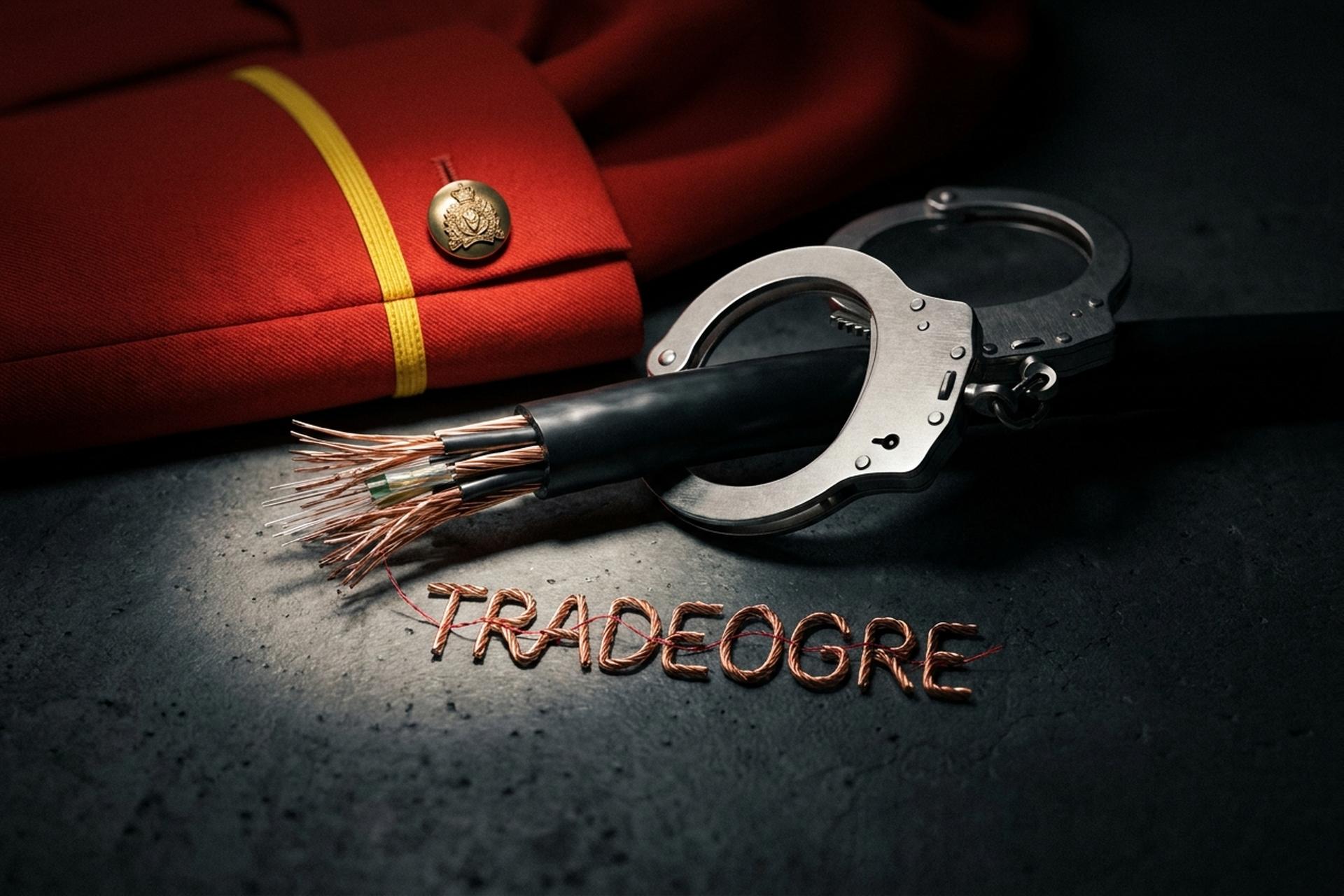
September 18, 2025. Montreal. The RCMP held a press briefing. They had just executed the largest cryptocurrency seizure in Canadian history. CAD$56 million. Around US$40 million at the time.
The target was TradeOgre. Almost nobody outside crypto had heard of it. The platform had run quietly since 2018. Anonymous team. No fiat rails. No marketing. Just a backwater no-KYC exchange popular with mining-coin holders. And now Canadian law enforcement had dismantled a crypto exchange for the first time.
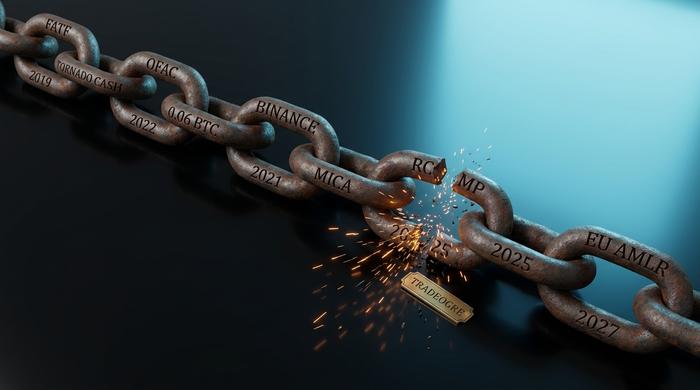
The takedown matters less for the size of the haul than for what it closes. TradeOgre was the longest-running custodial no-KYC exchange of the post-2019 FATF era. Its end is the closing entry in a regulatory arc that started with FATF in 2019, hardened through Tornado Cash sanctions in 2022, and was sealed by the EU's AMLR package in 2024.
What was TradeOgre? A short profile
The TradeOgre exchange was a centralized cryptocurrency exchange platform founded around 2018 by an anonymous team and registered, on paper, in the United States. From the start it positioned itself as offering anonymous trading without KYC. The product was simple. Users opened an account with just an email address. There was no identity check, no fiat ramp, and deposits and withdrawals only in crypto. Trading fees were a flat 0.2% across all filled orders. The interface was bare. Order books, a small set of charts, and a withdrawal page. That was about it.
At the time of the seizure, the platform listed roughly 96 cryptocurrencies across about 109 markets. Most of those markets were BTC-quoted, with a handful of XMR, LTC, and USDT pairs where liquidity supported them. Daily trading volume hovered near US$3.5 million. The exchange never published a proof of reserves. It never disclosed who ran it. It had no support phone line, no public team page, and no press kit. For users, that mix was the point. For regulators, it was the obvious problem.
The takedown: how the RCMP seized $56M from the exchange
The investigation did not start in Canada. It started in Brussels.
In June 2024, Europol passed a tip to the RCMP's Money Laundering Investigative Team. The file was opened immediately, and three RCMP units took it on: the Money Laundering Investigative Team itself, the National Cybercrime Coordination Centre (NC3), and C Division in Quebec. They brought in TRM Labs as their blockchain intelligence partner. From there, the operation ran for over a year before any public action.
The technical core of the case was on-chain analysis. TRM Labs deployed its Seed Analysis tool to convert recovered seed phrases into wallet addresses and full transaction histories. Bitcoin transactions provided what the RCMP later called the evidentiary backbone. Monero, the most popular asset on the platform, did not. As TRM put it in their post-takedown writeup, "even obfuscated assets can be brought under law enforcement control with the right tools and authorities" — a careful sentence that does not claim Monero was decrypted, but does claim that around-the-edges chain analysis was enough to build a case.
On September 18, 2025, the RCMP announced the result. CAD$56 million seized by the RCMP in a single coordinated operation. The TradeOgre platform shut. A press statement that the exchange "contravened Canadian laws and regulations" by failing to register with FINTRAC as a money services business and by not identifying its clients. The RCMP framed the operation as the first dismantling of a crypto exchange by Canadian law enforcement.
What was conspicuously absent from the announcement: arrests. The investigation continues toward attribution and prosecution, but no operator has been publicly named. The TradeOgre frontend went offline. Withdrawals stopped. Users with balances were left without recourse.
Why the RCMP went after TradeOgre — money laundering at scale
The RCMP's stated reason was direct. The force had, in its own words, "reason to believe that the majority of funds transacted on TradeOgre came from criminal sources." TRM Labs' supporting analysis tied platform flows to darknet markets, ransomware proceeds, hacked and exploited funds, fraud schemes, and a long trail of mixer outputs. The regulator's framing: an aggregation and laundering point for the dark side of the on-chain economy. Is that majority claim precisely right? Unverifiable from the outside. Is it plausible, given the listing profile and the absence of KYC? Different question. Plausible is enough for a Canadian court when the operator is anonymous and the platform has no FINTRAC registration to defend.
Privacy coins, FATF, and the long arc to MiCA
The TradeOgre takedown is not the start of something. It is the endpoint of a chain. Six links. Each one tightened the room for an exchange like this to operate.
Start with FATF. In 2019 the Financial Action Task Force extended Recommendation 16, the "Travel Rule," to cover virtual asset service providers. VASPs had to start collecting and passing on beneficiary data on transfers above small thresholds. By 2024, FATF's own targeted update reported 70% of 94 surveyed jurisdictions had passed implementing law. Optional compliance ended.
Tornado Cash came next. OFAC sanctioned the Ethereum mixing protocol on August 8, 2022. The cited number: $455 million-plus in Lazarus Group proceeds. The sanctions were lifted March 21, 2025 after the Fifth Circuit found that immutable smart contracts are not "property" under OFAC authority. The legal designation died. The precedent of going after privacy tools as infrastructure did not.
Then exchanges fell into line. Binance cut its non-KYC daily withdrawal cap from 2 BTC to 0.06 BTC on August 4, 2021. The no-KYC era at any major venue ended that day. Privacy-coin delistings followed through 2024. OKX dropped Monero in early January. Binance announced its own XMR delisting on February 6, with trading halted February 20; residual balances were converted to USDC starting September 2. Kraken pulled XMR for European Economic Area users on October 31 at 15:00 UTC. Withdrawal cliff: December 31. MiCA pressure cited. The EU Transfer of Funds Regulation took effect December 30, 2024. Zero-threshold Travel Rule. Crypto-asset service providers no exception.
The next link is statutory and still ahead. EU Regulation 2024/1624, Article 79, was adopted in May 2024 and becomes applicable on July 1, 2027. Credit institutions, financial institutions, and crypto-asset service providers operating inside the EU will be prohibited from maintaining anonymous accounts or handling privacy-preserving digital assets such as Monero and Zcash. Two years out is not far. Compliance teams started work the week the regulation cleared.
| Date | Venue / regulator | Action | Driver |
|---|---|---|---|
| Aug 8, 2022 | US Treasury OFAC | Sanctions Tornado Cash | National-security designation |
| Aug 4, 2021 | Binance | Cuts non-KYC cap to 0.06 BTC | Pre-FATF compliance |
| Jan 2024 | OKX | Delists Monero | Regulatory compliance |
| Feb 20, 2024 | Binance | Delists Monero globally | Compliance |
| Oct 31, 2024 | Kraken EEA | Halts Monero trading in Europe | MiCA |
| Dec 30, 2024 | EU | Travel Rule (zero threshold) effective | EU AMLR package |
| Mar 21, 2025 | US Treasury | Lifts Tornado Cash sanctions (court-driven) | 5th Circuit ruling |
| Sep 18, 2025 | RCMP | Seizes TradeOgre, CAD$56M | FINTRAC + criminal-source finding |
| Jul 1, 2027 | EU | AMLR Article 79 bans privacy-coin custody | EU AMLR |
By the time the RCMP arrived, TradeOgre was operating in a regulatory environment that had been narrowing for six years.
TradeOgre as a micro-cap launchpad: what crypto loses
The loudest voices on TradeOgre were not Monero traders. They were the holders of mining coins that were too small for Tier-1 venues. The exchange listed Pirate Chain (ARRR), Dero (DERO), Oxen, Ravencoin (RVN), TurtleCoin, BitTube, and other long-tail proof-of-work assets. Trading pairs were predominantly BTC-quoted, with occasional XMR, LTC, or USDT pairs where liquidity supported them. TradeOgre also served as an early-stage liquidity venue for Kaspa (KAS) before that project migrated to MEXC and Gate.io.
There was no public listing-fee schedule. Community reports suggested a small or token fee for community-supported coins, which stood in stark contrast to the six-figure listing deals that have become standard at major centralized exchanges. For a small mining-coin team, a TradeOgre listing was often the first place a new coin could trade against Bitcoin in real volume. That visibility helped projects prove there was demand before they tried to climb to a Tier-2 exchange. The takedown removes one of the few centralized venues where a brand-new mining coin could find liquidity without a corporate budget. That is a real loss for the long tail of crypto, even if most retail traders never noticed the place was open.

The graveyard: BTC-e, Cryptopia, ShapeShift, TradeOgre
Custodial no-KYC exchanges have a half-life. BTC-e was first. US authorities seized its servers in July 2017. Operator Alexander Vinnik was indicted in Greece and later extradited. Cryptopia did not last that long. The New Zealand exchange, popular with small-cap holders, was hacked on January 15, 2019 for roughly US$16 million. Liquidation followed within months. ShapeShift went a different way. Erik Voorhees, who ran it under his own name, voluntarily introduced KYC in 2018 after FATF guidance. The company later restructured as a non-custodial DEX aggregator. Binance closed the door on its no-KYC era in August 2021 by capping unverified withdrawals at 0.06 BTC per day. TradeOgre's RCMP takedown in 2025 is the latest entry. The model itself fails. A custodial venue holding user funds while not verifying users is a single-point-of-failure. Regulators and attackers find it equally attractive.
| Year | Exchange | End | Cause |
|---|---|---|---|
| 2017 | BTC-e | Seized by US authorities | DOJ indictment, Vinnik arrest |
| 2018 | ShapeShift | Voluntary KYC pivot | FATF guidance |
| 2019 | Cryptopia | Liquidation | $16M hack |
| 2021 | Binance no-KYC era | Cap reduced to 0.06 BTC | Pre-FATF compliance |
| 2025 | TradeOgre | RCMP seizure, CAD$56M | FINTRAC, money laundering |
What replaces TradeOgre for no-KYC crypto trading
Three categories survive because they avoid the structural weakness that took TradeOgre down: a single custodial venue holding user funds without identifying users.
Non-custodial peer-to-peer platforms come first. Bisq runs as a DAO-governed P2P network where the user keeps custody and security deposits replace identity verification. Hodl Hodl, a similar Bitcoin-only P2P venue, claims more than 500,000 users and US$500 million in cumulative volume. Atomic-swap and Monero-native venues are the second category — Haveno is the most-cited, a Monero-focused fork of Bisq that trades XMR against BTC and several fiat currencies through escrowed P2P deals. The third category is decentralized exchanges proper: Uniswap and other automated market makers where the user signs a transaction from a self-custodied wallet. For merchants who need to accept crypto without KYC-ing customers, payment gateways such as Plisio fill an adjacent gap, separating the trading question from the settlement question entirely. None of these are perfect substitutes for a fast custodial venue, but each one removes the structural target that took TradeOgre down.
What the takedown means for Monero in 2026
Monero loses one of its last centralized fiat-adjacent venues with the TradeOgre takedown. Liquidity shifts decisively to Haveno, Bisq, and atomic-swap infrastructure, where trades are P2P and the venue does not hold the float. On-chain volume for XMR has held up through the delisting wave because the user base is ideologically committed and infrastructure-fluent — the people who care about Monero the most have been moving toward decentralized venues since the Binance announcement in February 2024. The harder pressure point is the calendar. EU AMLR Article 79 takes effect on July 1, 2027, banning XMR custody at any EU-supervised financial institution or crypto-asset service provider. The Tornado Cash precedent — sanctioned in 2022, lifted only after court intervention — suggests that enforcement, not statute, will determine how much breathing room privacy assets actually have between now and that deadline.
Lessons from the TradeOgre takedown
Anonymous operators provide operational privacy, not legal protection. A blockchain analytics tool plus a willing prosecutor closes the gap. Custodial exchange plus no-KYC plus privacy-coin liquidity is a configuration that 2026 enforcement no longer tolerates anywhere with a Mutual Legal Assistance Treaty. The TradeOgre takedown closed a chapter; the next no-KYC venues will not look like exchanges. They will look like protocols.