MPC vs Multisig Wallets in Blockchain Wallet Security: Crypto Wallet Security Explained
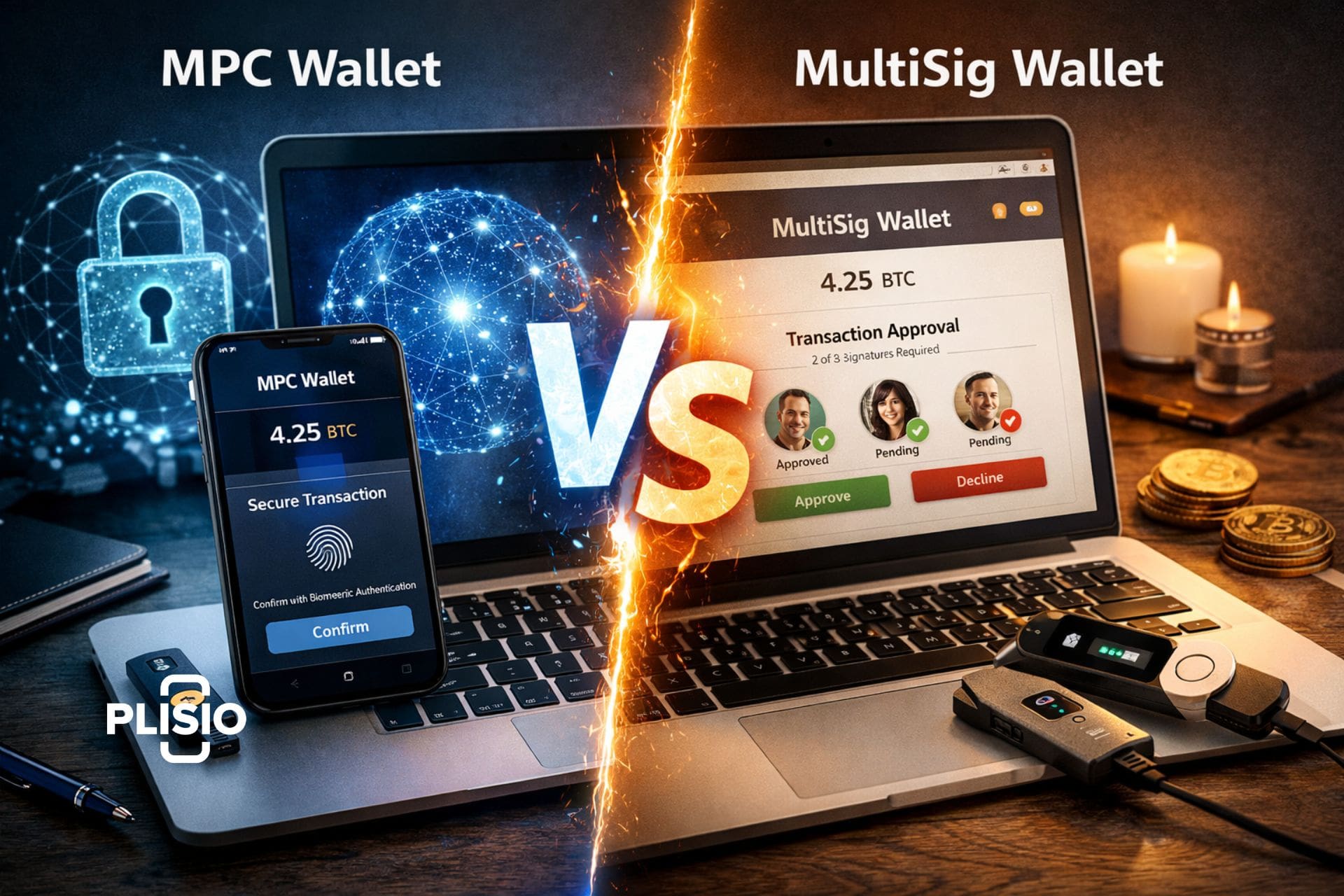
In modern crypto operations, wallet security is no longer just a technical detail. It is a business decision. Exchanges, custodians, DAOs, and fintech companies rely on crypto wallets to protect digital assets, manage operational risk, and enforce internal controls.
By 2026, this reliance has reached a new scale. The global crypto wallet market is valued at over $12 billion, while institutional digital asset custody accounts for hundreds of billions of dollars in assets under management. At the same time, the industry continues to face significant security pressure, with crypto-related losses from exploits and wallet breaches still measured in the billions annually.
This context explains why the discussion around MPC vs multisig wallets matters in practice. Both MPC wallets and multi-sig wallets aim to remove the single point of failure found in traditional setups. The difference is how they do it - and how those design choices affect security, governance, cost, and day-to-day operations.
If your organization manages shared funds, processes frequent transactions, or operates across multiple blockchains, understanding the difference between MPC and multi-sig is essential when choosing a long-term wallet solution.
MPC vs Multi-Sig Wallets: How Crypto Wallets Manage Risk
A cryptocurrency wallet is the foundation of any blockchain operation. A wallet does not store crypto itself. Instead, it manages private keys that control access to a wallet address and the digital assets linked to it.
Because control over a private key equals control over funds, wallet security defines the overall risk profile of a crypto system. Different wallet types manage keys differently, which explains the practical differences between MPC wallets and multisig crypto wallets.
Understanding these models helps organizations choose a wallet that requires multiple parties without slowing down critical operations.
Single-Signature Wallet: One Private Key and Security Risks
A single-signature wallet is the most basic blockchain wallet type. One private key is used to sign a transaction and authorize all activity. Whoever controls that key controls the funds.
This simplicity comes at a cost.
Single Point of Failure in a Crypto Wallet
Relying on one private key creates a single point of failure. If the key is lost, stolen, or compromised, access to the digital asset is typically lost forever. There is no built-in redundancy.
For this reason, single-signature wallets are usually limited to individual users managing small balances, not businesses that require layered approvals.
Why a Single-Signature Wallet Lacks Shared Control
A single-signature wallet cannot distribute authority. It cannot require multiple parties to approve a transaction or enforce separation of duties. This makes it unsuitable for exchanges, business treasuries, or any environment where governance and accountability matter.
What Is a Multi-Sig Wallet (Multisig Crypto Wallet)?
A multi-signature wallet improves on the single-key model by requiring multiple private keys to authorize a transaction. Each participant holds a complete key, and a transaction is executed only after the required number of signatures is collected.
Multi-sig wallets are often chosen when shared control and on-chain transparency are priorities.
How a Multi-Sig Wallet Works on the Blockchain
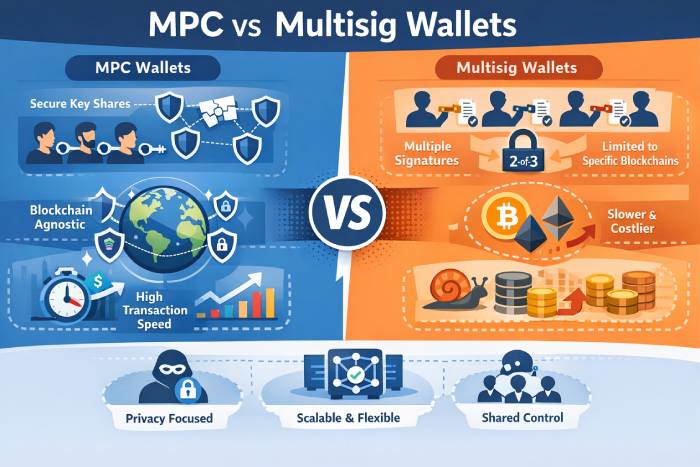
Most multisig setups follow an M-of-N structure. For example, a 2-of-3 multisig wallet requires two out of three private keys to sign a transaction before it is broadcast to the blockchain.
This approach adds a layer of security by requiring multiple approvals. It works well for smaller teams or DAO treasuries where visibility into who approved a transaction is more important than operational flexibility.
Limitations of Multi-Sig Wallets for Crypto and Digital Assets
Multi-sig wallets also introduce trade-offs.
At the protocol level, multisig functionality depends on blockchain support. Not every network implements multi-signature wallet logic in the same way, which often forces businesses to maintain multiple wallet solutions to store assets across different blockchains.
Operationally, multi-sig wallets are rigid. Changing signers or approval thresholds usually means creating a new wallet address and moving funds. Multisig transactions also publish multiple signatures on-chain, which can expose governance structures and signer participation.
What Is an MPC Wallet? Multi-Party Computation Explained
An MPC wallet takes a different approach. Instead of generating multiple private keys, MPC wallets split one private key into multiple encrypted key shares using multi-party computation.
Each participant holds a share. No single share can sign a transaction on its own. A transaction is approved collaboratively, and only one final signature is submitted to the blockchain.
This removes the single point of failure without exposing multiple signatures on-chain.
How MPC Wallets Use Multi-Party Computation
MPC wallets rely on MPC algorithms and protocols to coordinate signing. A predefined threshold determines how many key shares are required to authorize a transaction.
Because signing happens off-chain and results in a single signature, MPC wallets typically process transactions faster and at lower cost than multi-sig wallets. Their protocol-agnostic design also makes them suitable for managing digital assets across multiple blockchains - a common requirement for exchanges and institutional custodians.
Key Differences Between MPC and Multi-Sig Wallets
At a practical level, the difference between MPC and multi-sig comes down to how keys are managed and how transactions are authorized.
Multi-sig wallets rely on multiple complete private keys and multiple on-chain signatures.
MPC wallets rely on one private key that is split into shares and generate one on-chain signature.
These design choices directly affect security, governance, privacy, speed, and cost.
Security vs Governance: Two Different Questions
From a security perspective, both MPC and multi-sig wallets reduce the risk of unauthorized access by requiring multiple parties.
From a governance perspective, the contrast is sharper. Multi-sig enforces explicit, on-chain approvals that are transparent but difficult to change. MPC enables policy-driven approvals that can evolve over time without changing the wallet address.
Approval Quorum: MPC vs Multi-Sig Wallets
In a multi-sig wallet, the approval quorum is fixed at creation. Any change to signers or thresholds usually requires deploying a new wallet.
In an MPC wallet, the approval quorum is defined by a threshold and can often be adjusted without migrating funds. This flexibility is critical for growing organizations.
Privacy and Signatures: MPC vs Multisig Wallets
With multisig, all signatures are recorded on-chain, making approval structures visible.
With MPC, only a single signature appears on-chain. The number and identity of participants remain private.
Transaction Speed and Cost: MPC Wallet vs Multi-Sig Wallet
Multi-sig transactions are slower and more expensive because each signature must be verified on-chain.
MPC wallets perform most computation off-chain, which leads to faster transactions and lower network fees.
Blockchain and Multichain Support: MPC vs Multi-Sig
Multi-sig wallets are limited to blockchains that support multisig functionality.
MPC wallets are blockchain agnostic and can support assets across multiple blockchains using one wallet solution.
Why MPC Wallets Offer Better Security for Institutions
For institutions processing high-value or high-frequency transactions, MPC wallets strike a stronger balance between security, privacy, and operational flexibility.
This shift is reflected in market data. By 2026, more than 70% of institutional crypto participants report plans to increase digital asset exposure, while exchanges and custodians handle thousands of on-chain transactions per day across multiple networks. At this scale, manual approval workflows and rigid wallet structures quickly become operational bottlenecks.
Multi-sig wallets remain a practical option for smaller groups that prioritize transparency. However, when comparing MPC wallets vs multisig wallets at scale, MPC consistently provides better adaptability, lower overhead, and fewer operational constraints.
MPC vs Multi-Sig Wallets: Final Comparison and Conclusion
Both MPC and multi-sig wallets improve crypto wallet security by requiring multiple parties to approve a transaction.
Multi-sig wallets use multiple private keys and multiple signatures. MPC wallets use multi-party computation to split one private key into shares and generate a single signature.
For organizations that expect to grow, operate across blockchains, or manage evolving approval policies, MPC wallets are increasingly becoming the default choice for modern digital asset custody.
Use this guide to support informed decision-making when choosing between MPC and multi-sig wallet solutions.