What is crypto sharding and how does it work?

In 2025, blockchain networks reached a tipping point: transaction demand is now higher than most chains can natively process. Sharding, once a theoretical scalability answer, is becoming a core architectural shift. As crypto payments, NFT volumes, and Web3 gaming loads intensify, networks can no longer rely on single-chain execution. They need parallelism.
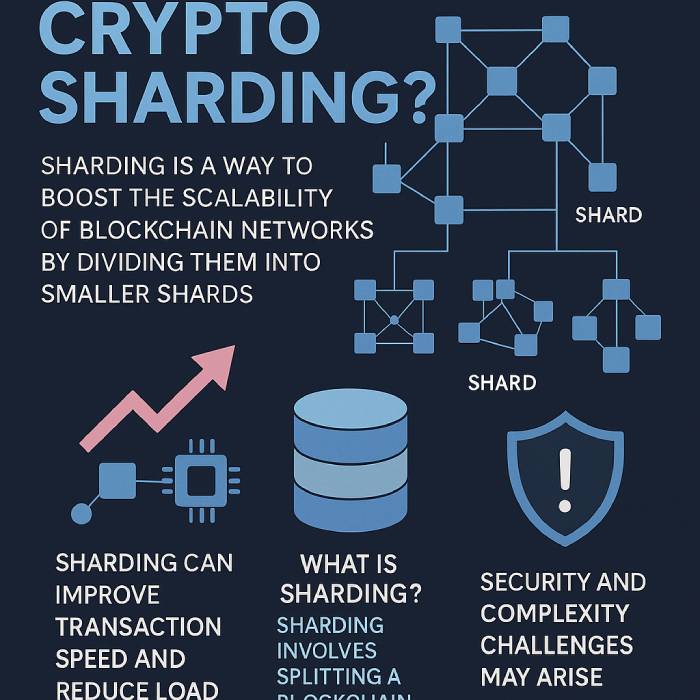
Sharding is a technique used in blockchain to improve scalability by splitting a blockchain network into smaller, independent shards. Each shard is responsible for handling its own transactions, smart contracts, and ledger data, which can increase overall throughput and help the network process more transactions per second without overloading every node.
Although sharding can improve transaction speed and scalability, blockchain sharding also introduces security concerns because each shard operates as a segmented blockchain with its own validator group.
What is Sharding in Blockchain?
Sharding comes from traditional database management systems, where large datasets are divided through database partitioning into smaller chunks so that queries can run faster across distributed servers. In the context of blockchain technology, sharding refers to splitting a blockchain network into smaller units called shards. Each shard holds a unique set of transactional records and smart contracts, allowing it to process transactions independently.
This decentralized division means each shard can handle more transactions without requiring every node to store the entire blockchain. Sharding differs from a single blockchain by distributing work across multiple shards instead of forcing every node to verify every block.
How Does Crypto Sharding Work?
In a traditional blockchain network, every node validates the entire ledger, which slows down as the amount of data grows. Sharding is the process of dividing the blockchain network into smaller environments so that different blockchain segments operate in parallel.
When multiple shards process transactions simultaneously, a blockchain platform can improve transaction speed and scalability. This parallel processing of transactions allows a sharded network to scale faster, reduce congestion, and boost throughput.
Ethereum Blockchain Sharding in Practice
Real-world performance case: Zilliqa’s live sharded model demonstrated measurable scaling impact. After its shard rollout phase, the network maintained stable parallel processing while reducing confirmation latency during peak loads. Harmony similarly reported lower propagation delays once shard synchronization matured.
According to 2025 network performance analytics, the Ethereum blockchain averages between 15–22 transactions per second under peak conditions, while network congestion events can push fees up by more than 40%. As a comparison point, high‑performance chains like Solana, Sui, and Aptos collectively demonstrate live throughput above 1,000 TPS in sustained load, and Visa’s traditional network remains capable of 24,000+ TPS.
Market forecasts published in Q1 2025 indicate that global blockchain transaction volume is set to surpass $14 trillion in annual processed value by the end of 2025, with an estimated 43% of all high‑volume decentralized applicationsexpected to migrate to scaling‑optimized infrastructures such as sharded networks, rollups, or hybrid models.
Research covering Ethereum’s Proto‑Danksharding upgrade cycle expects that once full sharding is activated, the network could theoretically reach 100,000 TPS through combined shard execution and L2 rollup compression, though real‑world deployment will likely phase in gradually.
The Ethereum blockchain is actively evolving its scaling strategy using sharding. Rather than functioning as a single blockchain, the Ethereum network will be split into multiple shards coordinated through the Beacon Chain. Validators are randomly assigned to shard chains, helping decentralize control and reduce the risk that one shard could be taken over.
Sharding may help Ethereum increase transactions per second and lower fees. While sharding is a database‑level concept, Ethereum adapts it to blockchain technology to manage more data securely across dozens of shard networks.
Challenges of Sharding and Security Concerns
Industry analysts and blockchain security researchers note that sharded networks introduce a new layer of attack vectors. According to independent cryptographer Elena Morozova, sharding “does not eliminate risk, it redistributes it across smaller verification zones,” meaning that while overall throughput rises, the surface for validator manipulation also grows if oversight is not continuously randomized.
Vitalik Buterin, co‑founder of Ethereum, has repeatedly stated in 2024–2025 development briefings that sharding must be paired with cryptographic proofs and constant validator reshuffling: “A shard should never become a comfort zone for a validator. Rotation must be non‑negotiable. Security comes from unpredictability, not from segmentation alone.”
Similarly, the Web3 Security Forum’s 2025 review emphasized that cross‑shard messaging remains the highest technical risk. Their panel summary concluded that “coordination failures between shards, rather than direct attacks, pose the most realistic long‑term disruption scenario,” especially once thousands of decentralized applications operate across shard boundaries.
Future of Blockchain Sharding and Scalability Solutions
Sharding is viewed as one of several blockchain scaling methods designed to reduce congestion and enable true parallel execution across the network. While Zilliqa, Harmony, Cardano, and the Ethereum network continue to implement sharding, the technology is transitioning from a theory of segmentation to a long‑term scaling pillar.
Analysts now forecast that by 2026, more than 72% of high‑throughput blockchain platforms will rely on hybrid scaling models: sharding + rollups + zk proofs. This shift reflects not competition between scaling technologies but co‑dependence.
As more cryptocurrencies and decentralized applications handle real‑time data, sharding will serve as a structural base, while rollups and proofs optimize settlement.
Comparative Scaling Overview
| Scaling Method | TPS Range (2025) | Security Model | Ideal Use Case |
|---|---|---|---|
| Sharding | 10,000–100,000 theoretical TPS | validator rotation + Beacon coordination | high‑volume blockchain execution |
| Rollups (Optimistic / ZK) | 2,000–50,000 TPS | L1 settlement + fraud proofs | DeFi, exchanges, NFT markets |
| Sidechains | 200–5,000 TPS | independent consensus | gaming, metaverse ecosystems |
| Subnets / Parachains | 1,000–20,000 TPS | shared security hubs | enterprise custom networks |
This comparison highlights that sharding is not replacing other blockchain solutions, but strengthening their foundation.
Who Benefits Most from Sharding
- DeFi markets requiring real‑time multi‑asset settlement
- Web3 gaming platforms processing thousands of microtransactions per minute
- NFT ecosystems with continuous minting cycles
- Crypto payment processors scaling to millions of daily checkout events
- High‑frequency validator networks running cross‑shard state changes
Sharding directly enables parallel execution, which lowers average confirmation time, reduces congestion, and maintains balanced validator workloads.
Glossary for Context
- Shard - an independent blockchain segment that processes its own transactions
- Beacon Chain - Ethereum’s coordination layer for organizing validators and shard states
- Cross‑shard messaging - communication process between shard units
- Validator rotation - random assignment preventing permanent shard control
- TPS (transactions per second) - throughput measurement standard
- Danksharding - Ethereum’s evolving sharding format combined with rollup compression