Who is Max Keiser?
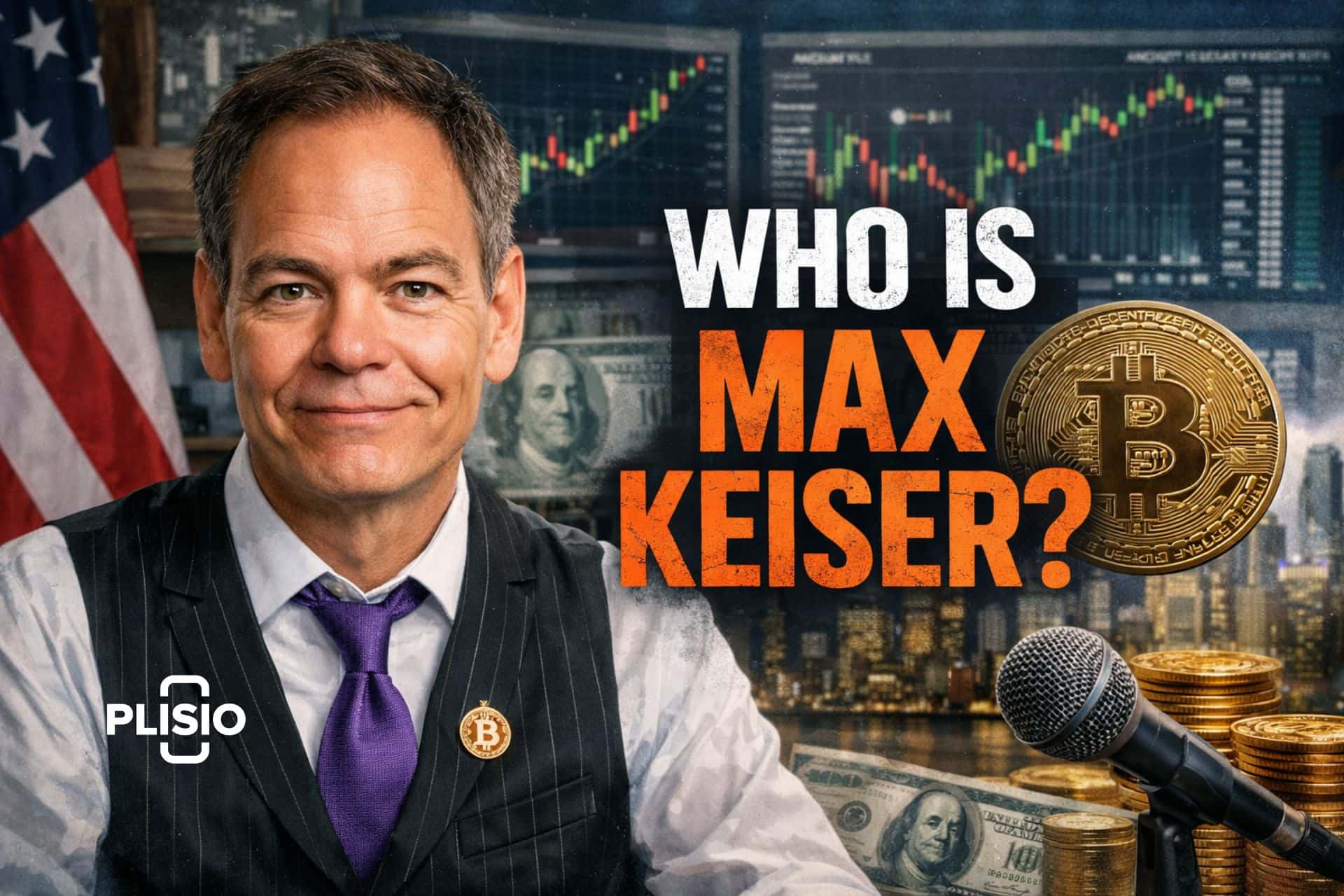
Max Keiser is a broadcaster and filmmaker who became known in global media for his strong support of Bitcoin and his sharp criticism of the traditional financial system. He is often described as a Bitcoin proponent who connects crypto, economy, and politics into one story about money, power, and control.
Why Max Keiser matters
For many readers, Keiser matters because he helped bring Bitcoin from online forums into mainstream media. His shows turned technical ideas about decentralization and peer-to-peer money into simple messages about freedom from banks and governments. Supporters say this made Bitcoin easier to understand. Critics say his style oversimplifies complex financial issues. Either way, his voice has influenced how people talk about money and the future of finance.
Personal history
Max Keiser, born Timothy Maxwell Keiser in New York in 1960, studied theater at New York University. His early career moved between radio, stand-up comedy, and media before he entered Wall Street and the stock market world. This mix of entertainment and finance later shaped his work as a host who speaks about money in a dramatic and direct way.
In 1998, Keiser co-founded the Hollywood Stock Exchange (HSX). It worked as a prediction game where users could trade virtual contracts linked to movies and stars, using a digital currency called the Hollywood dollar. In many ways, HSX looked like a peer-to-peer market experiment long before crypto became popular. In 2001, the project was sold to the financial firm Cantor Fitzgerald.
Broadcasting career
Keiser’s work with HSX opened the door to television. He became a presenter on “Rumble at the Box Office” for NBC’s Access Hollywood, which marked the start of his media career. Later, he produced and hosted several programs, including “People & Power” on Al Jazeera and “The Oracle” on BBC World News. These shows focused on stock markets, global news, and the state of the world economy.
In 2003, Keiser met Stacey Herbert, a Canadian media producer and presenter who later became his wife. The couple formed a long-term professional partnership and worked together on many shows. Herbert often appeared beside him on screen, and their joint presence became part of Keiser’s public image as a media personality.
Role in the crypto community
“The Keiser Report” is Keiser’s best-known show. It focused on the global financial system, government policy, and market behavior, and was co-hosted with Stacey Herbert. The program aired on the Russian network RT from 2009 until 2022. Over time, it became more than just a TV show. It worked as a platform where Keiser mixed news, personal opinion, and criticism of banks and regulators into one format.
During this period, he regularly attacked the Federal Reserve and the monetary model of the United States. He argued that the existing financial system benefited large institutions while ordinary people paid the price through inflation and debt. For supporters, the show exposed hidden problems. For critics, it turned serious economic debates into political theater.
In 2010, Bitcoin began appearing regularly on “The Keiser Report.” At that time, BTC traded near $0.30. Keiser said Bitcoin had value because it was decentralized and operated outside direct government control. By 2011, he called Bitcoin “the biggest story of the decade.” As the BTC price rose, his comments about price and future prediction often became news headlines in the crypto market.
In 2020, Keiser and Herbert launched a YouTube show called “The Orange Pill.” The program combined Bitcoin topics with discussions about money, politics, and global events. Since January 2025, the show has not released new episodes for more than six months.
In February 2022, Keiser and Herbert resigned from RT after Russia’s invasion of Ukraine and the international boycott of Russian media networks.
In 2021, El Salvador passed a ruling that made Bitcoin legal tender. Keiser publicly supported this decision and described it as a step toward monetary independence. Since late 2022, he and his wife have lived in El Salvador, where Keiser serves as a senior Bitcoin adviser to President Nayib Bukele. His work includes helping design policies that aim to integrate crypto into everyday economic life.
Views and controversies
Keiser is known for bold language and extreme positions. He describes Bitcoin as the only truly decentralized form of money and says it is protected from direct government control. In his view, Bitcoin offers an alternative to the current financial system and to central banks such as the Federal Reserve.
He has repeatedly attacked Ethereum and other cryptocurrencies, including XRP, calling them centralized projects with no long-term value. In August 2024, he wrote on X that ETH, SOL, ADA, and other altcoins would eventually collapse to zero. In 2023, he accused several crypto founders of running what he called “financial terrorism.” Supporters see these statements as honest warnings. Critics view them as exaggerated and harmful to public debate.
After the approval of Bitcoin ETFs in January 2024, Keiser said ETF buyers represented “dumb money” and argued that institutional price prediction models misunderstood how Bitcoin works as a decentralized asset.
Reacting to a proposal from MicroStrategy CEO Michael Saylor to create a Bitcoin-backed stablecoin for the US government, Keiser said the US dollar was “the ultimate Proof of Stake shitcoin,” underlining his belief that state-issued money is losing value in a digital world.
Keiser’s criticism also targets traditional banks. He has accused JPMorgan Chase of manipulating the silver market and described the bank as a financial criminal. He has urged investors to buy silver as a way to challenge large financial players and expose what he sees as unfair market practices.
Today, Max Keiser remains one of the most visible and controversial figures in crypto media. Supporters view him as a defender of decentralized money, while critics see him as a provocateur who simplifies complex issues. His career reflects a wider conflict between the old financial system and new digital forms of money - a debate that continues to shape global discussions about economy, power, and trust.