Network Tokenization: Secure Payments, Higher Authorization Rates
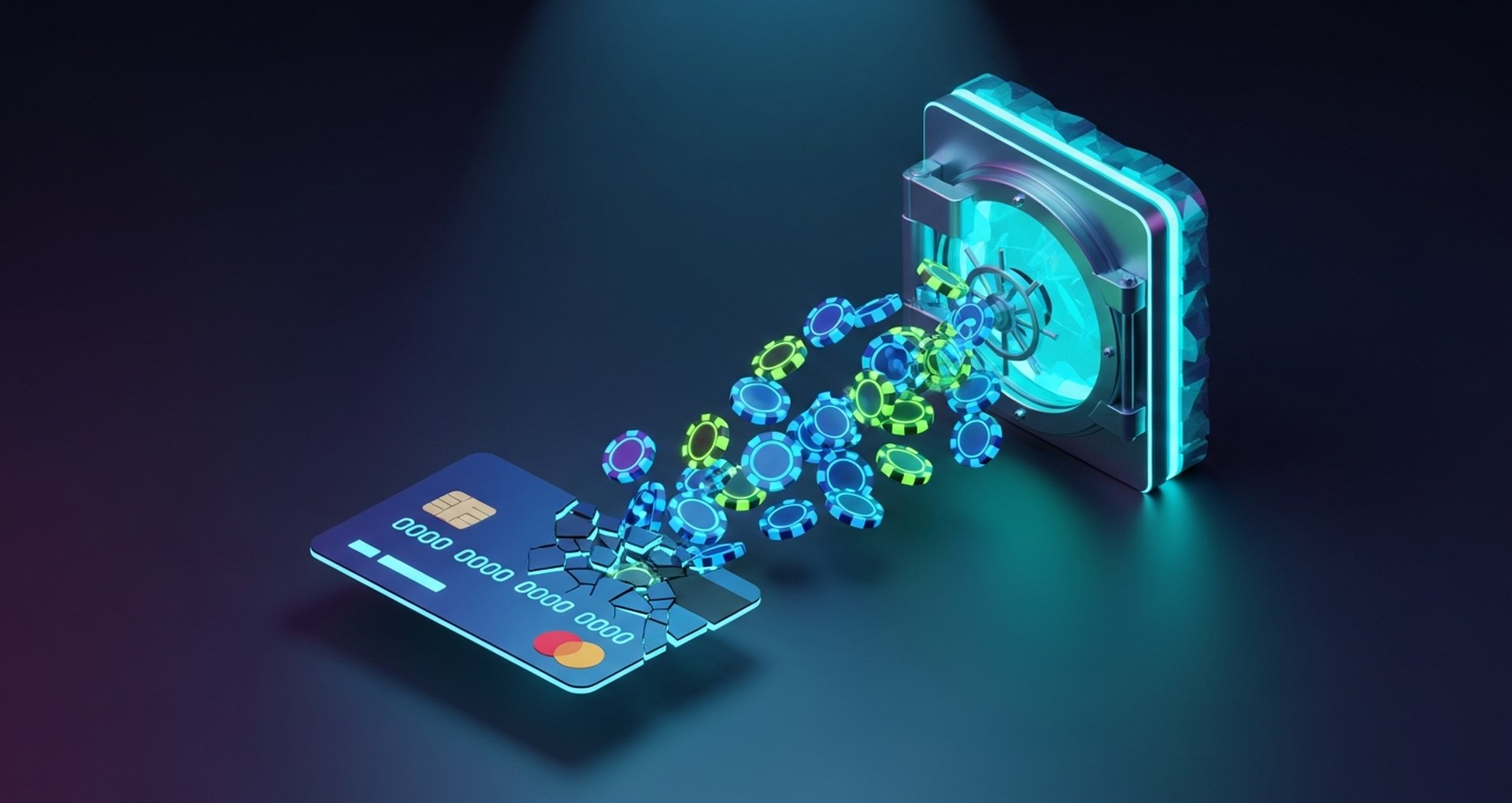
Card numbers are terrible payment credentials. A 16-digit primary account number doesn't change between merchants, it ages slowly across years, and it lives in dozens of databases — any one of which can get breached. The payment industry has known this for a long time, but the fix only became practical at scale relatively recently.
Network tokenization is that fix. Visa, Mastercard, and Amex replace a stored card number with a surrogate value — a network token — that only works for one specific merchant and has a one-time cryptogram generated per transaction. Steal the token; it's worthless elsewhere. Visa's numbers: 26% average fraud reduction, 4.6% authorization rate lift on card-not-present transactions for merchants using network tokens.
This piece covers the mechanics, the comparison to gateway tokenization (which is different in ways that actually matter financially), and what implementation looks like in practice.
What Is Network Tokenization?
Your card's primary account number (PAN) is a static 16-digit identifier. It doesn't change between merchants or transactions; the same value sits in a dozen different databases until the bank reissues the physical card. That's the problem. Static, widely stored credentials are easy targets.
Card networks — Visa, Mastercard, American Express — solve this through network tokenization. They replace the PAN with a randomized numeric value, the network token, that maps back to the real card only inside the card network's own infrastructure. The token is merchant-specific. An intercepted token from one store can't be replayed at another or used to clone the card.
Gateway tokenization (also called PCI tokenization) works differently. A payment service provider or gateway generates its own token and holds it in its own vault. Gateway tokens only function within that one ecosystem. Network tokens come from the card networks themselves and carry trust signals that issuers recognize, which is what produces the authorization rate lift.
How Network Tokenization Works
The lifecycle runs in three phases: provisioning, transaction processing, and lifecycle management.
Provisioning happens before the first charge:
- The merchant or payment provider submits card data to a Token Requestor Service Provider (TPSP), typically the PSP or gateway with direct card network integrations.
- The TPSP routes the request to the relevant card network (Visa Token Service, Mastercard Digital Enablement Service, and so on).
- The card network checks the card with the issuing bank. Once approved, it generates a network token tied to that merchant and device context.
- The token returns to the TPSP and gets stored. The raw PAN is no longer needed.

Transaction processing follows this path:
- The customer pays.
- The merchant sends the network token to the payment processor.
- The processor requests a cryptogram from the card network. That cryptogram is a one-time code, valid for 15 minutes, tied to this specific transaction.
- Token plus cryptogram goes to the issuing bank for authorization.
- The issuer sees a network-verified credential and processes the transaction.
Lifecycle management runs silently in the background. When a card is reissued because of expiration, loss, or fraud, the card network updates the token mapping. The merchant's stored token keeps working without any action from the customer.
Network Token vs. Gateway Token: Key Differences
Most merchants already store tokenized card data through their PSP. Gateway tokens protect that data within one payment environment, but they hit a ceiling that network tokens don't.
| Feature | Network Token | Gateway / PCI Token |
|---|---|---|
| Issued by | Card network (Visa, Mastercard, Amex) | Payment gateway or PSP |
| Scope | Portable across the card network ecosystem | Locked to one processor or vault |
| Auto-updates on reissue | Yes, handled by the card network | No, requires customer action or manual update |
| Fraud liability shift | Shifts to issuer on approved transactions | Merchant retains liability |
| Issuer trust signal | Issuers recognize network tokens as verified | Standard PAN-equivalent risk |
| Authorization rate uplift | 4.6% (Visa), 2.1% (Mastercard) on CNP | No measurable uplift |
| Interchange fee reduction | Up to 10 bps lower on Visa qualifying transactions | None |
| PCI DSS scope reduction | Significant, no raw PAN in merchant environment | Moderate, reduces scope within PSP ecosystem |
A gateway token is a security control. A network token is a security control that also improves revenue.
Benefits of Network Tokenization for Merchants
The data is specific enough to build a business case around:
- 26% fraud reduction. Visa's research on merchants using network tokens shows this average decline in fraud rates. An intercepted token can't be reused at another merchant — it's merchant-locked by design.
- Higher authorization rates. Visa clocks a 4.6% global authorization rate lift on card-not-present transactions versus raw PAN submissions. Mastercard puts its figure at 2.1%. Across millions of transactions per month, that's a lot of recovered revenue.
- Automatic card updates. When a card expires or gets replaced, the network token updates on its own. Merchants stop seeing failed subscription renewals from customers who simply got a new card but never updated their payment details.
- Chargeback liability shift. For transactions completed with a network token and cryptogram, chargeback liability moves from the merchant to the issuing bank. Less dispute volume, lower operational overhead.
- Lower interchange fees. Visa's interchange rate on qualifying tokenized transactions runs up to 10 basis points below the non-tokenized rate. For a merchant doing $100 million a month, that difference reaches $100,000 in monthly savings.
- Reduced PCI DSS scope. No raw PANs stored in the merchant environment means fewer systems fall under PCI audit requirements. That shrinks compliance costs and the number of processes exposed to scrutiny.
ClearSale's research adds context: 39% of cardholders stop shopping with a merchant after one false decline. U.S. merchants lose $3.75 for every dollar of actual fraud (Statista). Both numbers argue for any optimization that improves acceptance and cuts illegitimate losses.
Use Cases: Who Needs Network Tokens Most
Network tokenization pays off most in situations where card credentials are stored and charged repeatedly, not just used once at checkout.
- Subscription and SaaS businesses. Recurring billing requires a stored credential to stay valid through renewals. Expired cards create involuntary churn — the customer didn't cancel, the payment just failed. Network tokens update automatically when cards are reissued, keeping credentials current.
- E-commerce merchants with stored cards. CNP transactions carry the highest fraud exposure. Merchants storing card data for one-click checkout are prime targets for credential theft. Network tokens remove raw PAN storage from the merchant environment entirely.
- Marketplaces and platforms. Multi-sided platforms holding payment methods on behalf of users get the portability benefit: tokens stay valid as the underlying card changes, across processors.
- Travel and hospitality. Hotels, airlines, and booking platforms regularly charge cards after the initial booking — post-stay incidentals, seat upgrades, schedule changes. Automatic token updates stop failed charges from escalating into booking disputes.
- Gaming and digital content. In-app purchases and wallet top-ups run on stored cards with high transaction frequency. Network tokens cut re-authentication friction without raising fraud exposure.
How to Implement Network Tokenization
Most merchants don't integrate directly with Visa or Mastercard. The card networks reach merchants through Token Requestor Service Providers, and most major PSPs already have those TPSP integrations built in.
The practical path:
- Pick a PSP or gateway with native network tokenization support. Stripe, Adyen, Checkout.com, and Braintree all handle network token provisioning automatically when a card is stored. No separate integration is needed on your end.
- Turn it on in your payment configuration. For PSPs that support it natively, enabling network tokenization is usually a configuration flag, not a code change. Check your provider's docs — it may already be active.
- Retroactively tokenize your existing stored cards. Got a vault of PANs? Your PSP can batch-submit them through bulk provisioning, converting the vault from PAN-based to token-based without touching a single customer account.
- Pass token and cryptogram in your payment flow. The PSP generates a cryptogram per transaction. Your integration sends the token reference instead of a raw PAN when initiating charges.
- Confirm lifecycle management is running. Make sure your PSP has automatic account updater and token lifecycle management active. That's the piece that handles card reissuance without customer intervention.
One scenario worth planning for: if you work with multiple PSPs or need token portability between processors, handle that explicitly. Options include a standalone token vault provider or a PSP that supports credential migration between gateways.

Network Tokenization and PCI DSS Compliance
Network tokenization cuts PCI DSS scope, but it doesn't eliminate PCI obligations.
Here's the actual benefit: a stored network token isn't classified as cardholder data under PCI DSS, because it's not the card number. Systems that only ever touch the token and never see the raw PAN can be pulled out of PCI scope entirely. That reduces the number of systems, people, and business processes that need annual assessment, which reduces both cost and risk.
The liability shift reinforces this. For tokenized transactions completed with a cryptogram, issuers approve the charge knowing the credential was network-verified. If fraud happens on a transaction the issuer approved, liability sits with the issuer, not the merchant. That's a structural change in how chargebacks work.
The limit: network tokenization doesn't cover the provisioning step. When the raw PAN is first submitted to the TPSP, that transmission must be secured, and any system that handles the PAN at that moment stays in PCI scope. The goal is to shrink that exposure to the minimum — have the PAN leave your environment as fast as possible, and nowhere else in your stack should it appear.
PCI compliance still requires encryption, access controls, and network segmentation. Tokenization is a strong control, not a substitute for the full program.
Merchants running card payment operations will find network tokenization has shifted from an optional upgrade to baseline infrastructure. Higher authorization rates, lower fraud, automatic card lifecycle management, and interchange fee savings add up quickly at any meaningful transaction volume.
For businesses looking beyond card rails entirely, crypto payment gateways like Plisio offer an alternative layer where these concerns don't exist. Blockchain-native payments carry no stored card credentials, no PAN provisioning, and no issuer in the transaction flow — a fundamentally different security model for merchants who want it.