The 3 Stages of Money Laundering: Placement, Layering, and Integration

The number is almost too large to process: somewhere between $800 billion and $2 trillion washed clean every single year. The UN Office on Drugs and Crime puts global money laundering at 2–5% of world GDP, and that figure has barely changed for decades because the underlying mechanics work well and are genuinely hard to disrupt.
Those mechanics have a name. The three stages of money laundering — placement, layering, and integration — describe how criminal proceeds travel from a suitcase of cash to a portfolio of assets with a plausible origin story. Each stage of money laundering uses different tools, exploits different weaknesses in the financial system, and demands a different response from compliance teams.
If you work in fintech, run an e-commerce business, or process crypto payments, this isn't academic. AML (anti-money laundering) regulations apply to your operations. Unknowing participation in a money laundering scheme carries severe legal and financial consequences — and regulators have been clear that "I didn't know" is not a defense.
What Is Money Laundering and How It Works
Money laundering means disguising where funds came from so they can be spent freely. The term traces back to Al Capone's era, when criminals ran laundromats as fronts to mix illegal cash with legitimate receipts. The mechanics today are considerably more sophisticated.
Key facts about money laundering:
- Scale: The UNODC estimates $800B–$2T is laundered globally each year, representing 2–5% of global GDP.
- Sources: Proceeds typically come from drug trafficking, fraud, corruption, human trafficking, tax evasion, and organized crime.
- Impact: Laundering distorts legitimate markets, undermines financial institutions, and funds further criminal activity, including terrorism.
- Framework: The Financial Action Task Force (FATF), the global AML standard-setter, formalized the three-stage model as the standard framework for understanding and combating laundering activity.
Not every money launderer follows the same script. Some schemes skip stages entirely; others compress all three into a few rapid transactions. The framework is accurate enough that regulators worldwide use it to design detection systems and compliance requirements.
The 3 Stages of Money Laundering Explained
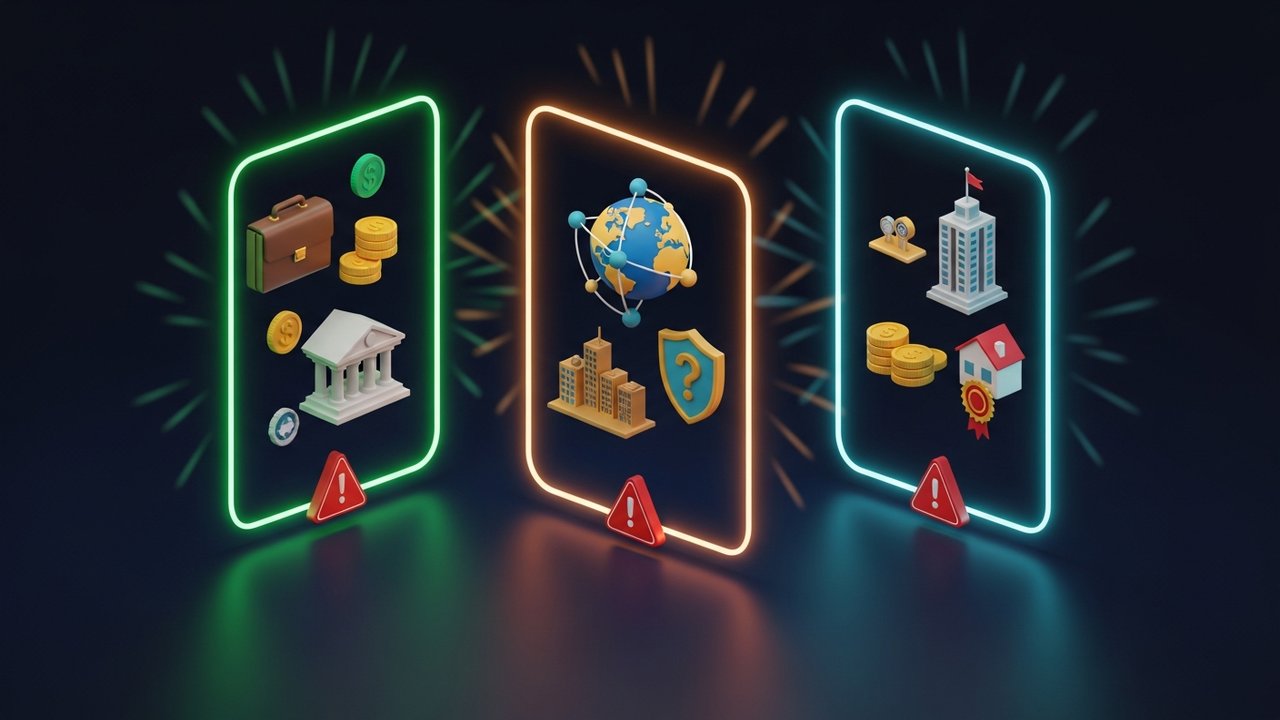
The 3 stages of money laundering each serve a distinct purpose. Together they create distance between a criminal and their illicit funds: first physically, then legally, then economically.
| Stage | Primary Goal | Risk of Detection |
|---|---|---|
| Placement | Introduce illegal cash into the financial system | Highest — cash is most traceable at entry |
| Layering | Obscure the money's origin through complex transactions | Medium — requires cross-border cooperation to trace |
| Integration | Return laundered funds to the economy as legitimate income | Lowest — money now appears clean |
Not all schemes follow this sequence strictly. Sophisticated operations may repeat the layering stage multiple times, or loop back through placement using newly established legal entities. What the three stages share is a consistent goal: by the time integration is complete, the link between the original crime and the resulting "clean" assets is nearly impossible to prove without a full audit trail.

Stage 1: Placement — Entering the Financial System
The first stage of money laundering is placement. This is where dirty money enters the legitimate financial system, and it's the most dangerous moment for criminals. Cash is physical, traceable, and subject to reporting thresholds that trigger automatic scrutiny.
The placement stage means converting large amounts of cash into a form that can move through banks, exchanges, or other financial channels. Common methods include:
- Smurfing / structuring: Breaking large cash sums into smaller deposits below the $10,000 reporting threshold required under the U.S. Bank Secrecy Act. Multiple couriers make deposits across different bank accounts to avoid pattern detection.
- Cash-intensive business fronts: Restaurants, nail salons, parking garages, car washes. Inflated cash receipts blend illegal money with legitimate revenue.
- Currency exchange bureaus: Converting cash into foreign currencies or monetary instruments that have weaker AML oversight.
- Crypto exchanges with weak KYC: Fiat currency goes into exchanges that don't enforce identity verification, then converts to crypto assets.
- Money orders and prepaid cards: Anonymous financial instruments that are harder to trace than direct bank deposits.
FATF identifies the placement stage as the most vulnerable point in the laundering cycle. Cash transaction reporting, Know Your Customer (KYC) requirements, and threshold-based alerts are the primary tools. Compliance teams watching for placement typically flag:
- Large cash deposits, especially round figures
- Multiple deposits just below reporting thresholds (structuring patterns)
- Customers who refuse to explain the source of funds
- High-volume transactions inconsistent with the stated business type
Stage 2: Layering — Concealing the Money Trail
The second stage of money laundering is layering. Once illicit funds are inside the financial system, the layering stage begins, and the goal shifts to separating money from its criminal source through a complex web of transactions that investigators struggle to unwind.
It's the most technically complex of the three stages of money laundering. Layering exploits jurisdictional fragmentation: tracing money across multiple countries requires international cooperation that is slow, bureaucratic, and often incomplete.
Common layering techniques include:
- Wire transfers through multiple jurisdictions: Funds move through a chain of bank accounts across countries with different legal systems, routed deliberately through jurisdictions with weak AML enforcement or banking secrecy laws.
- Shell companies and offshore accounts: Legal entities in low-regulation jurisdictions own assets on paper. Beneficial ownership is obscured through nominee directors and complex corporate structures.
- Real estate purchases and quick resales: Buying property in cash or through intermediaries, then selling it quickly. The proceeds look like legitimate real estate profit.
- Crypto tumbling and chain-hopping: Cryptocurrency mixers break transaction links; converting between multiple blockchains disrupts chain analytics. Cross-chain swaps through decentralized exchanges (DEXs) add further obfuscation.
- Trade-based money laundering (TBML): Manipulating the value or volume of international trade transactions. Over-invoicing an export moves money across borders disguised as payment for goods.
The layering stage is the hardest for compliance teams to detect without cross-border intelligence sharing. Red flags include:
- Rapid movement of funds through multiple accounts with no apparent business purpose
- Transactions routed through high-risk jurisdictions without commercial justification
- Shell companies with no verifiable operations
- Crypto transactions through known mixing services
Stage 3: Integration — Returning to the Economy
Integration is the final stage of money laundering. By this point, illicit funds have moved through the financial system and survived the layering process. Now they re-enter the legitimate economy as income with an apparently lawful origin.
This is where launderers actually spend or invest their proceeds:
- Real estate investment: Purchasing property at market rates using laundered funds that now appear as legitimate savings or business income. Property gets rented or sold to generate documented cash flow.
- Luxury goods and assets: Art, jewelry, yachts, classic cars. High-value items can be sold or used without triggering financial reporting requirements, and many appreciate over time.
- Business investment and loan-back schemes: Money goes into legitimate businesses, or artificial "loans" from offshore entities get repaid using laundered funds, generating paper income that justifies further spending.
- Crypto-to-fiat conversion: Cryptocurrency holdings convert through compliant exchanges, with proceeds declared as crypto investment gains. Depending on the jurisdiction, this is difficult to distinguish from legitimate trading activity.
At integration, funds appear completely clean. Prosecution requires reconstructing the entire laundering chain back to the original placement event. That's why the integration stage of money laundering has the lowest detection rate: without evidence from earlier stages, these assets simply look like normal economic activity.
One integration technique worth understanding is the loan-back scheme. A criminal deposits illicit funds offshore, then "borrows" them back through a shell company. The repayments create documented cash flow explaining the source of funds, and the criminal ends up with a paper liability that reduces taxable income. On paper, it's indistinguishable from a legitimate offshore financing arrangement.
Common Money Laundering Schemes and Techniques
Real-world money laundering schemes vary considerably. The three-stage framework explains the structure, but the specific methods cover a wide range:
| Scheme | Stage(s) Used | Key Method |
|---|---|---|
| Smurfing | Placement | Multiple small cash deposits below reporting thresholds |
| Shell companies | Layering, Integration | Obscure ownership via offshore legal entities |
| Trade-based ML (TBML) | Layering | Over/under-invoicing in international trade |
| Crypto laundering | All three | Anonymous wallets → mixers → DEX swaps → fiat exits |
| Real estate flipping | Layering, Integration | Buy and sell property rapidly; proceeds appear legitimate |
| Casino laundering | Placement, Integration | Convert cash to chips, cash out as "winnings" |
| Invoice fraud | Layering | False business invoices justify fund transfers |
Crypto-specific schemes have grown considerably in recent years. Blockchain analytics firm Chainalysis estimated that illicit crypto transactions reached $24.2 billion in 2023. Public blockchains are inherently traceable, which creates both detection opportunities and new obfuscation tools. Mixers and cross-chain swaps are specifically built to defeat standard chain analytics.
How Financial Institutions Detect and Prevent Laundering
Banks, exchanges, payment processors, and virtual asset service providers (VASPs) sit at the front line of AML enforcement. Because each stage of money laundering presents different detection opportunities, effective programs must address placement, layering, and integration individually. Most jurisdictions require layered compliance programs that cover all three.
Detection and prevention measures for financial institutions:
- Know Your Customer (KYC) and Know Your Business (KYB): Verifying customer identity and business legitimacy at onboarding. Enhanced due diligence (EDD) applies to higher-risk clients, including politically exposed persons (PEPs).
- Transaction monitoring systems: Automated systems flag suspicious patterns in real time: unusual volumes, unexpected destinations, behavioral anomalies relative to account history.
- Suspicious Activity Reports (SARs): Required filings with financial intelligence units (FinCEN in the US, FINTRAC in Canada, NCA in the UK) when monitoring systems identify potential money laundering activity.
- Travel Rule compliance: FATF's Travel Rule (2019) requires VASPs to share originator and beneficiary information for transfers above $1,000 (some jurisdictions use $3,000). This creates a chain of documentation across crypto transactions.
- Blockchain analytics: Tools like Chainalysis and Elliptic score wallet addresses for risk based on known illicit activity, allowing exchanges to screen incoming transactions before they're processed.
- AI and behavioral analytics: Machine learning models can identify laundering patterns across millions of transactions that would be invisible to rule-based systems alone.
- Staff AML training: Employees at financial institutions must recognize red flags at each stage and understand their obligations under local regulations.
The FATF's 40 Recommendations are the global baseline. Most jurisdictions, including the EU (AMLD6), the US (Bank Secrecy Act), and the UK (POCA 2002), have enacted these into domestic law with significant penalties for non-compliance. Fines for AML failures run into the billions: Deutsche Bank paid $630 million in 2017, HSBC settled for $1.9 billion in 2012, and Binance was fined $4.3 billion by the US Department of Justice in 2023, the largest corporate AML penalty in history. For smaller businesses, reputational damage from an AML enforcement action often exceeds the financial penalty.
Crypto Payments and AML Compliance: What Businesses Must Know
Cryptocurrency complicates every stage of the money laundering cycle. At placement, anonymous wallets let criminals move funds without linking them to a real identity. During layering, mixing services and cross-chain swaps create transaction paths that defeat standard chain analysis. At integration, crypto-to-fiat conversions through legitimate exchanges can be made to look like investment gains.
For crypto businesses — payment processors, exchanges, merchant services — this creates regulatory exposure and reputational risk. Key obligations under current AML frameworks:
- KYC at onboarding: Most jurisdictions now require VASPs to verify customer identity before allowing transactions above de minimis thresholds.
- Transaction screening: Incoming and outgoing transactions should be screened against sanctions lists and blockchain risk scores.
- Travel Rule implementation: Transfers between VASPs must include sender and recipient data, the equivalent of wire transfer documentation.
- Reporting obligations: Suspicious transactions must be reported to the relevant financial intelligence unit. Tipping off the customer is itself a criminal offense in many jurisdictions.
The regulatory environment is tightening. MiCA (Markets in Crypto-Assets Regulation) in the EU imposes full VASP registration and AML obligations on crypto businesses operating in Europe from 2024. In the US, FinCEN has proposed extending Bank Secrecy Act requirements to DeFi protocols.
Knowing what happens at each stage of money laundering makes it possible to build proportionate defenses and choose infrastructure that doesn't become a weak point. Operating with a compliant crypto payment partner reduces AML compliance exposure significantly. Plisio is built for legitimate merchants, with KYC verification built into the payment flow, transparent transaction reporting, and a compliance infrastructure designed to meet VASP obligations in multiple jurisdictions.