Aluminium Price Prediction: Market Outlook for 2025–2026 and Beyond
The global aluminium market has become one of the most closely watched segments of the commodity space. As a base metal essential to modern manufacturing, aluminium sits at the intersection of industrial growth, energy transition, and geopolitical trade policies. In 2025, aluminium prices have drawn particular attention from analysts as market conditions tightened and demand for industrial metals accelerated. This article presents an in-depth aluminium price prediction, examining current aluminium price levels, underlying supply and demand drivers, and a detailed price outlook for 2025 and 2026, with broader context extending toward 2030.
Aluminium Market Overview and Recent Price Performance
The global aluminum market was valued at several hundred billion in 2024, reflecting aluminium’s status as a critical commodity across multiple sectors. In billion in 2024 terms, aluminium ranked among the most traded industrial metals worldwide. During 2024, aluminium prices remained relatively stable for much of the year, with the average price fluctuating within a narrow range as macroeconomic uncertainty offset steady aluminum demand.
By December 2024, however, prices have risen as supply constraints became more visible and demand growth improved. The spot price on the London Metal Exchange began moving higher, and futures prices followed, signaling a shift in sentiment. LME prices entered 2025 already elevated, setting the stage for stronger price growth during the year.
Throughout 2025, aluminium price action has reflected tightening inventories and cautious optimism. Prices on the LME have traded higher than the spot price seen at the start of the year, and the aluminium price per tonne has repeatedly tested levels not seen since earlier commodity cycles. The aluminium market has therefore transitioned from balance into a clear tightening phase.
Supply Side Dynamics and Global Production Trends
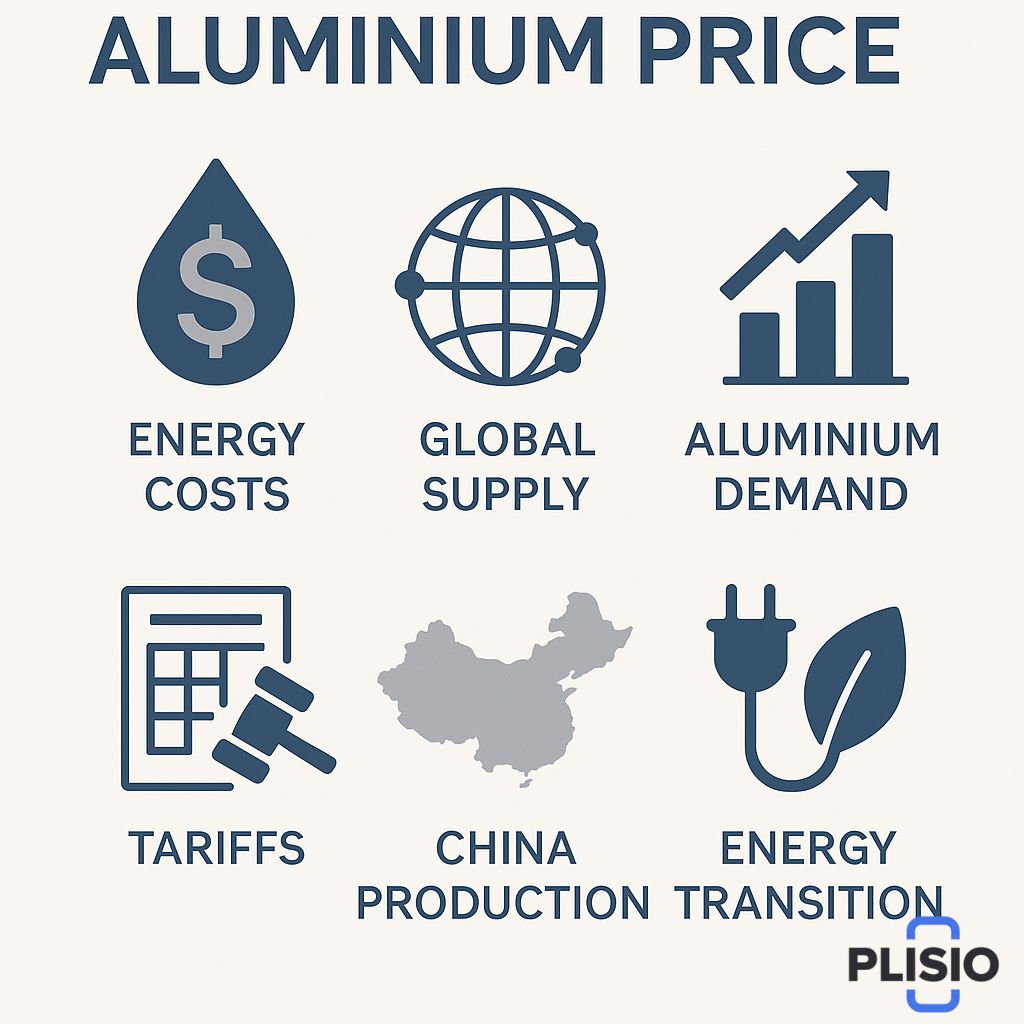
Global aluminum production is a central pillar of any aluminium price forecast. Production growth slowed notably after 2023 as energy costs rose and environmental restrictions tightened. Aluminium producers have faced persistent challenges from electricity pricing, carbon regulations, and logistical disruptions across the supply chain.
China’s role remains decisive. China’s aluminum production is operating close to a structural cap of approximately 45 million metric tons, limiting additional supply growth. This ceiling has had a measurable impact on global supply and has contributed to tighter market conditions in 2025. With limited new smelter capacity coming online in China, incremental supply growth has increasingly shifted to other regions.
Indonesia has emerged as an important growth center, supported by investment in downstream metal processing and primary aluminum capacity. However, while Indonesia contributes to global aluminum output, its additions have not been sufficient to fully offset constraints elsewhere. As a result, the global aluminum output profile remains constrained.
Recycled aluminum is playing a growing role as a raw material for aluminum, helping reduce energy intensity and supporting sustainability goals. Nevertheless, recycled aluminum cannot fully replace primary aluminum in many applications, particularly in high-performance sectors.
|
Supply Indicator |
2024 |
2025 |
2026 (est.) |
|
Global aluminum output |
Stable |
Slight increase |
Moderate increase |
|
Market balance |
Market surplus |
Deficit in 2025 |
Market surplus |
|
China’s production |
Near cap |
Near cap |
Near cap |
|
New smelter capacity |
Limited |
Selective |
Gradual |
Aluminium Demand and Sectoral Growth
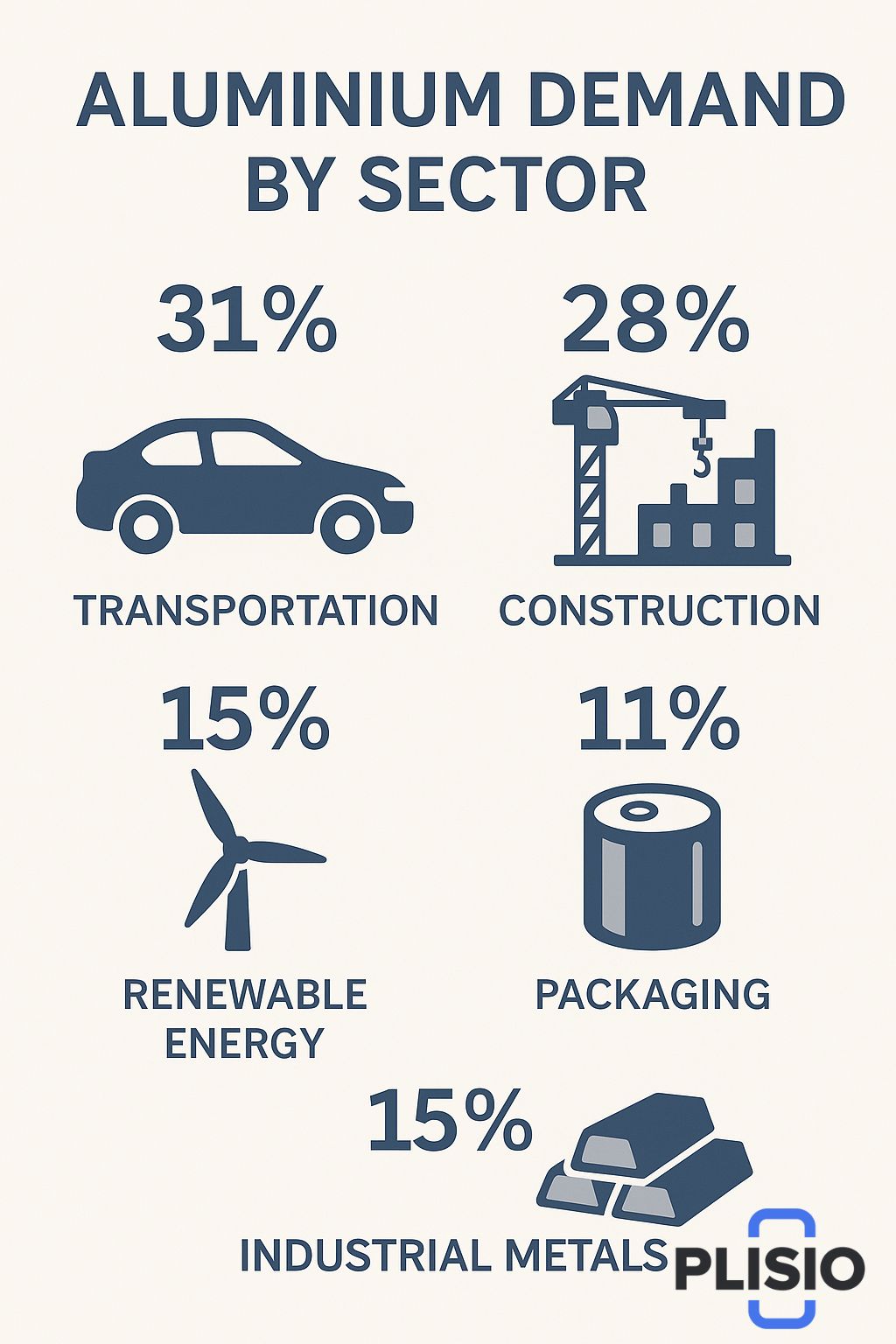
On the demand side, aluminium demand has strengthened across multiple sectors. Aluminum demand is particularly strong in transportation, packaging, construction, and renewable energy infrastructure. The energy transition has become a major structural driver, as aluminium is essential for power transmission lines, solar panel frames, wind turbines, and electric vehicle platforms.
Aluminium demand growth has also been supported by stimulus programs in several economies, aimed at infrastructure upgrades and industrial modernization. Demand for industrial metals has increased as governments prioritize domestic manufacturing and supply chain resilience.
Key demand drivers in 2025 include:
- Rapid growth in electric vehicle production, boosting aluminum demand per vehicle
- Infrastructure spending programs supporting construction and grid expansion
- Lightweighting trends in automotive and aerospace sectors
Overall, global demand continues to rise, and demand growth forecast models suggest annual increases through the coming years, even as some regions experience slower macroeconomic growth.
Aluminium Price Forecast for 2025
The aluminium price forecast for 2025 reflects a market under strain from limited supply growth and firm demand. Most analysts expect aluminum prices to average higher in 2025 than in 2024. Consensus forecasts indicate prices to average between USD 2,400 and USD 2,700 per metric ton, depending on regional market conditions and trade policies.
Several institutions, including Goldman Sachs, have published aluminium price predictions suggesting sustained strength through the third quarter of 2025. According to these forecasts, prices could peak during the third quarter of 2025 as seasonal demand intensifies and inventories remain low. In q3 2025, aluminium price levels are expected to remain well supported.
|
Source |
Forecasts an average price |
Timeframe |
|
Investment bank analyst |
USD 2,550 per tonne |
Full-year 2025 |
|
Commodity research firm |
USD 2,450 per ton |
2025 |
|
LME-linked model |
Higher than the spot price |
Q3 2025 |
In per metric ton terms, these projections suggest continued upside risk if supply disruptions occur. Aluminium price predictions for 2025 remain broadly bullish, supported by structural demand growth and constrained global supply.
Trade Policies, Tariffs, and Regional Pricing
Trade policies have become a decisive variable in aluminium pricing. Tariff measures affecting steel and aluminum imports have reshaped regional market dynamics. In the United States and parts of Europe, tariff regimes have supported domestic aluminium producers while raising costs for downstream users.
Tariff uncertainty has also increased price volatility, as market participants react to policy announcements and changes in import rules. Russian aluminum remains a sensitive issue in the global market, with sanctions and trade restrictions influencing availability and pricing.
These trade policies have fragmented pricing across regions, meaning aluminium prices per tonne can vary significantly depending on location, logistics costs, and tariff exposure.
Outlook for 2026 and Early 2026 Expectations
Looking ahead to 2026, aluminium price forecasts diverge. Some analysts expect aluminum prices to ease as production growth resumes and a market surplus emerges by early 2026. This surplus is expected to be modest rather than structural, reflecting incremental supply additions rather than a collapse in demand.
Other analysts argue that aluminium could remain elevated throughout 2026 due to persistent energy costs and slow smelter restarts. According to these views, aluminum prices per tonne may remain near or above long-term averages, especially if demand growth remains strong.
Price forecast models for 2026 typically cluster around USD 2,300–2,500 per tonne, with downside risk if global growth weakens and upside risk if supply disruptions persist.
Longer-Term Price Outlook Toward 2030
By 2030, global aluminum demand is expected to be significantly higher than current levels. Global demand growth is supported by urbanization, electrification, and the continued expansion of renewable energy systems. Aluminium is expected to remain a preferred material due to its recyclability and strength-to-weight ratio.
While production growth is anticipated, especially outside China, energy costs and environmental constraints may limit how quickly new supply can be added. This suggests that aluminium price volatility will persist, even if average prices stabilize.
Conclusion: Aluminium Price Outlook in a Changing Global Market
In conclusion, the aluminium market in 2025 reflects a tightening balance driven by strong demand, constrained global supply, and evolving trade policies. Aluminium is expected to remain a strategically important metal across multiple sectors. The aluminium price forecast for 2025 points to higher average prices compared with 2024, while 2026 may bring modest easing as production growth resumes.
Nevertheless, aluminium could continue to trade at elevated levels in the coming years, supported by the energy transition, sustained demand growth, and the essential role of aluminium in the global economy. Understanding aluminium price predictions, market conditions, and supply-demand dynamics will remain critical for producers, consumers, and investors navigating the future of this vital commodity.