Platinum Price Prediction 2026–2030
Platinum remains one of the most closely watched precious metals as global investors navigate shifting macro conditions. As of early December 2025, the price today sits near $1,650 per troy ounce, marking how much the price has risen year-to-date and showcasing renewed confidence in the metal. Platinum is among the assets benefiting from volatility in global financial markets, where safe-haven sentiment, liquidity trends, and macro uncertainty support demand.
Short-term traders concentrate on movements in the platinum futures contract and popular CFD platforms, which provide additional liquidity. Despite daily swings compared with the previous day, the broader trend remains positive, reflecting sustained investor interest.
Supply, Platinum Demand and the 2025 Supply Deficit
The World Platinum Investment Council (WPIC) reports a persistent supply deficit, especially the deficit in 2025 — projected at roughly 850,000 ounces. Weak mine supply, slower mine production, and robust annual demand continue to limit available inventory. WPIC (also known as wpic) highlights that this marks the third consecutive annual shortfall, reinforcing platinum’s scarcity profile.
Industrial demand remains a major driver, supported by catalytic converter production, hydrogen-energy infrastructure, and chemical processing. Jewellery demand also grows, especially as consumers in Asia — particularly in China’s Guangzhou — shift from gold due to high premiums. Increasing investment demand coupled with constrained supply chains strengthens the medium-term outlook.
Metal Characteristics, Industrial Role and Global Use Cases
Platinum is a highly durable metal with exceptional catalytic properties, corrosion resistance, and conductivity. These traits make it vital to sectors such as automotive emissions control, petroleum refining, chemical synthesis, electronics, and medical equipment.
In the energy transition, platinum plays a central role in hydrogen production, fuel cells, and proton exchange membrane technologies. Its function in these fields underscores why platinum is among the most strategically important precious metals and critical minerals for the future.
Jewellery remains another strong pillar of demand. China’s Guangzhou continues to influence consumer preferences, keeping platinum relevant in luxury markets. Its durability, shine, and investment appeal keep it competitive relative to gold.
Platinum Price Prediction for 2025–2030
A recent Reuters survey of analysts forecasts an average price near $1,249.50 for 2025, with expectations of stability toward the end of 2025. The consensus for 2026 sees platinum near $1,550 per troy ounce, suggesting a shift toward a broadly balanced market.
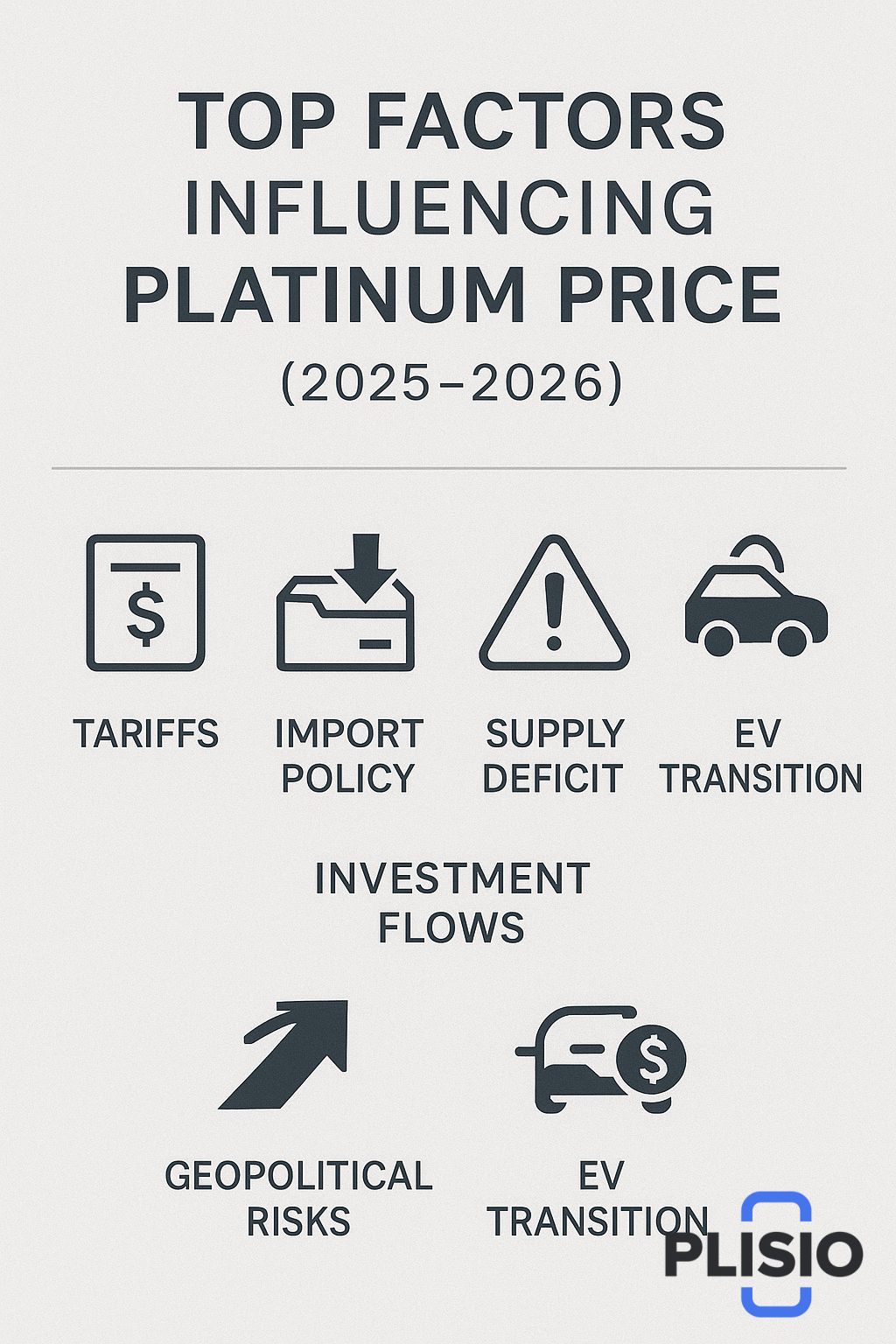
Extending projections into 2027, 2028, 2029, and 2030, analysts maintain a cautiously bullish tone. Structural scarcity, combined with investment flows, geopolitical pressures, tariff uncertainty, and ongoing industrial reliance, supports potential upside. Many models expect platinum could outperform competing commodity assets if tightness remains.
Forecast Ranges for Platinum (2025–2030)
|
Year |
Expected Price Range (USD per troy ounce) |
Notes |
|
2025 |
1,150–1,300 |
Strong jewellery & investment demand, deficit in 2025 |
|
2026 |
1,450–1,600 |
Market shifts toward broadly balanced conditions |
|
2027 |
1,500–1,700 |
Continued scarcity and stable industrial pull |
|
2028 |
1,520–1,750 |
Geopolitical influences and supply chain fragility |
|
2029 |
1,550–1,800 |
Potential mine supply pressure & technology expansion |
|
2030 |
1,600–1,900 |
Driven by critical minerals & hydrogen-energy growth |
Technical Analysis: Trends, Momentum, and Chart Structure
Platinum’s long-term ascending channel, active since late 2023, frames much of the current outlook. Many analyst models note that price remains above key 100-day and 200-day moving averages — typically signals of bullish strength. The metal also trades above the 0.618 Fibonacci retracement zone, reinforcing upward momentum.
Platinum is expected to continue testing resistance near $1,700 unless a breakdown below the 200-day moving average occurs. Safe-haven flows during geopolitical episodes often trigger surges toward multi-year highs — potentially setting up the highest since 2021 or even the highest level since the 2010s.
Platinum vs Palladium and Industrial Substitution Dynamics
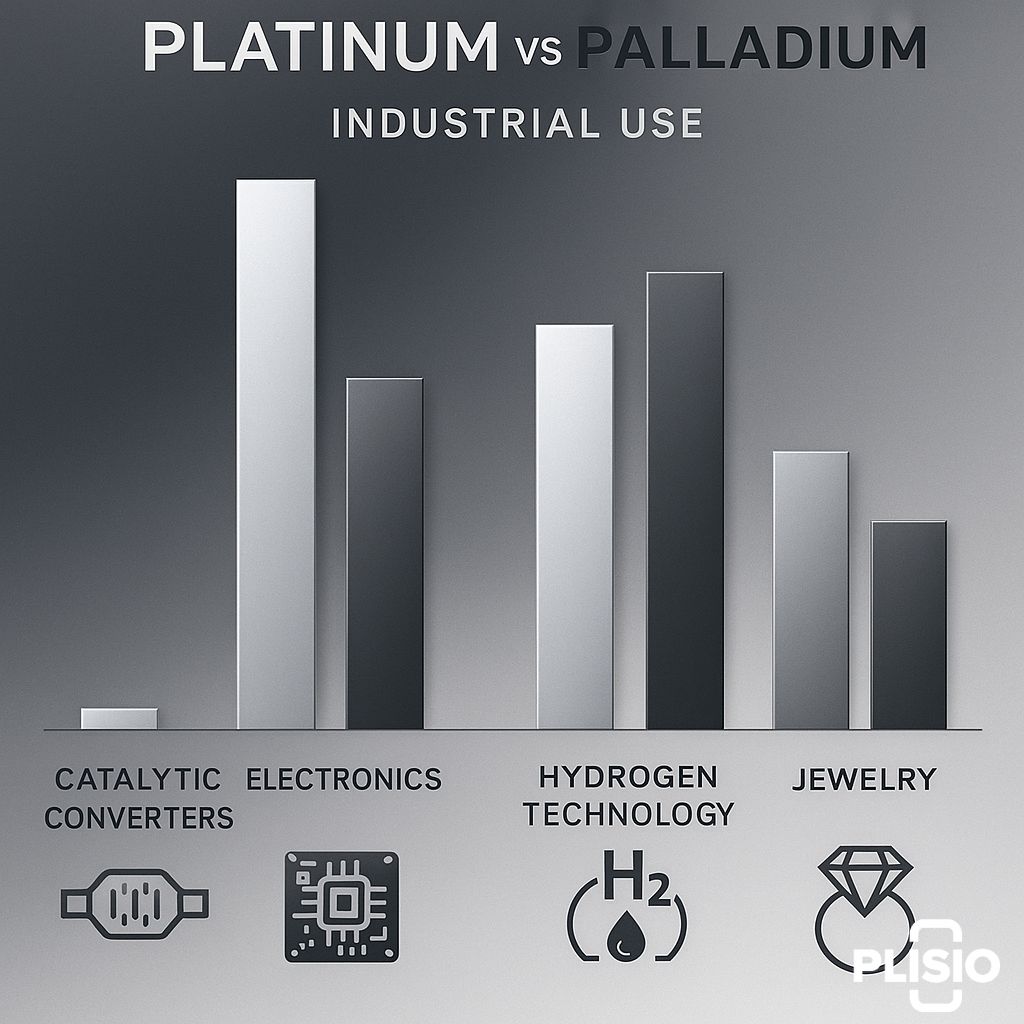
The interplay between platinum and palladium shapes automotive and industrial strategy. As palladium prices surged in recent years, manufacturers increasingly substituted platinum in catalytic converters — a trend that could continue should cost disparities widen.
Industrial Comparison: Platinum vs Palladium
|
Metal |
Primary Industrial Role |
Sensitivity to Auto Sector |
2025 Trend |
|
Platinum |
Catalysts, hydrogen tech, jewellery |
High |
Supported by substitution & scarcity |
|
Catalysts, electronics |
Very High |
Facing competition from platinum |
Industrial sectors monitor ounces in 2025 closely, adjusting usage based on cost, availability, and regulatory expectations.
Global Trade, Tariff Pressure, Import Policies and Geopolitical Factors
Global markets feel the effects of shifting tariff rules, changing import regimes, and geopolitical realignment. Tariff uncertainty influences restocking cycles, delaying industrial procurement and impacting short-term liquidity. The U.S. regulatory landscape also shapes catalytic demand, affecting the trajectory of both platinum and palladium.
Supply chains remain strained by logistical bottlenecks, political tension, and limited mine expansion — reinforcing vulnerability to disruption. Any unexpected shortfall can create rapid market tightening and record-breaking price behaviour.
Outlook Into the Future: Investment Flows, Safe-Haven Behaviour and Long-Term Scenarios
Investor behaviour continues to shift toward tangible stores of value as macro uncertainty intensifies. Platinum benefits from industrial necessity, scarcity, and its positioning in the global clean-energy system.
As investment flows increase and safe-haven interest rises, platinum may see periods of strong performance. The future path into 2030 depends on global technological adoption, hydrogen infrastructure, and the resilience of mine production under economic and geopolitical strain.
Disruption risks — including mining challenges, labour shortages, geopolitical shocks, and supply chain failures — can all push the market into deeper shortfall territory. Under these circumstances, platinum could outperform many competing assets.
Conclusion: A Structured Long-Term Platinum Narrative
Platinum enters the second half of the 2020s supported by multifaceted demand, constrained supply, technological relevance, and macro-driven investment interest. The metal’s trajectory through 2026–2030 combines technical strength, industrial indispensability, and global economic complexity.
Whether viewed as a strategic industrial resource, a precious metal, or a safe-haven during uncertainty — platinum stands positioned for continued relevance and potential strength amid evolving global dynamics.