The 10 Most Expensive NFTs Ever Sold, Ranked

Start with the number: $91.8 million. Pak's The Merge pulled that in over about 48 hours in December 2021, split between roughly 29,000 wallets. Beeple had gone one better on a per-piece basis a few months before, when Christie's hammered down a single JPEG for $69.3 million. Nobody has topped either since. The most expensive NFTs are still artefacts of that one strange stretch, and the money behind it has moved on.
Below are the ten biggest NFT sales anyone has on record. What they were, who bought them, what happened in the room. Some buyers did fine. Some are still trying to get out. If you have ever read a headline about an eight-figure non-fungible token and wondered what actually changes hands, this is that.
What Makes the Most Expensive NFTs So Valuable
Why does one token sell for $50 and a near-identical one for $50 million? A few things:
- The name on it. A Beeple, a Pak, a Larva Labs punk carries a track record, and people pay up for that the way they pay up for a signature in a saleroom.
- Real scarcity. Money pools around the rarest items in a set. Nine alien CryptoPunks exist in a run of 10,000, and everyone knows which nine.
- The venue. A JPEG in a Christie's catalogue has provenance and a paper trail. The same JPEG on a random marketplace does not.
- Timing. Every record on this page was set while NFTs were headline news.
- Who else wanted it. DAOs, funds, and big holders bid partly for the trophy, partly to sell it on.
Good NFT art with a clean chain of ownership trades like any other blue-chip collectible. You need thin supply, buyers with real money, and a story people want to repeat. Knock out one of those three and the resale number drops, whatever it cost to mint.
There are two buyers in the room. One is the collector who wants a particular piece and means to keep it, museum-style. The other is the trader who treats a rare token as cash that happens to be illiquid and wants out at a markup. Both were bidding at the same time in 2021, against a supply of maybe a dozen serious pieces. The traders drifted off. The collectors are still around, and that is most of what the market is now.
The 10 Most Expensive NFTs Ever Sold, Ranked
The list below mixes one-of-one digital art with rare profile-picture tokens. Prices are the widely reported sale figures in US dollars at the time of the transaction; several were paid in ETH, so the dollar value moved with the market.
| Rank | NFT | Price (USD) | Creator | Year | Venue |
|---|---|---|---|---|---|
| 1 | The Merge | $91.8M | Pak | 2021 | Nifty Gateway |
| 2 | Everydays: The First 5000 Days | $69.3M | Beeple | 2021 | Christie's |
| 3 | Clock | $52.7M | Pak & Julian Assange | 2022 | On-chain |
| 4 | HUMAN ONE | $28.9M | Beeple | 2021 | Christie's |
| 5 | CryptoPunk #5822 | $23.7M | Larva Labs | 2022 | On-chain |
| 6 | CryptoPunk #7523 | $11.75M | Larva Labs | 2021 | Sotheby's |
| 7 | TPunk #3442 | $10.5M | Tron community | 2021 | On-chain |
| 8 | CryptoPunk #4156 | $10.26M | Larva Labs | 2021 | On-chain |
| 9 | CryptoPunk #5577 | $7.7M | Larva Labs | 2022 | On-chain |
| 10 | Ringers #879 "The Goose" | $6.2M | Dmitri Cherniak | 2023 | Sotheby's |
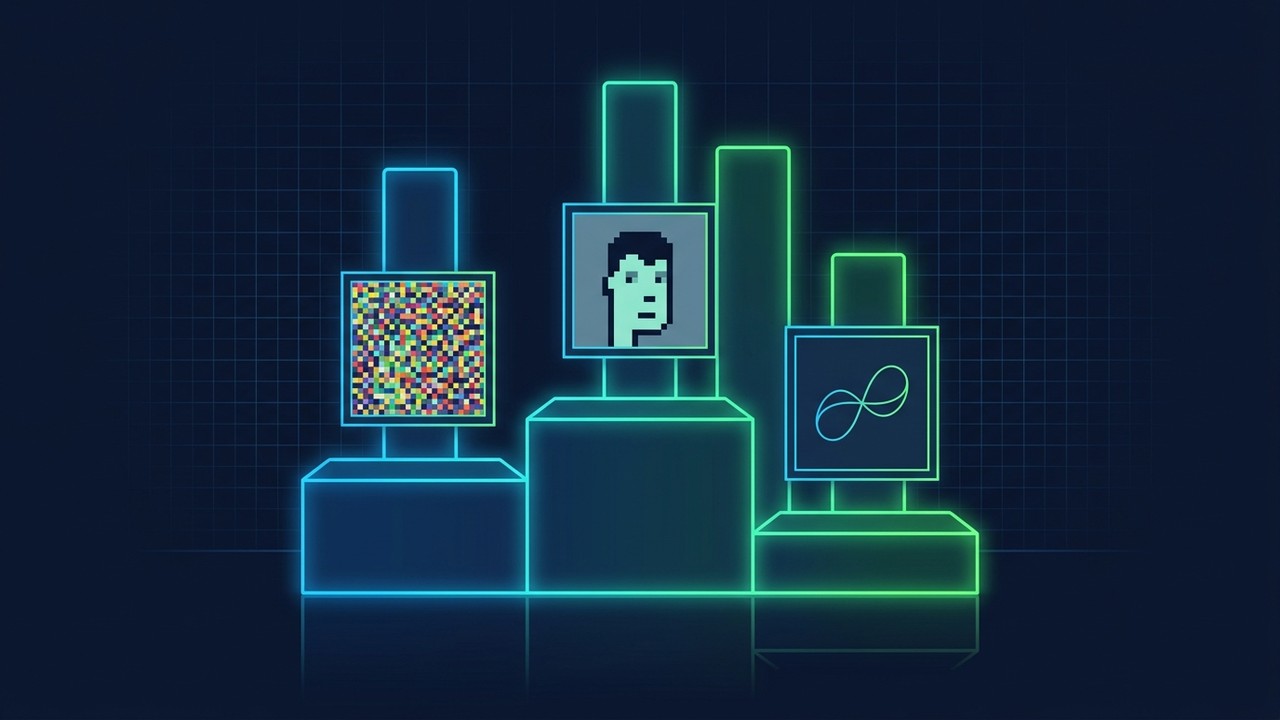
1. The Merge by Pak, $91.8 million
The Merge was not one sale. Over 48 hours on Nifty Gateway in December 2021, about 28,983 people bought roughly 312,000 "mass" units, and each wallet's units fused into a single growing blob. Add it all up and you get $91.8 million, which is why it tops the list, though plenty of rankings keep it separate because no single buyer ever wrote that cheque. Pak, the digital artist behind it, has still never said who they are.
2. Everydays: The First 5000 Days by Beeple, $69.3 million
If you want a record with one owner, this is it. Mike Winkelmann, who signs his work Beeple, made an image a day for over 13 years and glued all 5,000 of them into one file. Christie's put it up in March 2021, and Vignesh Sundaresan, an investor who goes by MetaKovan online, won it. First time a major auction house had sold a pure NFT, and the moment the whole thing hit the evening news.
3. Clock by Pak and Julian Assange, $52.7 million
Clock is bleak by design: an on-chain tally of the days Julian Assange had been locked up. AssangeDAO, about 10,000 people pooling funds, bought it in February 2022 to pay for his legal defence. It is still the most expensive NFT attached to a political cause, and one of the first times a DAO formed for the sole purpose of buying one thing.
4. HUMAN ONE by Beeple, $28.9 million
Beeple's first physical-digital hybrid: a rotating four-screen sculpture showing a figure walking through shifting landscapes, which the artist can update remotely for as long as he chooses. Christie's sold it in November 2021 to venture investor Ryan Zurrer. HUMAN ONE was pitched as a bridge between NFT collecting and traditional fine art, and it priced accordingly.
5. CryptoPunk #5822, $23.7 million
No CryptoPunk has sold for more. #5822 is an alien, one of only nine, and it wears a blue bandana on top of that. Deepak Thapliyal, then running Chain, paid 8,000 ETH for it in February 2022. Larva Labs had given CryptoPunks away for free back in 2017, and every profile-picture project since has borrowed the format.
6. CryptoPunk #7523, $11.75 million
Nicknamed "Covid Alien" for its surgical mask, #7523 sold in Sotheby's 2021 "Natively Digital" auction to entrepreneur Shalom Meckenzie. It pairs two scarce traits: an alien base and a mask, worn by only 175 of the 10,000 punks.
7. TPunk #3442, $10.5 million
Not an Ethereum punk at all. TPunks is a CryptoPunks derivative on the Tron blockchain, and Tron founder Justin Sun bought #3442, an alien in a red cap, in August 2021 before donating it to the APENFT foundation. The sale showed how far the punk format had spread beyond the original.
8. CryptoPunk #4156, $10.26 million
An ape punk in a blue bandana, sold in December 2021 for 2,500 ETH. The token had become a well-known avatar in the community, and its sale followed a long-running debate about commercial rights for CryptoPunks holders.
9. CryptoPunk #5577, $7.7 million
A cowboy-hat ape punk, bought in February 2022 by Robert Leshner, founder of the Compound lending protocol. Ape punks number just 24 in the set, which makes them the second-scarcest type after the aliens.
10. Ringers #879 "The Goose" by Dmitri Cherniak, $6.2 million
The most recent entry. Sotheby's sold it in June 2023 as part of the Grails collection liquidated from the bankrupt hedge fund Three Arrows Capital. "The Goose" is a prized output of Cherniak's generative Ringers algorithm, and its price, booked well after the hype had faded, showed that blue-chip generative NFT art still drew serious money.
CryptoPunks: The Most Valuable NFT Collection
Run back through the ten: six are CryptoPunks or punk knock-offs. No other NFT collection shows up anywhere near that often. It comes down to a rarity chart that buyers committed to memory a long time ago.
- Aliens. Nine of them. Every one is a million-dollar punk.
- Apes. Twenty-four, the next rung down.
- Zombies. Eighty-eight.
- Humans. Everyone else, ranked by how many rare accessories they stack.
The origin story reads like a joke now. Larva Labs made 10,000 punks in 2017 and gave them away to whoever had an Ethereum wallet. Yuga Labs, the people behind Bored Ape Yacht Club, bought the CryptoPunks and Meebits rights in March 2022. Yuga then passed the CryptoPunks rights on again in 2025, to the Infinite Node Foundation, a non-profit that wants to preserve digital art, for a reported $20 million. Museums, not merch tables. The punks held their floor price through every one of those handovers, better than any other early profile-picture project. Bored Ape holders watched their floor fall a lot further.
How Crypto Payments Drive the NFT Market
Every record here was paid in cryptocurrency, nearly always ETH. Marketplaces run on wallets and on-chain settlement, so buying an NFT works like any other crypto transaction:
- Fund a self-custody wallet with the network's currency, usually ETH for Ethereum-based NFTs.
- Connect the wallet to a marketplace such as OpenSea or a dedicated auction platform.
- Place a bid or buy at the listed price, and let the smart contract transfer the token.
- Pay the network fee, and account for the marketplace commission on top.
A couple of crypto quirks sit behind the headline figures. Most sales were priced in ETH, so the dollar number the press ran depended on ETH's price that day. Buy at 8,000 ETH, look again a year later, and the story reads differently. Gas fees on Ethereum also went haywire during the 2021 rush, adding hundreds of dollars to a plain transfer and pushing smaller buyers out of the busy drops.
Those same rails work for anyone selling digital goods, no bank needed. A shop that wants to take crypto for art, collectibles, or anything else can run payments through a gateway like Plisio and settle out without sitting on the volatility. For a collector it comes down to one thing: your wallet is the account, and your private keys are the receipt.
How the NFT Market Changed After the Record Sales
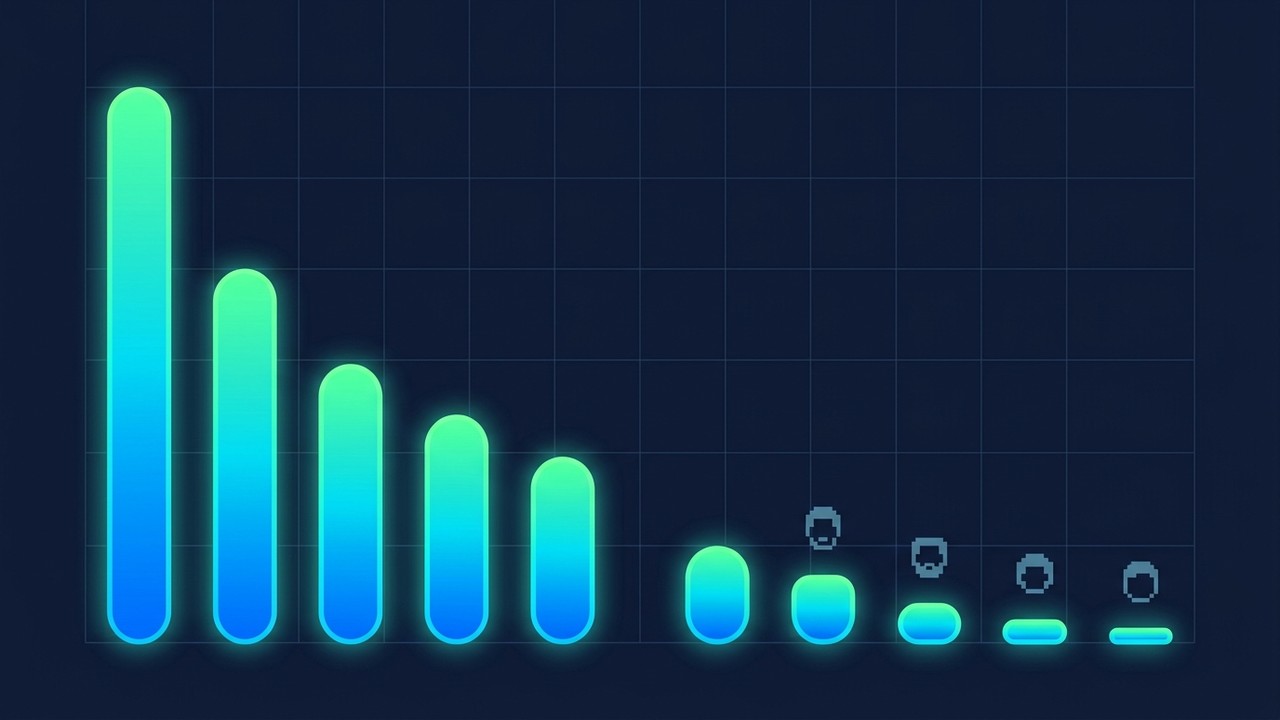
Every sale above is stuck in one narrow window, roughly early 2021 to early 2022, when volume and prices topped out together. The NFT market has shrunk hard since.
- Monthly trading volume fell more than 90% from its high
- Floor prices for most blue-chip collections dropped 70% to 95% in ETH terms, and further in dollars
- Thousands of collections lost all liquidity, with no bids at any price
- Attention shifted toward NFTs with a function: game items, event tickets, loyalty passes, and avatars tied to active communities
- One-of-one art and respected generative projects held value far better than mass profile-picture drops
The distance between a handful of trophy assets and the rest keeps growing. A top CryptoPunk or a real Beeple still moves for millions. The average 2021 mint just sits there. If you are trying to price an NFT today, that is the lesson: rarity, provenance, and an active community now do the job hype used to do.
Are These Expensive NFTs Still Worth Anything
A handful, yes. Everydays has stayed in one private collection since the sale and has never come back to auction. Other Beeple pieces and the better CryptoPunks still get valued in the millions, sometimes tens of millions. The Merge units still trade most weeks. Clock and HUMAN ONE sit with a DAO and a collector, neither showing any interest in selling.
The rest is mostly a graveyard. The go-to example is Jack Dorsey's first tweet. Sina Estavi paid $2.9 million for the tokenized version in March 2021, put it back up a year later expecting something near $48 million, and watched the top bid land around $280. XCOPY's "Right-click and Save As Guy" went for $7 million and would not clear a fraction of that now. Outside the blue-chip names, most 2021 mints just have no buyer. What makes something a valuable NFT is cultural weight and real scarcity, not the fact that it is an NFT.
The Short Version
The most expensive NFTs still point back to that same short burst in 2021 and 2022. The Merge at $91.8 million. Everydays at $69.3 million. A string of alien CryptoPunks in the tens of millions. Punks are still the spine of the list, and one-of-one art has held up better than the profile-picture floods. Underneath the records the market runs quiet now, lower floors and thinner volume, though the trophy pieces mostly kept their worth. Weighing an NFT yourself? The top sales keep saying the same thing: provenance, scarcity, and a real community are what make a token an asset.