Ben Affleck Net Worth: From $30 to $300 Million
The first check Ben Affleck ever earned as an actor was thirty dollars. He was a kid with a bit part in Field of Dreams in 1989. Today the Ben Affleck net worth is estimated at around $300 million. That is a long climb, and the way he made it is more interesting than the number itself.
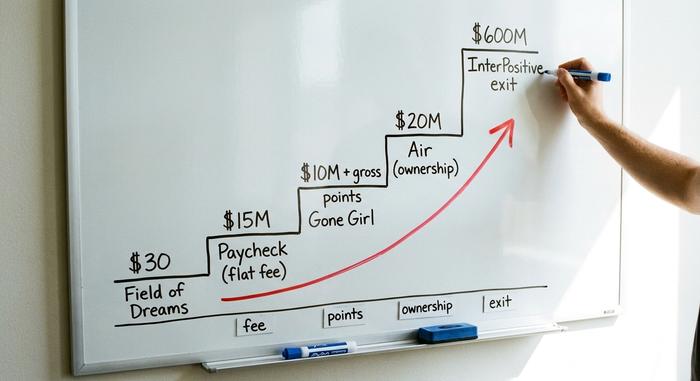
Here is the thread to follow. Affleck spent three decades moving up one ladder — from being paid by the project to owning the thing that pays. He started as hired talent collecting a fee. He became a star taking a slice of the box office. Then he became an owner, first of a studio, then of a startup that Netflix bought for a fortune. The acting made him famous. The ownership made him rich. Those are not the same skill, and most actors never learn the second one.
One caveat up front. No celebrity net worth is audited. The $300 million is an estimate from sites like Celebrity Net Worth, sanity-checked against public filings and reported deals. Treat the figure as informed guesswork, not a bank statement.
How big is Ben Affleck's net worth?
The going estimate is about $300 million as of 2026, per Celebrity Net Worth. For years those same trackers parked him at roughly $150 million. Then the number doubled. Not because he suddenly booked more movies, either. It doubled because of one deal, which we will get to. Hold that thought.
What is worth saying now is simpler. A $150 million swing in a single year does not happen to an audited balance sheet. It happens to a guess. When an estimate can lurch that far that fast, it is chasing headlines, not counting cash. So hold the $300 million loosely.
For scale, $300 million puts Affleck in the upper tier of working actors but nowhere near the very top. The billionaire-adjacent fortunes in entertainment belong to people who own catalogs, libraries, and franchises, not to hired leads. His number reflects exactly that in-between status — richer than a salary man, smaller than a mogul, and still climbing.
Good Will Hunting and his first Academy Award
The single most important thing Affleck did early was write, not act. Think about that for a second. The defining money move of a famous movie star was a screenplay. In 1994 he and Matt Damon sat down and wrote Good Will Hunting, then sold it for a reported $600,000 and split the check. Modest, for a film that would gross north of $200 million worldwide. The size of the check was never the point, though. The lesson buried inside it was. People who own the material outlast the people hired to perform it. I keep coming back to that instinct, formed at 22 over a borrowed word processor, because it explains his bank balance better than any part he ever played.
A $30 check and a shared bank account
The backstory explains the instinct. Affleck and Damon were broke kids from Cambridge, Massachusetts, close enough that they once ran a joint bank account, so whoever landed a gig could float the other's rent. His first acting paycheck was that famous $30 from Field of Dreams in 1989. Thirty dollars. For most of the decade after, he was a jobbing actor with no leverage and nothing of his own. So the two of them wrote their way out.
$600,000 for a script, an Oscar at 25
The script won the pair the Academy Award for Best Original Screenplay in 1998. Affleck was 25, the youngest winner in the category at the time. The trophy mattered less than what it proved: he could build the thing, not just appear in it. A second Oscar arrived fifteen years later, when Argo took Best Picture in 2013, a film he directed, produced, and starred in. The Academy somehow left him off the Best Director ballot that year. One of the odder snubs of the decade, frankly. He won the bigger award regardless.
Directing became his hedge against a shaky acting career. His first time behind the camera, Gone Baby Gone in 2007, starred his brother Casey Affleck and drew genuine critical acclaim. The Town came in 2010, a commercial success and a critics' film at once. By the time Argo landed, the director version of Affleck was the more bankable one, and directors keep getting hired long after the tabloids wander off.
From Pearl Harbor to Daredevil paychecks
Then came the flat-fee years, and they read as a warning. Through the early 2000s Affleck was a leading man cashing huge checks with no stake in whether the film sank or soared. Paycheck, in 2003, reportedly handed him $15 million. That was the ceiling of his salary era. Daredevil and Gigli paid somewhere around $11.5 to $12.5 million each the same year. Armageddon, way back in 1998, had come in near $600,000.
The rest of the era reads like a receipt roll. Reindeer Games, about $6 million in 2000. Changing Lanes and The Sum of All Fears, roughly $10 million apiece in 2002. The Pearl Harbor figures from 2001 are the funniest, honestly, because nobody agrees on them. I have seen everything from a quoted $250,000 base to nearly $10 million once you fold in bonuses. That gap should make you distrust every celebrity salary number, including the ones in this article. Pick whichever you like. The shape underneath does not change. One big check, paid once, and nothing left behind when the film left theaters.
A salary does not care whether the movie works, and that cuts both ways. Gigli bombed so completely it turned into a punchline, and his acting career stalled for years while the tabloids feasted. He still had the money. What he did not have was equity to ride a hit or a cushion to survive a bomb. An employee, in the most literal sense. Extremely well paid, completely exposed.
Batman v Superman and the backend deals
The next rung was learning to take a piece of the gross instead of a flat fee. This is where the money starts to compound.
Batman money
When Affleck signed on as Batman, the paydays got serious. Forbes pegged his earnings at $35 million in 2014, the year he signed, and $43 million in 2016, when Batman v Superman: Dawn of Justice came out. The Batman v Superman role alone reportedly paid him about $20 million, and he later carried an executive producer credit into Justice League. Years afterward, Warner Bros. reportedly offered him $30 million to put the cowl back on for The Flash. The franchise treated him like a fixed asset, and it paid accordingly.
Gone Girl and first-dollar gross
The more telling deal was Gone Girl in 2014. Affleck reportedly took around $10 million plus participation in the film's gross. That structure, where the talent earns from the first dollar the movie makes rather than a flat sum, is how Hollywood's actually-wealthy operate. It was a small signal of where he was heading — away from the paycheck, toward the points.
Most viewers never think about the gap between a fee and a point, but it is the line that separates a rich actor from a wealthy one. A fee is a wage that ends. A point is a share of the business that keeps paying. Affleck had spent fifteen years collecting wages. Gone Girl was him quietly starting to ask for shares instead.
Artists Equity, the Ben Affleck and Matt Damon bet
The real pivot came in 2022, and it reunited the Good Will Hunting partnership. Affleck and Damon had run production companies before, Pearl Street Films and the earlier LivePlanet, with mixed results. Artists Equity was different because it had real money behind it and a real argument.
A studio that shares the upside
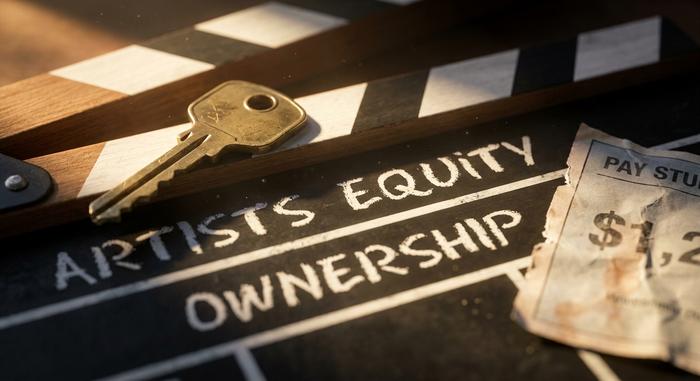
Affleck and Matt Damon launched Artists Equity in November 2022, with Affleck as chief executive and Damon as chief content officer. RedBird Capital Partners committed a reported minimum of $100 million. The pitch was in the name — a production company that shares profits not only with the marquee stars but with the crew and the people who actually make the films. Its first release, Air, arrived in 2023, with Affleck reportedly drawing about $20 million for it, and more projects followed, including The Rip in 2026.
The model was the whole argument. Most studios pay the stars and the director, then keep the rest. Artists Equity promised a slice to the crew, the below-the-line workers who almost never see a back-end check, while the company itself kept ownership of the films it made. Air, the drama about Phil Knight's bid to sign Michael Jordan for Nike, gave the venture an early hit and proved the pitch could pull A-list talent onto those terms rather than scare it off.
Why ownership changes the math
This is the part that reframes the whole Ben Affleck net worth. A fee is capped the moment you sign it. An ownership stake keeps working after the cameras stop. For thirty years Affleck had mostly sold his time. With Artists Equity he started selling time and keeping equity, and equity is the only part of show business that compounds.
The $600 million Netflix AI windfall
Then came the deal that doubled the Ben Affleck net worth estimate. Affleck had quietly founded an AI filmmaking-tools startup called InterPositive in 2022, run in stealth. In March 2026 Netflix agreed to acquire it in one of its largest-ever purchases, reportedly for up to $600 million, according to Variety. The structure matters: the upfront payment was reported to be less than $600 million, with the rest tied to performance targets, and Affleck joined Netflix as a senior adviser while his roughly sixteen-person team moved over.
Two honest caveats. The $600 million is the deal's ceiling, not Affleck's personal cut, and his ownership percentage and net proceeds were never disclosed. Even so, a founder exit of that scale is a different category of money from any movie check. It is the clearest single reason the trackers moved him from $150 million to $300 million in a single year. The kid who earned $30 on a film set built a company a streamer paid nine figures to absorb.
Not every recent payday was nine figures, of course. His reported eight-figure Dunkin' Super Bowl ad in 2023 turned a New England coffee habit into one of the most-watched commercials of the year, the kind of brand deal that lands precisely because he leaned into it instead of hiding from it.
| Era | Project | Reported pay | What changed |
|---|---|---|---|
| 1989 | Field of Dreams | $30 | First acting check |
| 1997 | Good Will Hunting (script) | ~$300K, split | Owning the material |
| 2003 | Paycheck | $15 million | Flat fee, the peak |
| 2014 | Gone Girl | $10M + gross points | Backend participation |
| 2016 | Batman v Superman era | $43M that year (Forbes) | Franchise plus EP credit |
| 2023 | Air | ~$20 million | Studio ownership |
| 2026 | InterPositive to Netflix | up to $600M (deal cap) | Founder exit |
Jennifer Lopez, divorces and gambling losses
No honest accounting skips the leaks, and Affleck has sprung a few. Start with the cards. He is a genuinely good poker player, good enough to win a California state championship worth $356,400 back in 2004. He is also good enough at blackjack that the Hard Rock in Las Vegas reportedly threw him out for counting cards in 2014, something he later owned up to himself. Treating gambling as a skill is its own kind of risk. At least this one occasionally paid him.
The expensive part was personal. The Jennifer Garner marriage ran from 2005 to 2018, and the terms stayed sealed. The Jennifer Lopez reunion, the one the tabloids had waited twenty years for, lasted from 2022 to a divorce finalized in early 2025. Here he got lucky in the boring, structural way that actually counts. By reported accounts neither owes the other spousal support, and he walked away still holding his Artists Equity stake. Given what that company became, that one detail was probably worth more than any settlement. The real estate churned the way celebrity real estate always does. A $60.85 million Beverly Hills estate bought with Lopez in 2023, his share later gifted to her, the house then listed near $50 million. He moved on to a $20.5 million place in Pacific Palisades.
| Year | Money event | Figure |
|---|---|---|
| 2004 | Poker championship win | $356,400 |
| 2014 | Hard Rock blackjack ban (card counting) | banned |
| 2023 | Beverly Hills estate, bought with Lopez | $60.85 million |
| 2025 | Pacific Palisades home | $20.5 million |
| 2026 | Gifted Beverly Hills share to Lopez; she listed it | ~$50 million |
What the Ben Affleck net worth really shows
So the $30-to-$300-million arc is not really a story about a movie star. It is a story about a man who, slowly and with some detours, learned to stop renting out his time and start owning the things that earn. The acting made him a household name. The screenplay, the backend deals, the studio, and the startup made him wealthy.
The lesson sitting inside the Ben Affleck net worth is almost boring in its simplicity: fees end, ownership compounds. He figured that out at 25 with a screenplay and spent the next thirty years proving it. The interesting question now is what he builds with the Netflix money, because a man who keeps choosing equity rarely stops at one exit.