Bitget Review: Is the Crypto Exchange Safe?
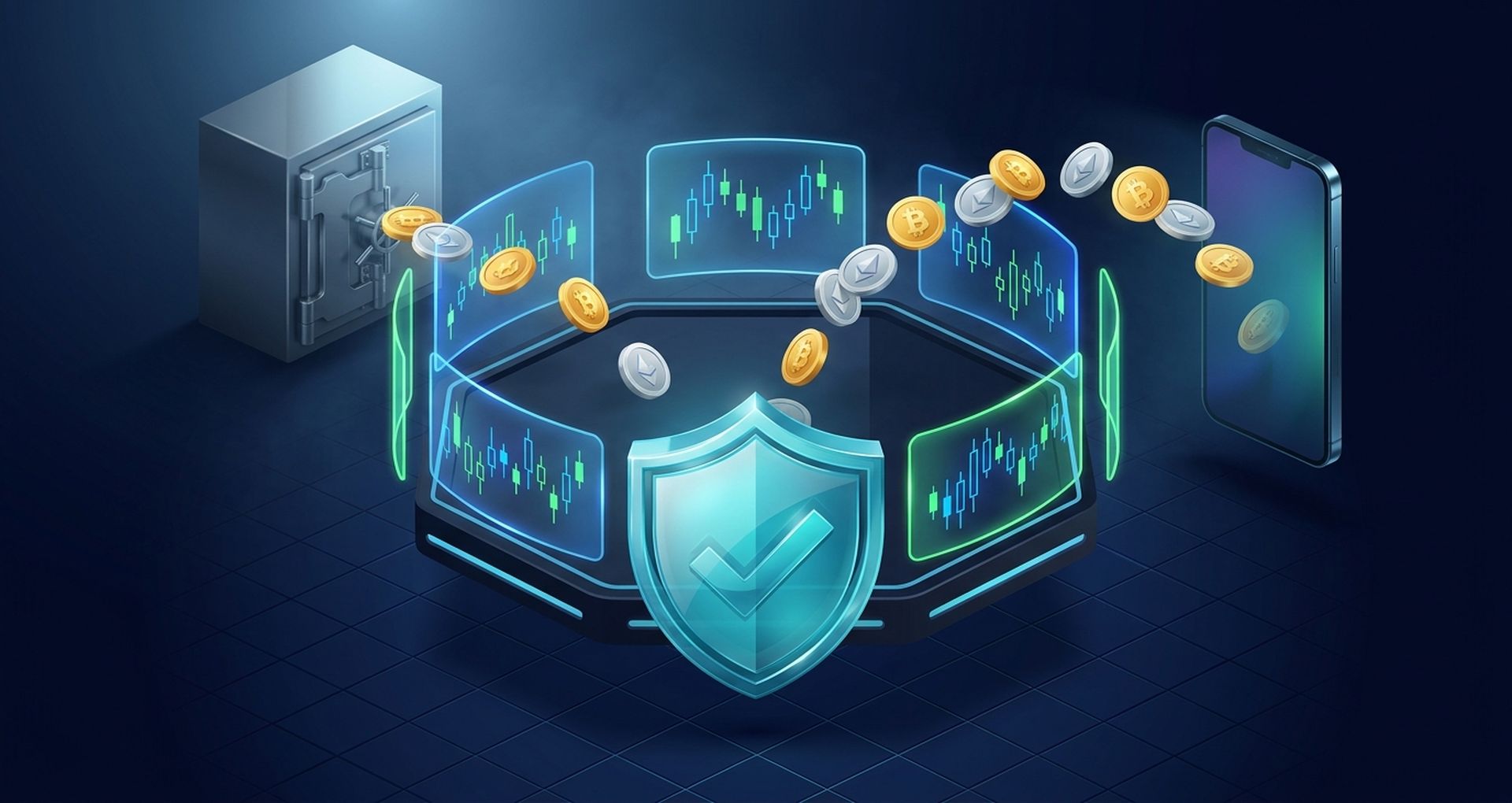
Bitget is a crypto exchange for people who trade, not for people who buy once and forget. Derivatives and copy trading are the pitch. What started as a small 2018 outfit now claims tens of millions of accounts. Before you send money anywhere, four questions matter: is it safe, is it legit, will it work where you live, and can you get your funds back out. This Bitget review works through all four.
The short answer first. Bitget is a real, mid-to-large crypto exchange. Fees are low, the mobile app is good, and it publishes proof of reserves. It is also a bad pick for beginners, useless if you live in the US or UK, and pricey if you need to move cash in and out. That is the whole Bitget exchange review in four sentences; the rest is detail.
What Is Bitget and How the Exchange Works
Bitget launched in 2018, registered in Seychelles like a lot of offshore platforms. Since then it has passed 25 million registered users in more than 100 countries, with over 630 digital assets and 500-plus spot trading pairs on the books. It holds virtual asset service provider registrations in a handful of EU states. It runs nothing in the United States.
The identity here is derivatives-first. A beginner-focused crypto exchange like Coinbase or Kraken sells itself to newcomers. Bitget puts futures trading, leverage, and copy trading up front instead. Spot trading works fine, but almost nobody opens an account here for it.
| Detail | Bitget |
|---|---|
| Founded | 2018 |
| Headquarters | Seychelles |
| Registered users | 25 million+ |
| Listed assets | 630+ |
| Regulation | VASP registrations in several EU states; no US presence |
| Native token | BGB |
Verification is mandatory. No KYC, no meaningful withdrawals. That means an ID document, plus proof of address at higher tiers, which is normal for an exchange this size.
Ownership sits with a holding company whose leadership is public, and Bitget has chased mainstream visibility through sports sponsorships and token listings. None of that makes it a regulated bank. Seychelles registration is light-touch oversight, so the safety question comes down to the platform's own controls, not a national regulator standing behind it. The rest of this Bitget review takes those controls one at a time.
Bitget Key Features Beyond Basic Crypto Trading
The feature set is what separates Bitget from a plain spot venue. Most of these tools target users who want automation, or who want to lean on more experienced traders.
- Copy trading. This is Bitget's flagship. You browse a ranked list of lead traders, see their historical return, drawdown, and follower profit-and-loss, then allocate funds to copy their positions automatically. Bitget runs one of the largest copy trading networks in the industry, covering both spot and futures.
- Trading bots. Spot grid, futures grid, and dollar-cost-averaging bots are built into the app, with AI-powered presets that suggest parameters based on recent volatility. These run server-side, so your machine does not need to stay online.
- Bitget Wallet. A separate self-custody wallet product for on-chain assets, DeFi, and NFTs. It is not the exchange account, and funds do not move between them automatically. Treat it as a distinct app.
- Launchpad and earn products. Token sales, staking, and flexible savings for passive yield on idle balances.
Copy trading is genuinely useful for people who lack the time to watch charts, but it is not passive income. You are still exposed to the lead trader's losses, and past performance on the leaderboard says little about the next month. A trader can top the rankings for a quarter by running high leverage into a favorable trend, then give it all back in a week. Sensible use means spreading a small allocation across several lead traders, setting your own stop on the copied position, and checking the drawdown column as closely as the return column.
The trading bots deserve a similar caveat. A grid bot profits from a market that chops sideways within a range and bleeds slowly when price trends hard against the grid. The AI presets pick sane starting parameters, but they cannot predict a breakout. Bots are a convenience for range-bound conditions, not a substitute for judgment about which conditions you are in.

Bitget Trading Platform: Spot and Futures
You get the trading platform on web and through a well-rated mobile app, TradingView charts on both. Spot trading covers those 500-plus pairs. Liquidity runs deep on the major coins and noticeably thin once you get into small-cap listings.
Futures trading is where Bitget really competes. USDT-margined and coin-margined perpetuals, leverage up to 125x, plus mixed-margin contracts that let one collateral asset back several markets. Maker and taker fees on futures are low. Order-book depth on the flagship contracts, BTC and ETH, holds up against the top tier of exchanges.
| Feature | Spot | Futures |
|---|---|---|
| Pairs / contracts | 500+ | 200+ perpetuals |
| Max leverage | None | Up to 125x |
| Fee (maker / taker) | 0.1% / 0.1% | 0.02% / 0.06% |
| Best for | Building a position | Short-term directional bets, hedging |
The cost of all this is complexity. The interface crams a lot onto one screen, and a first-timer can open a leveraged position while thinking they placed a plain buy. If you are new, stay in spot mode until the layout stops fighting you.
Execution is solid on the liquid markets. Slippage on a mid-size BTC or ETH order stays minimal, and the matching engine holds up during volatile sessions when thinner platforms lag or reject orders. The trading platform shows its limits in the long tail. Newly listed tokens can carry wide spreads, and exiting a small-cap position during a sell-off may cost more than the headline fee suggests. That comes down to the asset's own liquidity, not a Bitget flaw, but plan around it if you trade outside the top 100 coins.
Bitget Fees, Deposit and Withdrawal Options
Trading fees are one of Bitget's strongest points. Spot trading costs a flat 0.1% trading fee for both makers and takers, and holding or paying in BGB, the native token, cuts that by up to roughly 20%. VIP tiers based on volume and BGB holdings lower it further. Futures sit at 0.02% maker and 0.06% taker before any discount.
Deposit and cash-out terms depend on how you move money:
- Crypto deposit: free. You pay only the sending network's fee.
- Crypto withdrawal: a flat network fee per asset, which Bitget sets and occasionally marks up slightly above cost.
- Fiat deposit: handled by third-party payment processors. Card purchases commonly carry 2% to 5% on top, so this is an expensive way in.
- Limits: tied to your KYC level. Basic verification unlocks a modest daily cap; full verification raises it substantially.
You can also set an address whitelist of pre-approved wallets, which blocks payouts to anywhere else even if someone gets into your account. Turn it on.
Is Bitget Safe? Security and Proof of Reserves
On the question most readers came for: Bitget is reasonably safe by exchange standards, with caveats.
- Proof of reserves. Bitget publishes a Merkle-tree report that users can verify against their own balance. The total reserve ratio for tracked assets has consistently sat above 100%, generally around 130%, meaning client assets are more than fully backed.
- Protection fund. Bitget maintains a protection fund worth more than $300 million, earmarked to cover users after a security breach or major platform failure. The fund's composition is published and updated.
- Account security tools. Two-factor authentication, the address whitelist described above, anti-phishing codes on emails, and device management are all available. Most account losses on any exchange trace back to phishing or reused passwords, not a platform hack.
- Track record. Bitget has handled security incidents involving abnormal trading and third-party access without user funds being permanently lost, and it has used the protection fund to make affected users whole. That is a better response than several failed exchanges managed.
The honest caveat: no centralized exchange is risk-free. Balances on Bitget are not covered by any deposit insurance scheme like FDIC or FSCS. A reserves report shows assets exist at a moment in time; it does not prove the absence of liabilities, and these are attestations rather than full financial audits by a top accounting firm. A determined bad actor with insider access, a regulatory freeze, or a banking-partner failure are all scenarios that no amount of on-chain verification can prevent.
None of this is Bitget-specific. It is the same routine that applies to any exchange. Bitget gives you the tools to protect yourself. Whether you use them is on you:
- Keep long-term holdings in a self-custody wallet, not on the exchange.
- Move only what you actively trade onto the platform.
- Enable 2FA, an anti-phishing code, and the address whitelist on day one.
- Verify the reserves report against your own balance once in a while.
- Withdraw profits on a schedule instead of letting a balance pile up.
Restricted Countries and Access When Using Bitget
Bitget does not serve everyone. Using Bitget is not possible from the United States or Canada, and it withdrew from the United Kingdom retail market under FCA pressure. Sanctioned jurisdictions are blocked outright, and the restricted list changes as regulation shifts.
KYC runs in tiers. The entry level, requiring an ID document, unlocks trading and limited payouts. Higher tiers add proof of address and, sometimes, a video check, raising withdrawal limits and enabling fiat channels.
Using a VPN to get around a country block violates Bitget's terms of service. If the platform detects it, it can freeze the account and hold funds pending review, so this is not a workaround worth the risk. Detection often happens at the worst moment, when you try a large withdrawal or when a compliance sweep flags mismatched location data, and recovering funds from that state is slow and not guaranteed.
If you live in a restricted market and need exposure to the same products, a regulated local exchange plus a separate self-custody wallet is the safer path, even if the fees are higher. Access you cannot rely on is not really access.
Pros and Cons of Using Bitget as Your Broker
Weighed as a trading broker rather than a savings account, Bitget lands well for its target user and poorly outside it.
Pros
- Low trading fees on both spot and futures, before BGB discounts
- Best-in-class copy trading with transparent lead-trader stats
- Deep derivatives market with up to 125x leverage and strong liquidity on majors
- Published proof of reserves and a funded protection fund
- Fast, capable mobile app with full charting
Cons
- Closed to US and UK users, plus a rotating restricted list
- Steep learning curve; the interface invites costly mistakes
- Fiat on-ramp is expensive and outsourced
- Support quality draws inconsistent reviews, especially during high-volume periods
Who should use it: active traders who want copy trading, futures trading, and spot trading in one low-fee account and are comfortable managing their own risk. Who should skip it: beginners, US and UK residents, and anyone who mainly wants to buy and hold.
Accepting Crypto Payments Without an Exchange
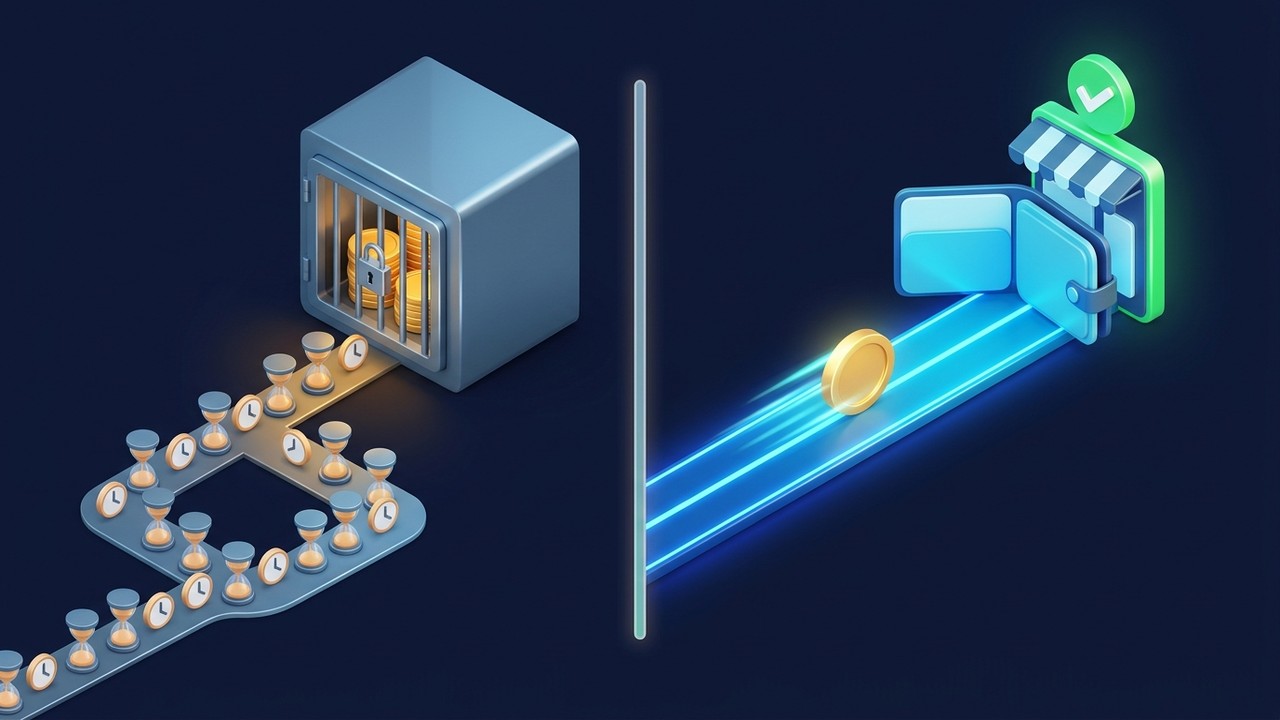
Say you are not trading at all. You just want customers to pay you in crypto. An exchange account is the wrong tool for that job. Park your revenue on a trading platform and you are trusting its solvency, its withdrawal limits, and whatever its regional rules become next quarter, and you are still doing a manual payout every time you want the money in your own wallet.
A payment gateway skips the custody part. Payments land in a wallet you control, auto-conversion smooths out volatility if you want it, and there is no exchange balance to reconcile. That strips out most of the risks this Bitget review has been walking through.
Plisio runs a non-custodial crypto payment gateway. It handles the major coins, drops into the usual e-commerce platforms, and forwards funds straight to your address. For business payments, that beats keeping a float on an exchange.
Final Verdict
Bitget earns a cautious recommendation for its intended audience. It is a legitimate crypto exchange with genuinely low fees, the strongest copy trading product on the market, deep futures liquidity, and the transparency of a published proof of reserves. The drawbacks are real too: no access for US or UK users, a learning curve that punishes mistakes, and a costly fiat path.
If you trade actively and manage your own risk, Bitget is worth an account. If you are new, or you just need to accept crypto for a business, this Bitget review points you elsewhere.