USDT TRC20 vs ERC20: Fees, Speed and Which to Use
Try to send Tether on almost any exchange and it stops you with one question: which network? That single prompt is the USDT TRC20 vs ERC20 debate in a nutshell. You're moving the same stablecoin, worth the same dollar, but the chain underneath changes, and with it the fee and the wait. Choose badly and the transfer overpays, stalls, or lands nowhere at all. What follows is how the two versions of USDT differ, what each one costs, how fast they settle, and when to reach for which.
What USDT TRC20 and ERC20 actually mean
USDT is Tether's stablecoin, worth one US dollar and meant to stay there. It doesn't belong to a single blockchain. Tether issues it on several chains at once, and two of those, Ethereum and TRON, carry most of the weight. On Ethereum the token is ERC20 USDT, named for the ERC20 token standard it runs on. On TRON it's TRC20 USDT, built on a standard that borrows almost everything from ERC20.
A dollar is a dollar on either one, and both redeem with Tether. What differs is the track underneath. An ERC20 balance and a TRC20 balance don't meet on-chain, so you can't fire USDT straight from an Ethereum address to a TRON address. To get from one to the other you route through an exchange or a bridge, which burns the token on the first chain and mints a fresh one on the second. USDT shows up on Solana, BNB Chain, Polygon and others too, but the bulk of transfers still ride TRON or Ethereum.
There's a reason it played out this way. USDT first appeared in 2014, running on top of Bitcoin. Ethereum came next and stayed the default for years, favoured by trading desks and the early DeFi crowd. TRON showed up afterward and spread fast, because it answered the complaint retail users kept making about ERC20: too much money to move a small amount. Now each network has its own regulars. Figuring out which one holds your USDT is where a clean transfer begins.
How token standards shape USDT transfers
Think of a token standard as the rulebook wallets, exchanges and smart contracts follow to handle a token: how it tracks balances, fires transfers, grants approvals. Nearly every token on Ethereum runs ERC20. TRC20 is TRON's near-copy of it, close enough that developers can shift contracts across with barely a change.
That rulebook isn't the reason the two USDT versions behave so differently, though. The chain beneath it is. Three things get decided there. Gas is one: every ERC20 transfer burns ETH, while every TRC20 transfer spends TRX as energy and bandwidth. The fee model is another. Ethereum runs gas as an open auction that climbs with demand, whereas TRON leans on a resource system that holds costs low and steady. Throughput is the third, with TRON tuned for cheap high-volume sends and Ethereum built for a wide smart contract and DeFi ecosystem.
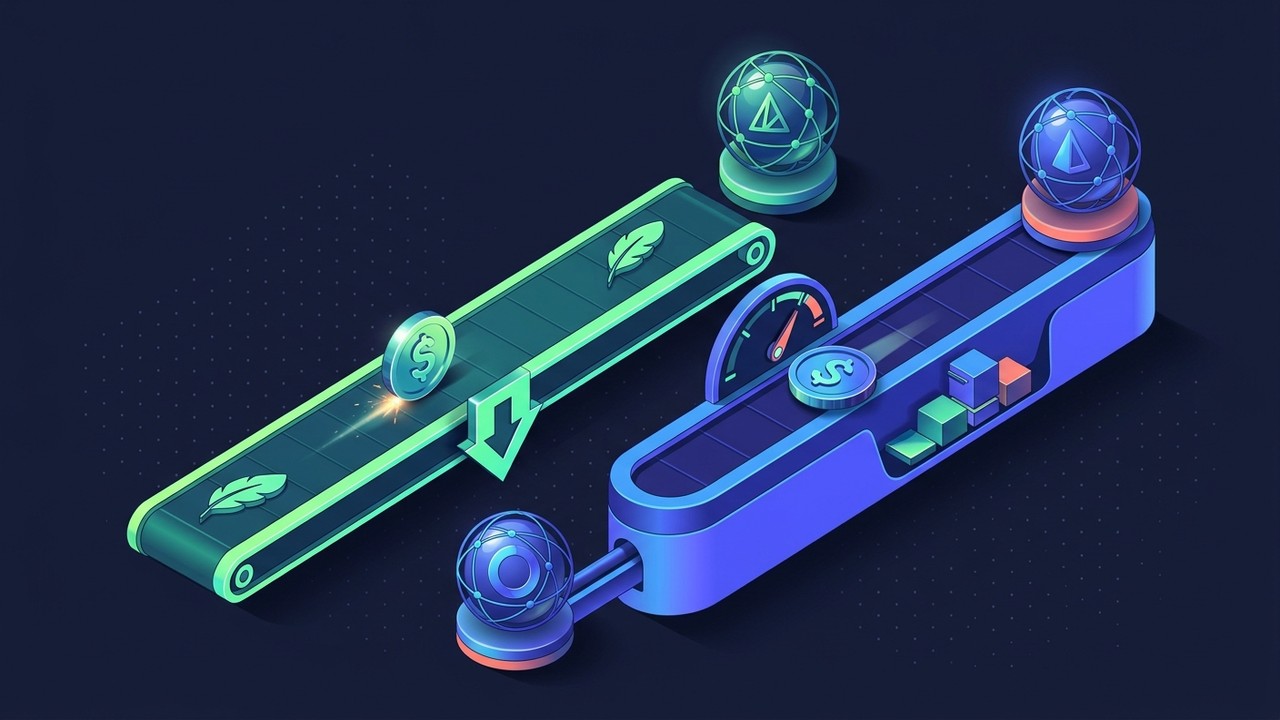
Put simply, comparing TRC20 and ERC20 is really comparing TRON and Ethereum, with a Tether wrapper on top.
This is also why wallet and exchange support differs. A platform that lists USDT has to run infrastructure for every blockchain it offers: nodes, fee handling, address generation. Every major exchange runs both TRON and Ethereum, so TRC20 and ERC20 USDT are almost always there. Smaller services and some hardware or browser wallets pick one. If you use a niche wallet, check that it lists the network you plan to receive on before anyone sends to it.
Key differences between TRC20 and ERC20 USDT
Here is how the two networks stack up for a typical USDT transfer.
| Factor | TRC20 USDT (TRON) | ERC20 USDT (Ethereum) |
|---|---|---|
| Gas token | TRX (energy and bandwidth) | ETH |
| Gas fee model | Fixed resource cost, low and stable | Open auction that rises with demand |
| Transaction fees | Low and predictable, often a few cents; many exchanges sponsor it to zero | Variable; cheap when the network is quiet, high during congestion |
| Transaction speed | Usually a few seconds to finality | Roughly 15 seconds to a few minutes, depending on load |
| Address format | Starts with T (for example T7zP19...) | Starts with 0x (for example 0xbd9e...) |
| Wallet support | Wide, though a few Ethereum-only wallets skip it | Near universal |
| Exchange support | Standard on almost every major exchange | Standard on almost every major exchange |
| DeFi and smart contracts | Limited ecosystem | Deep: Aave, Curve, Uniswap and most of DeFi |
| Best fit | Everyday transfers, payouts, exchange moves | DeFi, institutional settlement, Ethereum-native counterparties |
TRC20 wins on cost and speed for plain transfers. ERC20 wins on ecosystem depth, and on acceptance among counterparties that only touch Ethereum.
Transaction fees and transaction speed compared
Fees are where most people feel the difference between the two networks.
ERC20 USDT. You pay the gas fee in ETH, and the amount floats with demand for Ethereum block space. When the network is calm, a USDT transfer can cost well under a dollar. When a popular mint or a market swing fills blocks, the same gas fee can jump into the double digits. You also need a small ETH balance sitting in the wallet, because the token cannot pay its own gas. Confirmation usually takes anywhere from about fifteen seconds to a few minutes, and transaction speed slips further when blocks are full.
TRC20 USDT. TRON's resource model keeps the cost of a transfer low and steady. In practice it is often a few cents of TRX, and many exchanges cover it entirely so the withdrawal shows a zero network fee. Transfers typically confirm in a handful of seconds. You still need a little TRX in a self-custody wallet to cover energy and bandwidth, but the buffer required is small.
Both options settle far faster and cheaper than a traditional bank wire. Between the two, TRC20 is the safer default when you care about a low, predictable fee and quick transaction speed, and ERC20 is acceptable when you are already transacting on Ethereum or need to arrive there. Whichever USDT network you pick, the fee is set by the blockchain, not by Tether.
How to check if your USDT is ERC20 or TRC20
Mixing up the networks is how most people lose USDT. Before you send anything, or hand your address to someone else, make sure you know which USDT network you are on. Three ways to tell:
- Read the address prefix. TRON addresses begin with T. Ethereum addresses begin with 0x. That first character alone pins down the network.
- Check the network label where you're withdrawing. Every withdrawal screen has a network dropdown, usually labelled TRC20 / TRON or ERC20 / Ethereum. Set it to whatever the receiving side is expecting before you confirm.
- Look up a past transaction. ERC20 transfers land on Etherscan, TRC20 transfers on Tronscan. If an old transfer turns up on one and not the other, you know the network it used.
When you're still unsure, send a tiny test amount, watch it arrive, then move the rest.
Common mistakes when transferring USDT across networks
Most failed USDT transfers come down to a few repeat errors. Each one is avoidable.
- Sending to the wrong network. Withdrawing ERC20 USDT to a TRC20 address, or the reverse, usually means the funds do not arrive. Recovery after a transfer to the wrong network depends entirely on whether the receiving party controls that address on the other chain.
- Copying an address for the wrong chain. Some users keep a TRON and an Ethereum address in the same wallet app and paste the wrong one. Always check the prefix.
- Assuming an exchange supports both. A platform may list USDT but only accept one network for deposits. Read the deposit screen before sending.
- Ignoring the network dropdown. The default selection is not always the one you want. Set it deliberately every time.
- Not keeping gas. An ERC20 wallet with USDT but no ETH cannot send. A TRC20 wallet needs a small TRX balance for the same reason.
When to use TRC20 and when to use ERC20
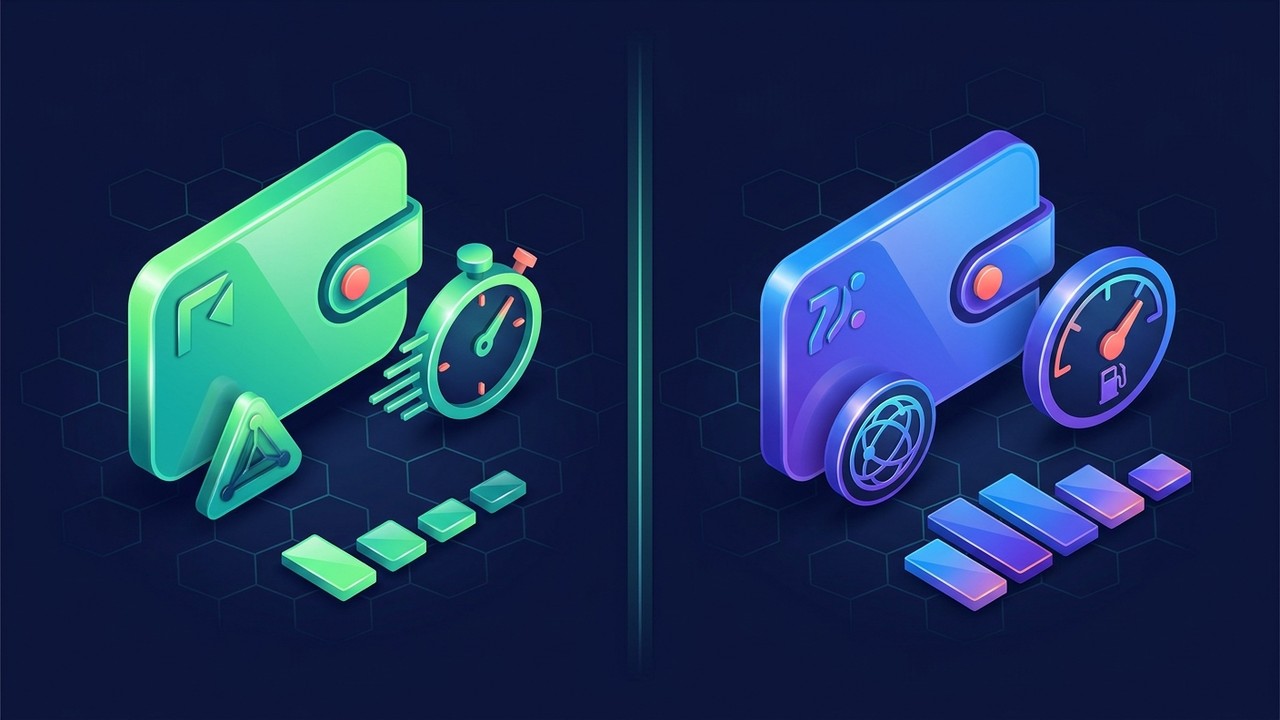
Neither network is universally better. The right pick depends on what you are doing.
Use TRC20 USDT when:
- You are making everyday transfers, payouts or remittances and want the lowest fee.
- You are moving funds between exchanges and both support TRON.
- You are sending to someone on a phone wallet who just wants dollars, fast and cheap.
- Fee predictability matters more than ecosystem access.
Use ERC20 USDT when:
- You are interacting with DeFi protocols like Aave, Curve or Uniswap, which live on Ethereum.
- A counterparty, custodian or OTC desk only settles on Ethereum.
- You need the deepest on-chain liquidity for large trades.
- You are already operating inside the Ethereum ecosystem and a bridge would add friction.
For most retail users moving USDT from A to B, TRC20 is the practical default. ERC20 earns its higher cost when the destination is Ethereum itself.
There is a middle case too. Say you trade on Ethereum but pay suppliers on TRON. Then it makes sense to hold a working balance on each network instead of bridging back and forth every time. Every bridge crossing costs a fee and adds a step where something can go wrong. Keeping USDT where you actually spend it usually works out cheaper over a month than converting on demand.
Accepting USDT payments on both networks
If you run a business and accept crypto, the TRC20 vs ERC20 split matters at checkout. Cost-sensitive customers will reach for TRC20 because the fee barely dents a small payment. DeFi-native and institutional customers often hold their USDT on Ethereum and prefer to pay from there without bridging.
Supporting both covers the full range. A crypto payment gateway handles this for you: it generates the right address for each network, detects which chain the incoming payment used, and settles the funds without you managing wallets on two blockchains. Plisio lets merchants accept USDT in both TRC20 and ERC20 form alongside other major coins, with automatic conversion and a flat processing fee.
Bottom line on USDT TRC20 vs ERC20
So the USDT TRC20 vs ERC20 call really comes down to the job in front of you. TRC20 is cheap, quick and predictable, which makes it the default for payouts, remittances and moving funds between exchanges. ERC20 costs more and takes longer, but DeFi and institutional settlement run on it. Check which network your USDT sits on, match it to the receiving side, and fire a test transaction any time you are not certain. Do that much and the two versions of Tether are just tools for different jobs.