Pig Butchering Scam: Spot Crypto Investment Fraud
It usually starts with a text meant for someone else. "Hi David, are we still on for lunch Thursday?" You reply that they have the wrong number, and instead of disappearing, the stranger is gracious about it. You keep talking. Weeks pass. A friendship forms, sometimes a romance, and then, almost in passing, they mention the crypto trades that have been treating them so well. That slow build is the heart of a pig butchering scam, now the costliest con running on the internet. US investment fraud losses reached $8.65 billion in 2025, and most of that flowed through schemes shaped exactly like this. Behind the friendly messages sit guarded compounds in Southeast Asia and hundreds of thousands of trafficked workers. Here is how the fraud really works, and how to keep it away from your savings.
What a pig butchering scam actually is
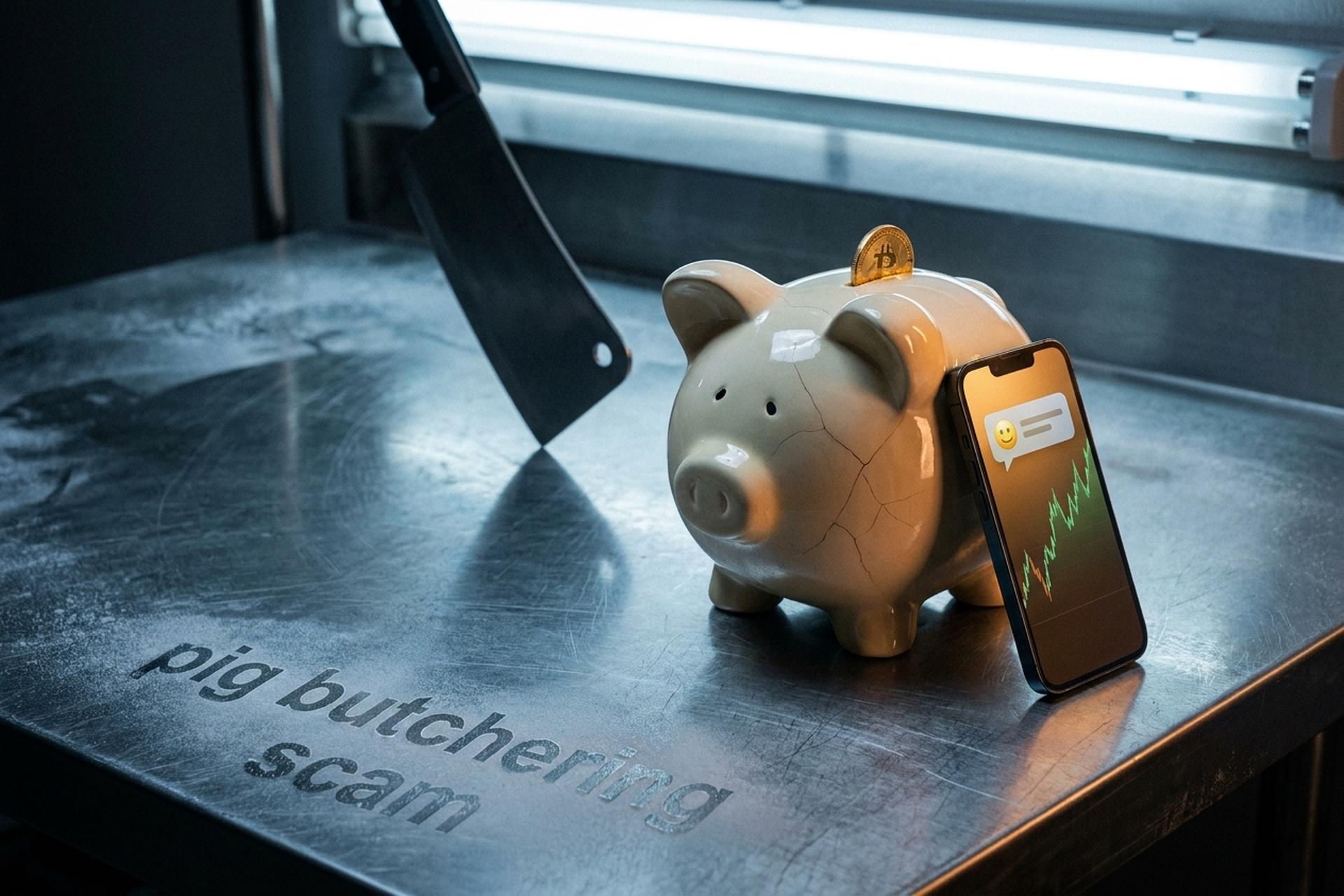
The name is blunt and deliberate. It comes from the Chinese phrase sha zhu pan, literally "pig-butchering plate," and it describes the method exactly. The scammer fattens the victim with attention and small fake profits before the slaughter, when everything is taken at once.
Strip away the drama and a pig butchering scam is investment fraud. At heart it is an investment scam, not a love story, and the romance or friendship is just the bait. A scammer builds trust over time, then steers the conversation toward a cryptocurrency "opportunity" on a platform that does not really trade anything. The victim is fattened, then butchered. Everything in between is theater designed to make a fake account balance look real.
Pig butchering vs a romance scam
People lump this in with romance fraud, but the mechanics are different, and the difference is the whole reason it works. A classic romance scam asks you for money: a sick relative, a stuck shipment, a plane ticket home. Pig butchering does the opposite. It convinces you that you and your new friend are making money together. You are not giving cash away out of love. You are investing out of hope. That flip, from charity to greed, is why careful, intelligent people get caught.
| Romance scam | Pig butchering scam | |
|---|---|---|
| The ask | "Send me money" | "Invest with me and get rich" |
| Victim's emotion | Sympathy, love | Hope, greed, FOMO |
| Money vehicle | Wire, gift cards | Crypto on a fake trading platform |
| Timeline | Weeks to years | Usually weeks to a few months |
| Who controls the funds | Scammer, directly | Victim transfers it "themselves" |
| Recovery odds | Low | Very low (funds move on-chain fast) |
How pig butchering scams work, step by step
There is nothing improvised about this. Pig butchering scams work like an assembly line, with scripts, playbooks, and a division of labor. ProPublica's reporting laid out a ten-step internal manual; the public-facing version comes down to three acts.
The opening message and the slow grooming
It starts with an unsolicited message. A wrong-number text, a friendly "hey, is this still your number?", a like on a dating app or one of the big social media platforms, a stranger in a WhatsApp or WeChat group. There is no rush. The scammer takes their time, sometimes for weeks, talking about ordinary life, building a relationship, learning what the victim wants and fears. The investment talk is held back until the trust is solid.
The fake platform and the first wins
Eventually the scammer mentions how well they are doing trading crypto, often crediting an "uncle" or a special tip. The victim is invited onto a slick investment platform and makes a small deposit. The dashboard shows an immediate profit. To seal the trust, the scammer encourages a small withdrawal, and it goes through. Now the platform feels proven. The victim's guard drops completely.
The slaughter and the tax-and-fee trap
With trust locked in, the deposits get bigger. Savings, retirement accounts, sometimes loans. When the victim finally tries to cash out the now-huge balance, the platform demands a "withdrawal tax" or a "fee" first. Paying it only triggers another fee. This stage exists to drain the last available dollar. Then the scammer and the platform vanish, leaving a frozen account and a balance that turns out to mean nothing.
| Stage | What the scammer does | What the victim sees | Goal |
|---|---|---|---|
| 1. Contact | Unsolicited message, "wrong number" | A friendly stranger | Get a reply |
| 2. Grooming | Daily chat, romance or friendship | A trusted relationship | Lower defenses |
| 3. The pitch | Introduces a crypto trading platform | An insider opportunity | Open an account |
| 4. The fatten | Small deposit, fake profit, small withdrawal works | Easy, real-looking gains | Build confidence, raise stakes |
| 5. The slaughter | Blocks withdrawals, demands taxes and fees | Errors, then silence | Extract everything, disappear |
Red flags and warning signs to watch for
The reliable warning signs are not about the romance. They cluster around the platform and the pace, which is exactly why they generalize across every version of a pig butchering scam. These are the red flags to watch for in any new online relationship that drifts toward money:
- An unsolicited message from a stranger, especially a "wrong number" that wants to keep chatting.
- A new contact who refuses to video call, or whose calls are always cut short or blurry.
- Pressure to move off the dating app or social platform fast, onto WhatsApp or Telegram.
- Any mention of "guaranteed," "risk-free," or unusually high crypto returns.
- A trading app you have to sideload, or one that only your new friend seems to use.
- Profits that look excellent on screen but withdrawals that stall or trigger fees.
- Love-bombing and investment talk arriving together. That pairing is the signature.
Any one of these can be innocent. Several at once is the scam announcing itself.
Inside the fake trading platform and websites
Here is the part victims never see clearly until it is too late. The fake investment platform is a stage set. The rising balance is just a number in a database the scammers control, not a position in any real market. No trade ever happens. When you "buy" crypto, you are watching an animation.
These fraudulent websites and apps are built to pass a glance. The domains are usually registered just weeks earlier. Some apps even slip briefly onto the official Apple and Google stores before being pulled. The sites often ask for identity documents under the banner of "KYC" verification, which means the victim loses money and hands over the raw material for identity theft at the same time.
A newer twist is the group chat. The victim gets added to an investment "community" full of members posting screenshots of their gains. Most are bots or paid shills. The point is social proof: if everyone is winning, the doubt feels unreasonable. According to TRM Labs, around 75% of wallets tied to pig butchering showed clear signs of on-chain money laundering, which tells you these are not lone operators but organized cash-out machines.
Where your crypto really goes: the money trail
The moment you hit "deposit," your money leaves the consumer world. It does not sit in an account. It enters a laundering pipeline designed to move fast and break the trail before anyone can follow.
Stablecoins and the laundering pipeline
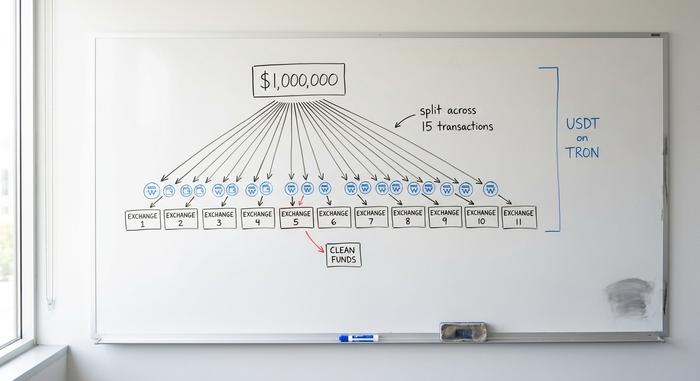
The vehicle of choice is the stablecoin Tether (USDT) on the Tron blockchain, prized for low fees and instant settlement. From there the funds are chopped up and scattered. In one case documented by investigators, a single victim's $1 million was split across 15 transactions and pushed through 11 different exchanges. Intermediary wallets relay the funds again and again until the original source is buried. By the time a victim realizes anything is wrong, the money has changed hands a dozen times. That is the part I find hardest to stomach: the theft is finished before the victim even suspects it.
The global crackdown
Law enforcement has finally caught up to the scale. The US Treasury cut the Cambodia-based Huione Group out of the American financial system, citing roughly $4 billion in scam-linked laundering. The Justice Department seized $225.3 million in USDT tied to pig butchering, and in the Prince Group case forfeited about 127,271 Bitcoin, worth near $15 billion, the largest forfeiture in DOJ history, according to Chainalysis. A coordinated takedown produced at least 276 arrests. Impressive numbers, but compounds rotate fast, and the criminals adapt faster than the enforcement cycle.
| Metric | Figure | Source | Period |
|---|---|---|---|
| US investment fraud losses | $8.65 billion | FBI IC3 | 2025 |
| Global on-chain scam losses | $17 billion | Chainalysis | 2025 |
| Average pig butchering payment, year over year | +253% ($782 to $2,764) | Chainalysis | 2024 to 2025 |
| US crypto losses, victims 60+ | $4.35 billion | FBI IC3 | 2025 |
The human cost behind pig butchering fraud
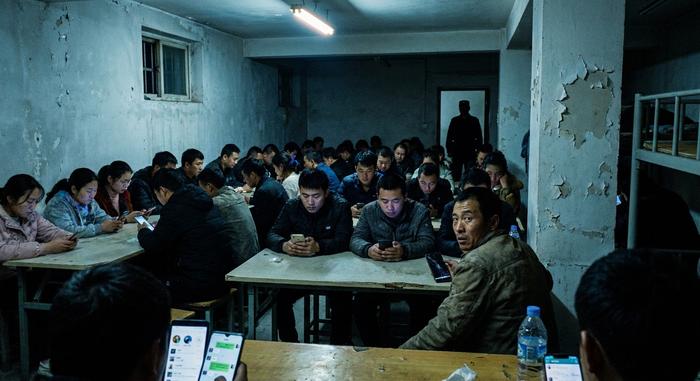
There is an uncomfortable truth the romance framing hides: the person typing to you may be a prisoner. The pig butchering fraud industry runs on human trafficking. The UN Office on Drugs and Crime estimates that roughly 120,000 people are held in scam compounds in Myanmar and around 100,000 in Cambodia, lured by fake job ads, then trafficked across borders and forced to scam under threat of violence.
These compounds are large enough to distort whole economies. UNODC has noted that scam revenue rivals a significant share of the formal economy across Cambodia, Laos, and Myanmar. The operations also move constantly; one analysis found the average scam center's lifespan had collapsed to about 42 days, rotating to stay ahead of raids. So the same pig butchering scam victimizes two groups at once: the investor losing their savings, and the worker forced to take them. It is a financial crime and a human rights crisis wearing the same mask.
Protecting yourself before the scam starts
The good news is that defense against a pig butchering scam is mostly a pace problem. Every tactic in this playbook relies on speed and isolation, so slowing down and bringing in a second set of eyes breaks the whole thing. A few habits do most of the work.
Never act on investment advice from someone you have only met online, no matter how warm the relationship feels. Before a single dollar moves, verify any trading platform against the SEC's investor.gov and FINRA BrokerCheck; a real firm is registered and searchable, a fake one is not. Run a reverse image search on your new contact's photos, since stolen pictures tend to show up elsewhere. Refuse to move the conversation onto a private app at a stranger's request.
The strongest single defense is also the simplest. Talk to someone before you invest: a fee-only financial advisor, your bank, an adult child. Scammers know this, which is why they tell victims to keep the "opportunity" secret. That instruction to stay quiet is itself one of the clearest warning signs. And remember the oldest rule in finance, the one this scam exists to make you forget: guaranteed high returns with no risk do not exist.
Report it: file a complaint and use a scam tracker
If you think a pig butchering scam has hit you, move quickly, because on-chain funds disappear fast and the first hours matter most. The steps are straightforward.
File a complaint with the FBI's Internet Crime Complaint Center at IC3.gov, and report to the FTC. Call your bank or exchange right away to try to freeze or recall transfers. File a report with local police and, in the US, the Secret Service, which works crypto cases. Logging the scam on the BBB Scam Tracker helps warn others and builds the pattern investigators rely on. The FBI's Operation Level Up has notified thousands of active victims and prevented more than $562 million in losses by reaching people mid-scam.
One last warning. After the slaughter comes the second slaughter. "Recovery services" that promise to get your crypto back for an upfront fee are very often the same criminals, or new ones, hunting the already-wounded. Real clawbacks come through law enforcement, not a stranger with a guarantee.
The bottom line on this crypto scam
Strip off the disguise and a pig butchering scam is simple. Someone wins your trust, shows you fake profits, and walks away with real money. The reason it keeps working is that none of it feels like a robbery while it happens. It feels like luck, or like love. Of all the cryptocurrency scams tracked today, this one tends to cost victims the most, because they never sense the danger until the account is already empty. The defenses are boring, which is probably why people skip them. Check any platform before you send a cent. Slow down when a new online friend steers the conversation toward crypto. Say it out loud to someone you trust, since secrecy is the one thing the scammer cannot work around. If a stranger you have never met in person is somehow making you rich, it is worth asking who is really being fattened here.