D2C Business Model: Definition, Benefits, and Examples
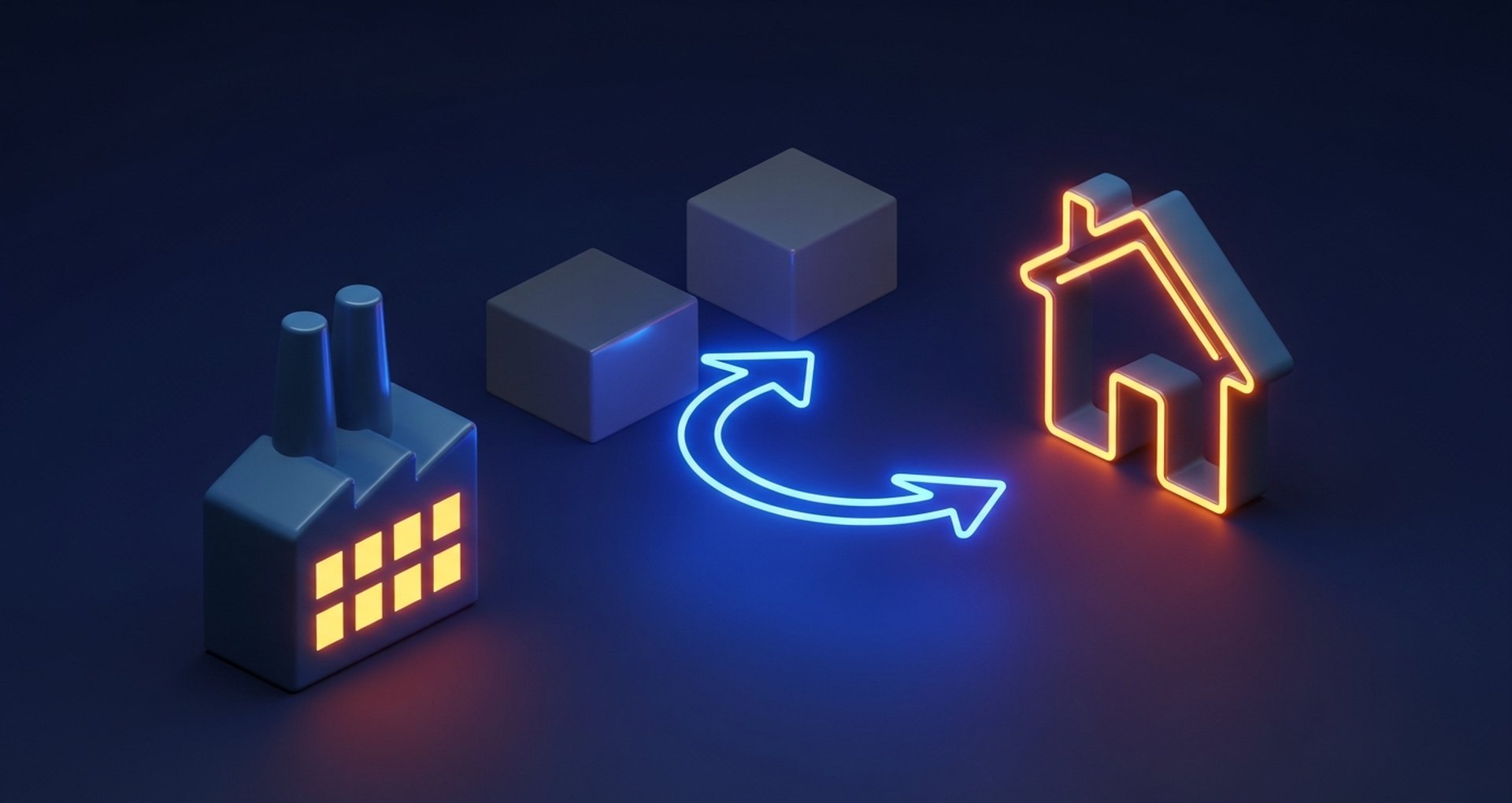
D2C is short for direct-to-consumer. Brands sell straight to the people who buy their products, skipping retailers, wholesalers, and distributors entirely. No middleman, no shelf negotiation, no margin shared with a third party.
The US D2C market grew from $76 billion in 2019 to $213 billion in 2024 — 178% in five years. That growth reflects something specific: brands figured out the traditional retail model hands over 30–50% of revenue to intermediaries while the brand loses visibility into who's actually buying. Warby Parker, Glossier, Dollar Shave Club, Gymshark — all built billion-dollar businesses going direct from day one. Lululemon, Crocs, Carter's all run significant D2C operations at enterprise scale.
What Is D2C and How Does It Work?
D2C business models cut out every supply chain layer between factory and buyer. A wholesaler typically takes a 20% cut; a retailer demands planogram compliance on top of that. D2C skips both. The brand handles the transaction directly, owns the fulfillment, and keeps all customer data.
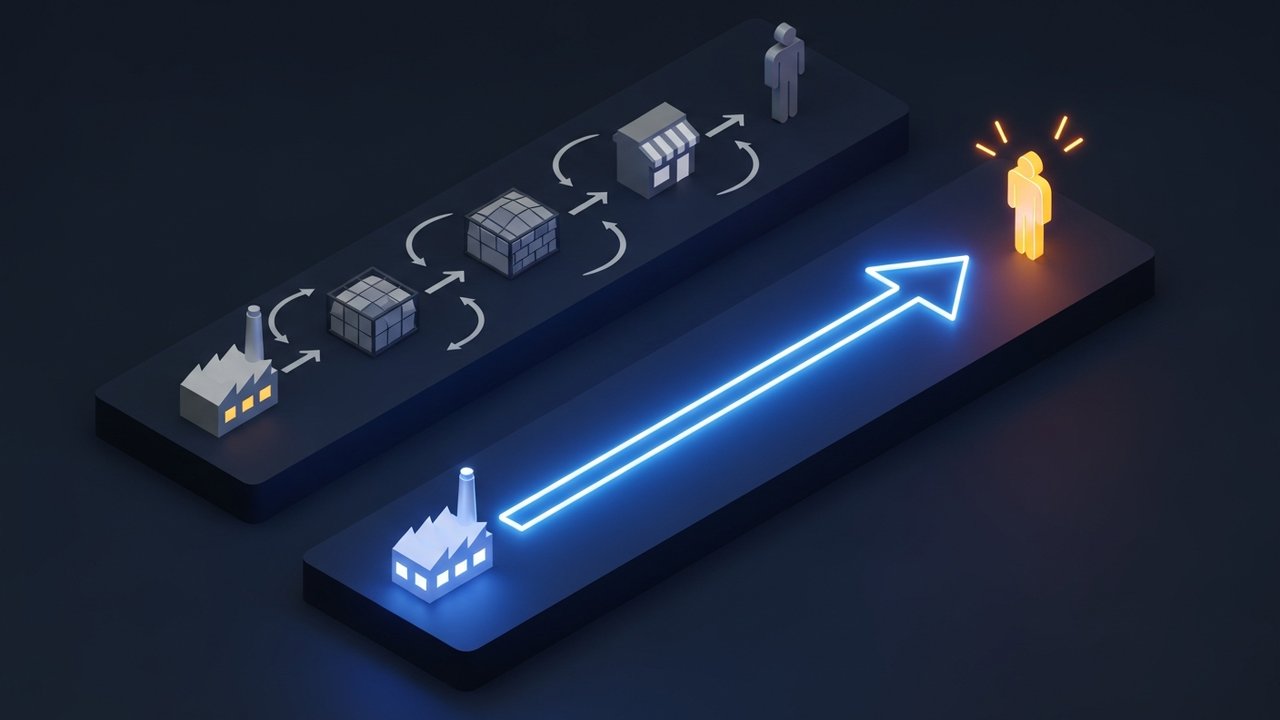
Most consumer goods travel far before someone uses them. Factory → distributor → wholesaler → retailer → customer. At every handoff, margin disappears. When the product finally sells, the brand finds out in a quarterly report, with no individual customer data attached.
DTC and D2C are the same thing — direct-to-consumer, two abbreviations for one model.
What made the direct-to-consumer model work at scale is ecommerce infrastructure. Shopify, WooCommerce, and headless platforms gave brands a functional global storefront without building one from scratch. Paid social added the acquisition layer: brands can now reach their exact target audience without paying for a retailer's foot traffic.
D2C vs B2C vs B2B: Key Differences Explained
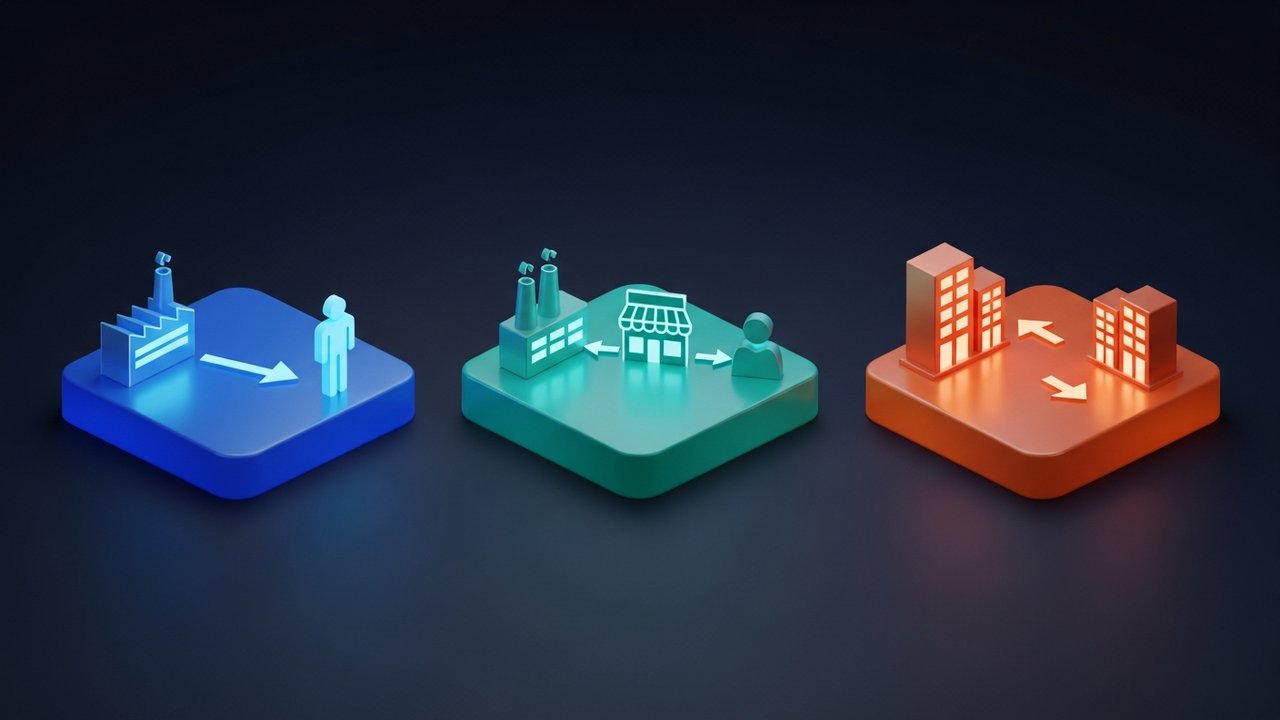
D2C is technically a subset of B2C. Both involve selling to consumers, but the channel structure is completely different — and so is who owns the customer.
| Dimension | D2C | B2C | B2B |
|---|---|---|---|
| Who sells | Brand sells directly | Retailer sells for the brand | Business sells to businesses |
| Intermediaries | None | Retailers, distributors | Distributors, agents |
| Profit margin | Higher (no middleman cut) | Lower | Varies by contract |
| Customer data ownership | Brand owns it | Retailer owns it | Brand owns it |
| Speed to market | Fast | Slower (retailer decisions) | Slower |
| Brand experience control | Full | Shared with retailer | Full |
In B2C, the retailer owns the customer. They get the email address, the purchase history, the return data. The brand gets a purchase order and sell-through reports. In a D2C business, the brand owns all of that.
What about Amazon? Selling on Amazon doesn't qualify as D2C. Amazon controls the customer relationship and owns all the data. True D2C means selling on a brand-owned storefront where the brand controls the entire experience, including the unboxing.
How the D2C Business Model Works in Practice
The concept is simple. The execution involves more moving parts than most founders expect.
- Manufacture or source the product. In-house manufacturing, private-label sourcing, or a contract manufacturer — all valid. The supply chain starts at production, not at a retailer's warehouse.
- Build a direct ecommerce storefront. Shopify is where most new D2C brands start. Headless commerce architectures handle more complex setups but cost significantly more upfront.
- Fund all marketing yourself. No retailer shelf means no passive discovery. D2C companies cover all acquisition costs. Paid social, SEO, email, and influencer partnerships carry the load.
- Customer buys from the brand's own storefront. Checkout, payment, and confirmation all run on brand infrastructure — not a marketplace, not a third-party platform.
- Handle fulfillment. In-house warehousing works at low order volumes. Most D2C brands eventually shift to a 3PL provider like ShipBob or Flexport for last-mile delivery at scale.
- Own every piece of customer data. Email addresses, purchase history, behavioral signals — all stay with the brand. Wholesale brands simply don't have this; a quarterly retailer report is the closest equivalent.
The supply chain footprint is lean: factory, warehouse, customer. Brands moving from wholesale discover that per-order logistics complexity is real. They also discover how fast margins improve when the distributor's cut comes back to the brand.
Benefits of D2C for Brands and Businesses
Brands shift toward D2C channels because traditional retail can't match the structural advantages. The most significant one: full ownership of the customer experience.
- Higher profit margins. The retailer or wholesaler layer typically takes 30–50% of the product's retail price. D2C reclaims that margin for the brand.
- First-party data ownership. Instead of getting anonymized sell-through data from retailers, a D2C brand owns the email addresses, purchase history, and lifetime value metrics of its entire customer base. 65% of consumers expect personalized experiences, and first-party data is what makes personalization possible.
- Direct customer relationship. Returns, reviews, and support tickets go directly to the brand. A D2C brand can improve the customer experience in ways a retailer never would: faster product iterations, loyalty programs, and follow-up flows built on real purchase data.
- Full brand experience control. Packaging, unboxing, post-purchase email sequences, and loyalty programs are all in the brand's hands, not on a retailer's generic shelf.
- Agility. No minimum order quantities from a retailer, no planogram compliance requirements. D2C brands can test new SKUs quickly and pull them if they underperform.
- Subscription and recurring revenue potential. Subscription models are nearly impossible through traditional retail. D2C unlocks predictable recurring revenue that wholesale brands can't easily access.
- Precise target audience reach. First-party customer data enables precise retargeting and lookalike audience campaigns that wholesale brands simply can't run, because they don't know who their customers are at an individual level.
D2C Challenges and How to Overcome Them
D2C advantages are real. So are the operational costs that most brands discover too late.
- Customer acquisition cost. A retailer's shelf provides passive discovery. D2C brands don't have that — every customer costs money to reach. CAC becomes the biggest financial risk as you scale, especially in paid social where CPMs keep rising. Building organic channels early (SEO, content, community) is the only real hedge against it.
- Fulfillment and logistics. Handling warehousing, last-mile delivery, and returns in-house requires serious investment. Per-order complexity grows fast. A reliable 3PL partner helps, but finding one that won't damage your brand reputation on bad delivery days is its own challenge.
- Tech stack complexity. Shopify is the storefront. You also need an ERP, CRM, email platform, analytics, and payment processing — all integrated. That's a real engineering lift, even before shipping a single order.
- Supply chain management. Without wholesale orders buffering demand, forecasting gets harder and D2C brands carry full inventory risk. Too much stock ties up cash; too little misses a viral moment. Both problems hurt.
- Competition from marketplaces. Amazon's convenience and trust are hard to beat on neutral ground. The only winning move is giving customers something Amazon can't offer: an exclusive product, meaningfully better pricing, or a brand experience worth choosing over one-click checkout.
- Payment infrastructure at scale. Multiple currencies, cross-border fees, fraud management across markets — these get complicated fast when selling globally. Most D2C founders underestimate this at launch and spend the next year fixing it.
Best D2C Business Examples and What They Do Right
Not every D2C success story looks the same. What the durable ones share: they built a direct customer relationship first and scaled distribution second.
Warby Parker went after Luxottica, the wholesale monopolist that controlled most of the retail optical chain. Cutting out that layer let Warby sell frames for a fraction of traditional prices. More important, they got direct customer feedback on what styles to make next — something no traditional eyewear brand had.
Glossier had an audience before it had a product. Community comments, social feedback, and direct conversation shaped what got manufactured. Customers who feel like they co-own a D2C brand buy from it repeatedly, and Glossier built that dynamic from scratch.
Dollar Shave Club cracked the subscription D2C model for a commodity product and proved that bypassing pharmacy retail entirely was a real strategy. Unilever paid $1 billion for it — mostly for the subscriber data and ecommerce infrastructure, not the razors.
Gymshark never needed a shelf. Social media and influencer marketing built the audience. Full D2C strategy throughout meant full margin throughout too. From side project to billion-pound business without a wholesale deal.
How to Start a D2C Business: Step by Step
Launching a direct-to-consumer business means making decisions across product, technology, logistics, and marketing at the same time.
- Choose your product and niche. D2C works best for products with a clear brand identity, repeat purchase potential, or strong emotional resonance. Commodities are harder to D2C because brand story matters less when customers are just optimizing for price.
- Define your target audience precisely. D2C success depends on marketing directly to end customers without a retailer acting as intermediary. Knowing your customer segment before spending on acquisition saves a lot of money.
- Build your D2C ecommerce storefront. Shopify is the dominant choice for new D2C brands; it provides payment processing, inventory management, and a broad ecosystem of apps. Custom headless builds serve complex requirements but need real engineering investment.
- Set up fulfillment. Decide early whether to warehouse in-house or use a 3PL. In-house works below a few hundred orders per month. At scale, a 3PL reduces per-order cost and operational overhead.
- Configure payment processing. Accept credit cards, digital wallets (Apple Pay, Google Pay), and buy-now-pay-later options from launch. If you're selling internationally, factor in cross-border card fees and whether crypto payment options make sense for your customer base.
- Launch acquisition channels. The core three for most D2C brands: paid social (Meta, TikTok), SEO, and email. Influencer marketing works in categories with high visual appeal. Build your email list from day one; it's the lowest-CAC channel long term.
- Track LTV vs CAC from the start. D2C profitability depends on customer lifetime value exceeding acquisition cost. Build cohort LTV tracking into your analytics from day one, not after you've scaled.
Payments in D2C: Accepting Crypto and Alternative Methods
Most D2C stores launch with card payments and call it done. That works for domestic customers. It starts to break down at the edges.
Cross-border D2C sales involve currency conversion friction, international card fees (typically 1.5–3% on top of processing fees), and higher decline rates from international issuers. For D2C brands building global customer bases, the payment stack matters more than it appears at the product-page level.
Crypto payments fix several of these pain points for the right customer segments. Blockchain-based payment settlement clears in minutes rather than the 2–3 business days of standard card settlement. There are no chargebacks, which matters for D2C brands selling high-value or easily resold products. Cross-border transactions don't carry the same currency conversion fees that card networks impose.
D2C brands that benefit most from adding crypto payments:
- International-first brands where a meaningful portion of customers hold crypto
- Digital product and SaaS D2C businesses where the customer base skews crypto-native
- Subscription D2C businesses exploring recurring crypto payment workflows
- Brands in markets where card penetration is low and alternative payment methods dominate
Plisio is an API-first crypto payment gateway that integrates with Shopify and custom D2C storefronts, supporting more than 20 cryptocurrencies. For D2C brands exploring omnichannel payment coverage, it adds a crypto option without replacing existing card infrastructure.