
91 Club Login Guide: How to Register, Earn, and Avoid Account Blocks
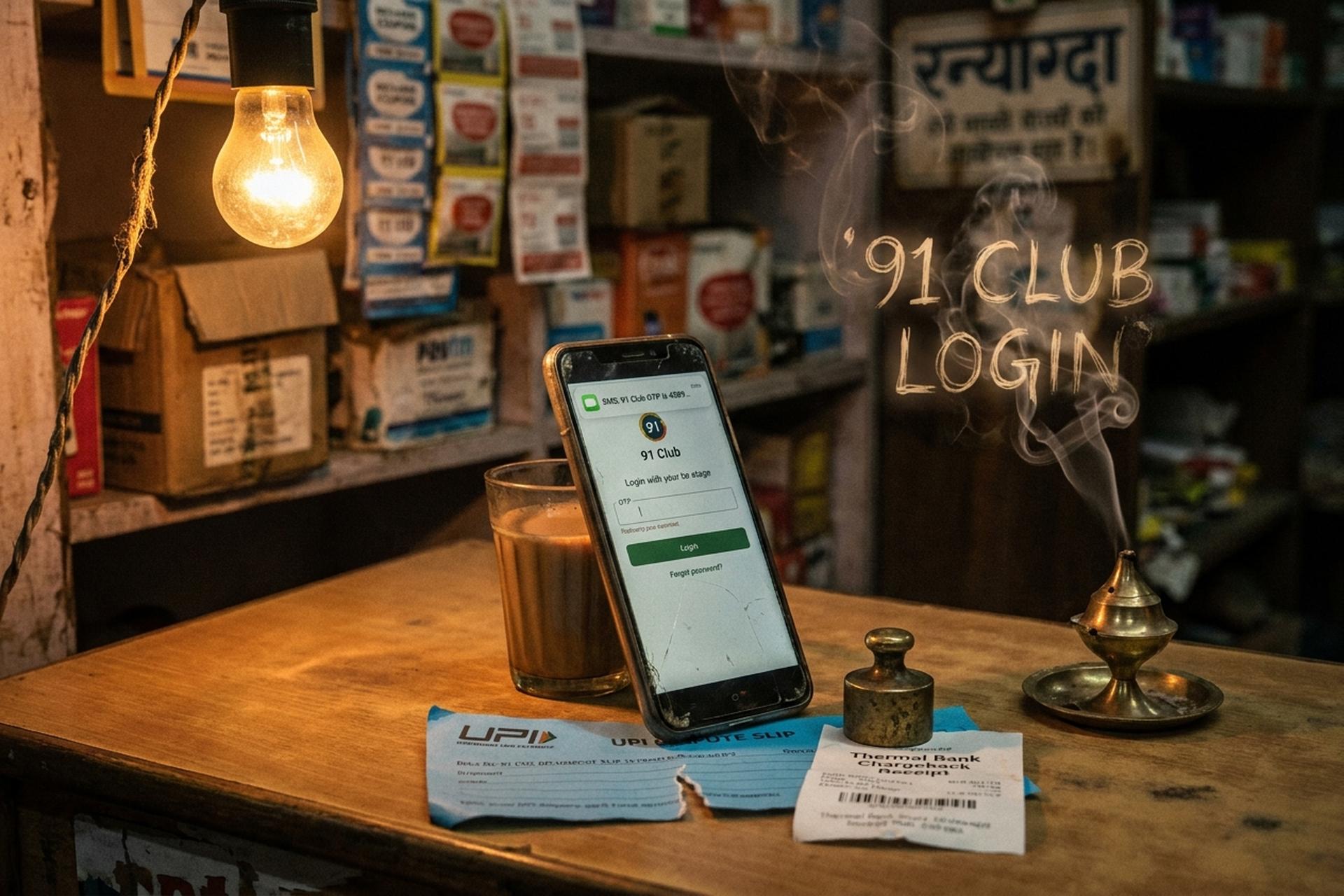
If you searched "91 Club login" before May 2026, you were looking for a gaming app. Today, you are looking at the surface of an app the Indian government has formally outlawed. The login flow has not changed. Almost everything around it has.
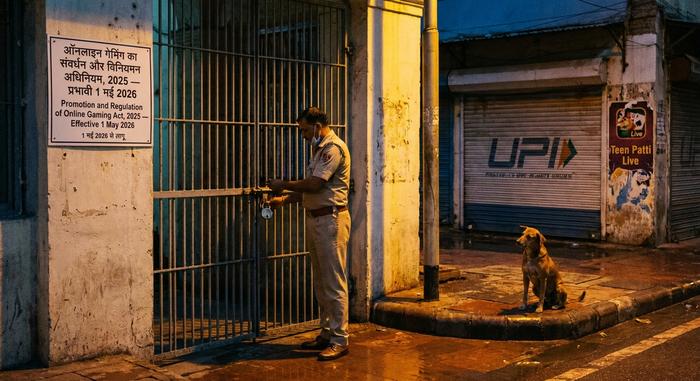
The Promotion and Regulation of Online Gaming Act, 2025 received presidential assent in August 2025 and its operative provisions took effect on 1 May 2026. The law bans every online "money game", regardless of whether outcomes turn on skill or chance. Color prediction, the core mechanic of 91 Club, sits squarely inside that definition. A guide that only walks through OTP screens would be incomplete — this one explains the login and the trap.
What 91 Club Is and Why Login Suddenly Matters
91 Club launched in 2023 as a mobile color-prediction and prediction games app aimed at Indian users. Each 91 Club game lets a player bet small amounts, with a floor of around ₹100, on outcomes generated every 30 to 180 seconds across modes called Win Go, TRX Hash, K3 dice, and an Aviator-style multiplier. The platform also goes by "91club" across mirror sites; the colour prediction mode is the most-searched. By 2024 the app had crossed one million India downloads, according to a profile published by On Pattison in April 2025.
Three things about the app have always sat uncomfortably for cautious users. The corporate parent is opaque: APK listings credit "91 Official" or "Avigma Tech" as the developer, and the operator is reportedly registered in Curacao, an offshore jurisdiction popular with grey-market gambling sites. The app is not on Google Play and is distributed only as a sideloaded Android APK from rotating mirror domains. The only login factor is an SMS one-time password.
For two years that combination was tolerated because the legal status of color-prediction was contested rather than settled. High Courts had struck down state bans in Karnataka and Tamil Nadu as overbroad while upholding restrictions in Andhra Pradesh and Telangana. The Centre had not legislated.
That changed in August 2025. The Promotion and Regulation of Online Gaming Act, 2025, passed by Parliament and assented to by the President, defined "online money game" broadly and banned the offering, financing, and advertising of any such game. Operative provisions and rules became effective on 1 May 2026. On 8 September 2025 the Supreme Court consolidated High Court challenges from Karnataka, Delhi, and Madhya Pradesh, and joint hearings began on 7 October. The Centre's filing argued that the online gaming ecosystem is "tied to drugs, hawala, and terror financing".
Logging in to 91 Club from India today intersects with a live federal prohibition. That does not mean every user faces an FIR. It does mean the platform operates without legal cover and any dispute has no domestic regulator to escalate to. Read the rest with that frame in mind.
How to Log In to 91 Club: Step-by-Step
The login itself is unremarkable. That is part of the problem. There is no authenticator-app option, no Google or Apple sign-in, no hardware-key support. The flow is the same one that entry-level Indian gaming apps have used for the last five years.
1. Open the 91 Club app, or visit the latest active 91 Club website in a mobile browser.
2. Tap "Login" on the home screen.
3. Enter your registered Indian mobile number, including the +91 country code if prompted.
4. Enter your password. If you have forgotten it, tap "Forgot Password" to receive a reset OTP by SMS.
5. The system may send a secondary verification OTP to your phone if it detects a new device or IP address.
6. After verification you land on the lobby with Win Go, TRX Hash, K3, and Aviator visible.
Two things to notice. There is no second factor beyond the SMS code, which means a successful SIM-swap attack hands an attacker complete account access. And the app will not ask for an email by default during login, even if you registered with one. Recovery is bound to the phone number. Treat the mobile carrier as your real password.
Registering a New 91 Club Account
Registration is free and takes less than a minute. That is exactly what the platform wants. Every minute spent on the form is a minute spent thinking about whether you should be filling it out at all.
To register on the official 91 Club platform you typically need to:
1. Visit the current official 91 Club site or open the APK after sideloading it.
2. Tap "Register" and select "Register with Phone".
3. Enter your Indian mobile number; an OTP arrives by SMS within roughly 30 seconds.
4. Set a password (most accounts accept eight to sixteen characters; mixed case recommended).
5. Optionally enter a referral code; this is how the app's referral-bonus economy is seeded.
6. Tick the 18 years and over age confirmation, accept the terms and the privacy notice, and submit.
The information collected (phone number, IP address, device fingerprint, and after your first deposit a UPI handle linked to your bank account) flows to an opaque corporate vehicle outside India. There is no data-protection authority in Curacao that you can complain to, and India's own Digital Personal Data Protection Act, 2023 has limited extraterritorial reach over non-cooperating offshore operators. If you would not hand the same data to a stranger in a parking lot, think twice before handing it to a registration form that promises a ₹50 spin-wheel bonus.
Why Players Get Blocked: The Withdrawal-Lock Pattern
The single most common 91 Club complaint on Indian consumer-grievance sites is not about login. It is about being blocked from withdrawing winnings. The pattern is consistent enough across user reports, aggregated under the "91-club" tag at consumercomplaintscourt.com and detailed in long reviews by analysts such as Aseem Juneja, that it is worth treating as a designed feature rather than isolated bad luck.
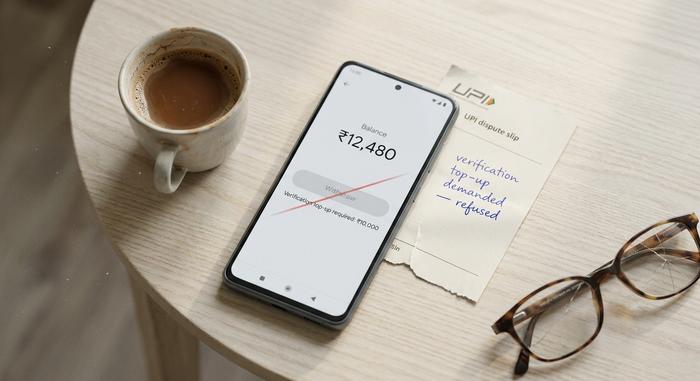
The mechanic, as users describe it, runs in three steps. First, small wins withdraw cleanly. A ₹500 or ₹1,000 cashout settles to UPI within minutes, exactly as the app promises. This builds confidence. Second, when a withdrawal exceeds an unstated threshold (frequently around ₹10,000) the request stalls. A "verification" or "tax compliance" notice appears, demanding an additional deposit (sometimes framed as a "Boeing software upgrade fee", a phrase that surfaced in July 2025 Telegram-funnel scams). Third, after the user pays, the account is silently restricted. Login still works. The balance is still visible. The withdraw button is greyed out, and customer support stops responding.
The table below contrasts a regulated gaming platform, say a UK-licensed sports book, with the user-reported pattern at 91 Club. It is not a forensic audit. It is a compatibility test you can run in your head before depositing.
| Behaviour | Regulated platform | 91 Club user-reported pattern |
|---|---|---|
| Small withdrawal under ₹2,000 | Settles in minutes | Settles in minutes |
| Large withdrawal over ₹10,000 | Same flow, may add KYC | Often stalled, "verification fee" demanded |
| KYC trigger | Asks for PAN/Aadhaar upload | Asks for additional deposit |
| Dispute escalation | Licensed regulator with public complaints register | None: Curacao licensee, no Indian regulator |
| Account block reason | Communicated in writing with appeal path | Often silent; balance visible, withdraw disabled |
If any single line in the right column matches what you are seeing in your account, stop depositing. The escalation path described later is the only realistic next step.
Police context matters here. Hyderabad busted a Rs 1,600-crore color-prediction racket years before 91 Club existed, and in 2024 NewsMeter reported at least 24 Telangana suicides since 2023 linked to online-betting debt. None of those deaths name 91 Club. All describe the same shape of harm.
India's 2025 Online Gaming Act: Why 91 Club Is Now Illegal
For the last few years, "is 91 Club legal in India?" was a genuinely complicated question. As of 1 May 2026 it is not. The Promotion and Regulation of Online Gaming Act, 2025 collapsed the long-running skill-versus-chance debate into a single statutory definition: an "online money game" is any online game where a user pays money or other stakes with the expectation of monetary or other reward, regardless of the outcome being determined by skill, chance, or both. Color prediction fits without ambiguity — there is no skill defence left.
The penalties are not symbolic. Offering, hosting, or operating a banned online money game can attract imprisonment of up to three years and a fine of up to one crore rupees. Advertising or promoting such a game, including by influencers and affiliate marketers, can attract up to two years' imprisonment and a fine of up to fifty lakh rupees. Banks and payment processors that facilitate transactions to a banned operator can be directed to block them.
| Date | Event |
|---|---|
| August 2025 | Parliament passes the Promotion and Regulation of Online Gaming Act, 2025; receives Presidential assent |
| September 8, 2025 | Supreme Court consolidates High Court challenges from Karnataka, Delhi, MP |
| October 7, 2025 | Consolidated SC hearings begin; Centre cites "drugs, hawala, terror financing" linkage |
| May 1, 2026 | Operative provisions and 2026 Rules in effect; payment-blocking powers active |
| Ongoing | Enforcement Directorate continues parallel money-laundering probes (Probo: Rs 400+ crore frozen, 2025) |
The Probo case is the closest enforcement signal in the prediction-app space. Probo is a separate platform, but the ED's 2025 freeze of more than Rs 400 crore in its assets, under the Prevention of Money Laundering Act, telegraphs how authorities view the category. Payment rails get blocked, operator bank accounts get attached, and prominent affiliates face criminal complaints. End-users are not the immediate target, but they hold the deposits that disappear when an operator is shut down.
There is no public RBI advisory naming 91 Club. There does not need to be. The Act applies to the category, not to individual brands.
App Security: Phishing Clones and SIM-Swap Risk
Because 91 Club's only login factor is an SMS OTP, the SIM card in your phone is, in effect, the master key. That makes SIM-swap fraud the single most consequential attack vector. An attacker who convinces your mobile carrier to port your number to a new SIM owns the OTP stream, and therefore the account.
The second risk is phishing. The app's official domain rotates frequently. Variants such as 91-club.com.in, 91clubofficial.fun, 91clubs.org, and 91clubapk.app all surface in searches as "official", and Scamadviser flags several with low trust scores. A user who clicks a link in a WhatsApp forward and enters credentials on a clone page hands the attacker their phone number and password. Combined with a SIM swap or an SMS-OTP intercept, that is enough to drain the account. Sites that promise a "91 Club hack" or a "Win Go predictor" (91clubhacks.in is the most-flagged example) are typically malware delivery vectors rather than functional tools.
Three practical defences keep the application secure. Set a carrier PIN with your mobile operator so no one can port your SIM. Never click 91 Club links sent over WhatsApp, Telegram, or SMS; type the URL or use a bookmarked one. Treat any third-party "predictor" or "hack" as malicious by default. The gameplay leaves no room for client-side prediction; tools that promise otherwise harvest credentials or push malware that risks total account loss.
Crypto Deposits and Official Payment Rails
Despite review-site claims, there is no credible evidence that 91 Club natively accepts USDT, BTC, or any other cryptocurrency on its official deposit screen. The verified rail is UPI through PhonePe, Google Pay, or Paytm, with IMPS bank transfer as a fallback. Crypto top-ups appear in scam reports, usually as a Telegram operator instructing a user to send USDT to a personal wallet on the promise of an account credit. Those flows are operator-side and unaudited. Under the May 2026 rules, regulated payment processors are also required to refuse settlement to banned operators, which is precisely the choke point the Act was designed around.
How 91 Club Compares to Daman, BDG Win, Tiranga
Users who hit a wall on 91 Club often migrate to Daman Games, BDG Win (Big Daddy Game), or Tiranga. Mechanics differ at the margins. Daman lists more than five million registered users in 2026 reviews and advertises sub-30-minute withdrawals. BDG Win runs a tiered VIP-rewards system. Tiranga leans on Indian-flag branding to suggest local legitimacy. Legal exposure is identical. Every one of those apps falls inside the Online Money Game definition in the 2025 Act. Switching apps is a brand decision — not a risk decision.
Global Access: Why US Users Cannot Download or Sign Up
91 Club is engineered for the Indian market. KYC accepts Indian mobile numbers, deposits run on UPI, and the only meaningful regulator is now telling it to stop. A US or European reader cannot legally sign up: the platform is unlicensed in any US state, and accessing it from a US IP would breach the Unlawful Internet Gambling Enforcement Act of 2006. The closest US analogues are sweepstakes-casino apps, which drew cease-and-desist letters from New York, Michigan, and Connecticut regulators in 2024 and 2025. The global online gambling market reached roughly USD 121 billion in 2025 with mobile at 74.5% of activity, but the regulated portion lives behind state licences 91 Club does not hold.
What to Do if Your Earnings or Account Are Locked
If you are already inside the loop, with login working, balance visible, and withdrawals frozen, there is a real escalation path even if the outcome is not guaranteed. Most users do not know it exists.
First, file a complaint at cybercrime.gov.in or call the National Cyber Crime Helpline at 1930. Both are free and operate in multiple Indian languages. The portal accepts complaints about online betting fraud explicitly. Second, contact your bank within 72 hours of the first disputed UPI transaction. The RBI's customer-protection framework caps liability at limited amounts when a fraud is reported promptly, and chargebacks are sometimes possible for UPI mandate misuse. Third, file a consumer-court complaint for amounts under Rs 20 lakh; a small-claims process exists at district level. Fourth, preserve everything: screenshots of the balance, withdrawal-attempt error messages, all SMS, and any operator chat. Without records the complaint goes nowhere.
Recovery rates on offshore operator funds are low. The point of escalating is partly individual recovery and partly to thicken the evidence base that cybercrime cells use to act on operators and their affiliates. India had roughly 488 million online gamers in 2024 and a real-money gaming sector worth USD 2.4 billion in FY24, on XcelGlobalPanel estimates. The 2025 law was a response to documented harms, not a theoretical exercise. Adding your case to the file matters even when it does not return your money.
Trust in money is an institutional achievement. An app run from an offshore jurisdiction with no domestic regulator, and a documented withdrawal-lock pattern, is the opposite of an institution. If you are about to log in for the first time — close the tab.
